
Sleep Apnea: Causes, Risks, and Medications That Affect Breathing
When you have sleep apnea, a condition where breathing repeatedly stops and starts during sleep. Also known as obstructive sleep apnea, it’s not just loud snoring—it’s your body struggling to get enough oxygen while you rest. Left untreated, it raises your risk of high blood pressure, heart attacks, and stroke. And here’s the part most people miss: many common medications can make it worse—sometimes dangerously so.
respiratory depression, a dangerous slowing of breathing caused by drugs that calm the central nervous system. Also known as CNS depression, it’s what happens when your brain forgets to tell your lungs to breathe. Opioids, benzodiazepines, sleep aids, and even some antidepressants can trigger this. If you have sleep apnea and take any of these, you’re not just at higher risk—you’re in a high-stakes situation. Studies show people with untreated sleep apnea who take opioids are up to four times more likely to suffer life-threatening breathing pauses during sleep. It’s not theoretical. It’s happening in real lives.
It’s not just about pills. Even over-the-counter cold medicines with diphenhydramine or alcohol can relax your throat muscles enough to block your airway. And if you’re using a CPAP machine but still feel tired, maybe it’s not the device—it’s the medication you’re taking before bed. The connection between sleep apnea and drug interactions is real, understudied, and often ignored by doctors who focus only on the sleep test results.
What you’ll find below isn’t just a list of articles. It’s a practical toolkit. You’ll see how opioid respiratory depression sneaks up on people, why some pain meds are riskier than others, how liquid dosing errors can compound breathing problems, and what to do if you suspect your medication is making your sleep apnea worse. These aren’t abstract warnings—they’re survival tips from real cases, written for people who need to take control before it’s too late.
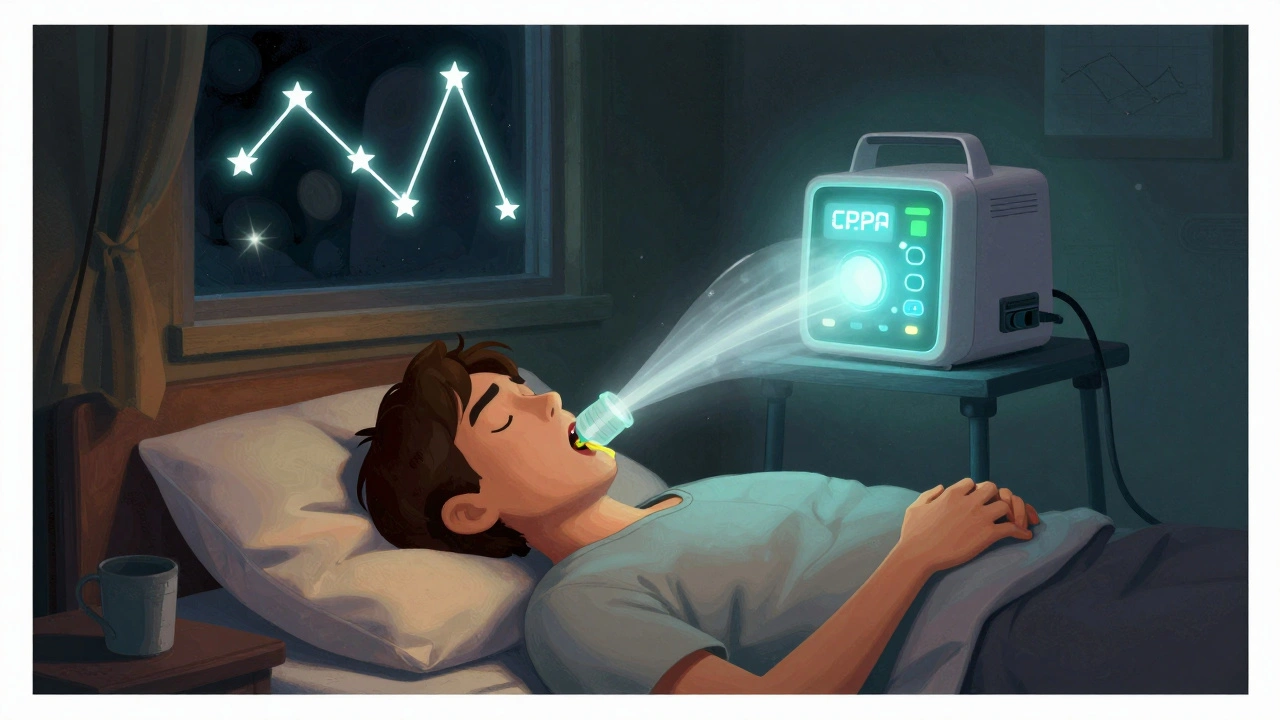
Sleep Apnea and Respiratory Failure: How Oxygen Therapy and CPAP Work Together
CPAP therapy is the gold standard for treating sleep apnea and preventing respiratory failure. Oxygen alone doesn't fix airway collapse-CPAP does. Learn how it works, why adherence matters, and what to do if it's not working.
Read more
Sleep Apnea and Cardiovascular Risk: How Breathing Problems Raise Blood Pressure and Heart Disease Risk
Sleep apnea isn't just about snoring - it's a major driver of high blood pressure, heart attacks, and stroke. Learn how breathing pauses during sleep silently damage your cardiovascular system and what to do about it.
Read more