
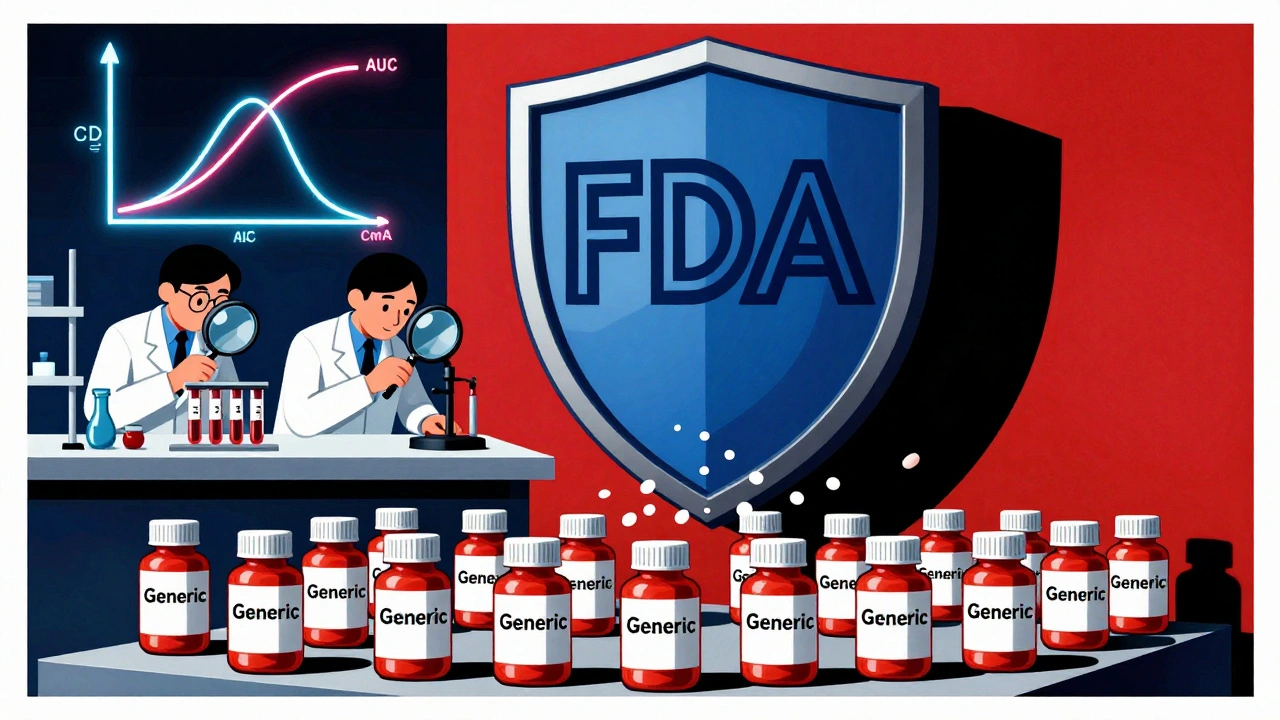
The U.S. Food and Drug Administration doesn’t just approve new drugs-it keeps millions of Americans alive by making sure affordable, safe generics reach pharmacy shelves. Every day, 9 out of 10 prescriptions filled in the U.S. are for generic drugs. But behind that number is a complex, science-driven approval system that few people understand. The FDA doesn’t just rubber-stamp copies of brand-name drugs. It demands proof-rigorous, measurable, scientific proof-that a generic works exactly the same way in the body.
How the FDA Approves Generic Drugs: The ANDA Pathway
The process isn’t called a New Drug Application. It’s called an Abbreviated New Drug Application, or ANDA. That word “abbreviated” doesn’t mean less important-it means smarter. When a company wants to make a generic version of a brand-name drug, they don’t need to run new clinical trials proving the drug is safe or effective. The original brand already did that. Instead, the generic manufacturer must prove one thing: bioequivalence. Bioequivalence means the generic drug delivers the same amount of active ingredient into the bloodstream at the same rate as the brand-name version. The FDA requires this to be shown through studies in 24 to 36 healthy volunteers. Blood samples are taken over time to measure two key values: AUC (total exposure) and Cmax (peak concentration). For the generic to be approved, the 90% confidence interval for both values must fall between 80% and 125% of the brand-name drug. That’s not a guess. It’s a strict, scientifically validated threshold. The FDA also requires the generic to match the brand in active ingredient, strength, dosage form (tablet, capsule, injection), and route of administration. Inactive ingredients can differ-like dyes or fillers-but they can’t affect how the drug works. And the generic must be used for the same medical conditions. If the brand is for high blood pressure, the generic can’t be marketed for migraines.What Happens After the Application Is Submitted
Submitting an ANDA isn’t like sending an email. It’s a massive undertaking. Each application typically contains 15,000 to 20,000 pages of data-chemistry, manufacturing controls, bioequivalence studies, labeling. The FDA’s Division of Filing Review checks for completeness within 60 days. If anything’s missing, they issue a Refuse-to-Receive (RTR) letter. In 2022, over 15% of applications got this response. Common reasons? Incomplete chemistry data, unclear manufacturing processes, or poorly designed bioequivalence studies. If the application passes filing, it moves to substantive review. The FDA sets a Target Action Date-usually 10 months for standard applications, 8 months for priority ones. Priority status is given to drugs in shortage or first-time generics. In 2023, the FDA approved 90 first-time generics, up from 72 in 2021. That’s not random. It’s the result of the Complex Generic Drugs Initiative, launched to tackle harder-to-make products like inhalers, topical creams, and extended-release tablets. Manufacturing facilities are inspected too. The FDA doesn’t trust paperwork alone. They send inspectors to check compliance with Current Good Manufacturing Practices (CGMP). In 2023, 82.7% of generic drug facilities were inspected. If a plant fails inspection, the application is put on hold-even if the science is perfect.Cost and Time: Why Generics Are So Much Cheaper
Brand-name drug development can cost up to $2.6 billion and take 10 to 15 years. Generic manufacturers spend between $2.4 million and $6.3 million-and get to market in 3 to 4 years. That’s not because they cut corners. It’s because the law lets them rely on existing safety data. The FDA’s ANDA pathway is designed to cut redundancy, not quality. The savings are massive. Generics make up 90% of prescriptions but only 23% of total drug spending. In 2023 alone, they saved the U.S. healthcare system $132.6 billion. Patients pay 80-85% less out of pocket. One Reddit user shared how their insulin cost dropped from $390 a month to $98 after switching to the FDA-approved generic Semglee. That’s life-changing.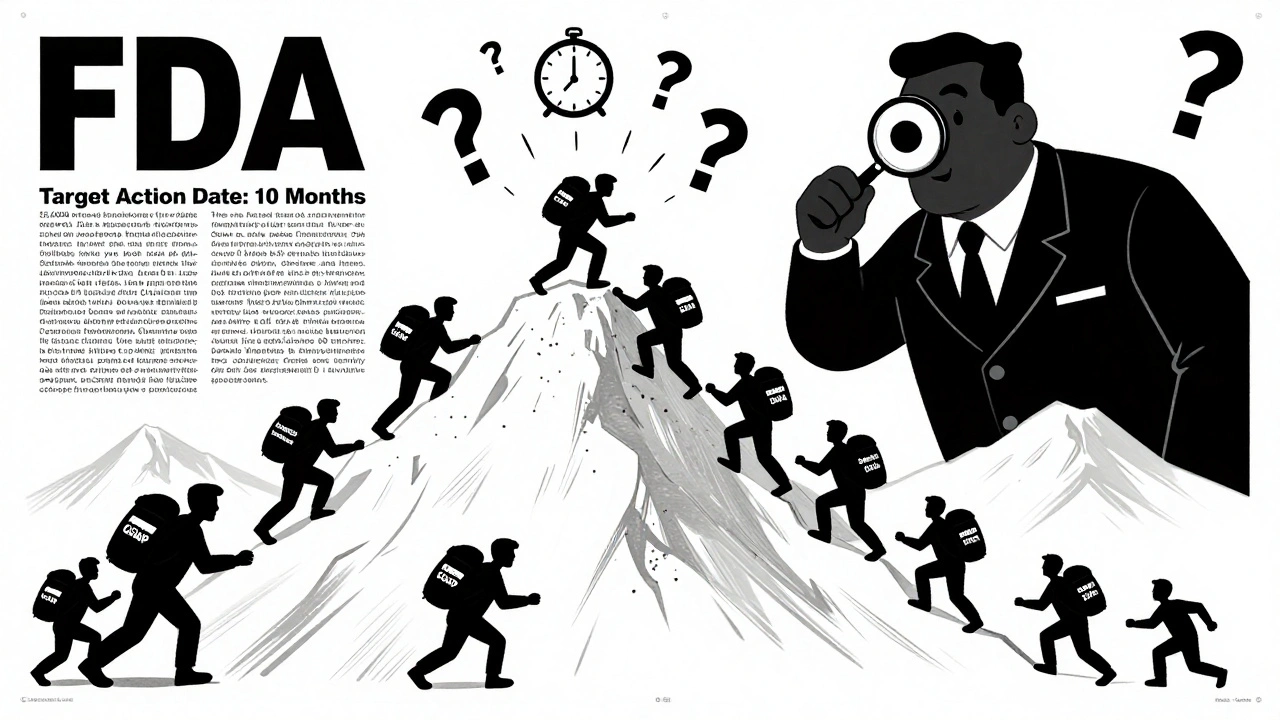
Challenges and Criticisms
Despite its success, the system isn’t flawless. In 2022, 1,842 ANDA applications were still pending. Some had been waiting over three years. Senator Bernie Sanders’ 2022 report highlighted delays tied to understaffing and resource limits within the FDA’s Office of Generic Drugs. Another issue: complete response letters. In 2022, 14.8% of applications were rejected outright-not because the drug was unsafe, but because bioequivalence data didn’t meet standards. Common problems? Small sample sizes, flawed study design, or not following FDA guidance documents. The agency publishes 287 guidance documents just for generic developers. Missing one can sink an application. There’s also public concern. About 22.7% of adverse event reports involving generics cite “lack of effectiveness.” But the FDA’s own analysis found 92.3% of those cases were due to disease progression, not the drug. Still, perception matters. A 2023 CVS survey showed 78.4% of patients trusted generics-but only 63.2% felt they worked exactly the same as the brand. That gap is real. Education is needed.How the System Is Evolving
The FDA isn’t sitting still. In October 2025, they launched a pilot program that speeds up reviews for generic manufacturers who produce drugs in the U.S. Applications from domestic facilities now get a 30% faster review timeline. That’s a direct response to supply chain risks. Over 78% of active pharmaceutical ingredients for generics come from outside the U.S.-mostly India and China. Funding is increasing too. The Generic Drug User Fee Amendments (GDUFA) IV, finalized in September 2024, commits $2.1 billion through 2027. Of that, $412 million is earmarked for complex generics. The FDA is also testing AI tools to help review applications faster. In Q4 2024, AI-assisted reviews were piloted on 12% of ANDAs. The goal? Approve 1,500 to 1,700 generics annually by 2027. Right now, there are over 2,100 pending applications for first-time generics. The backlog is shrinking, but demand is growing.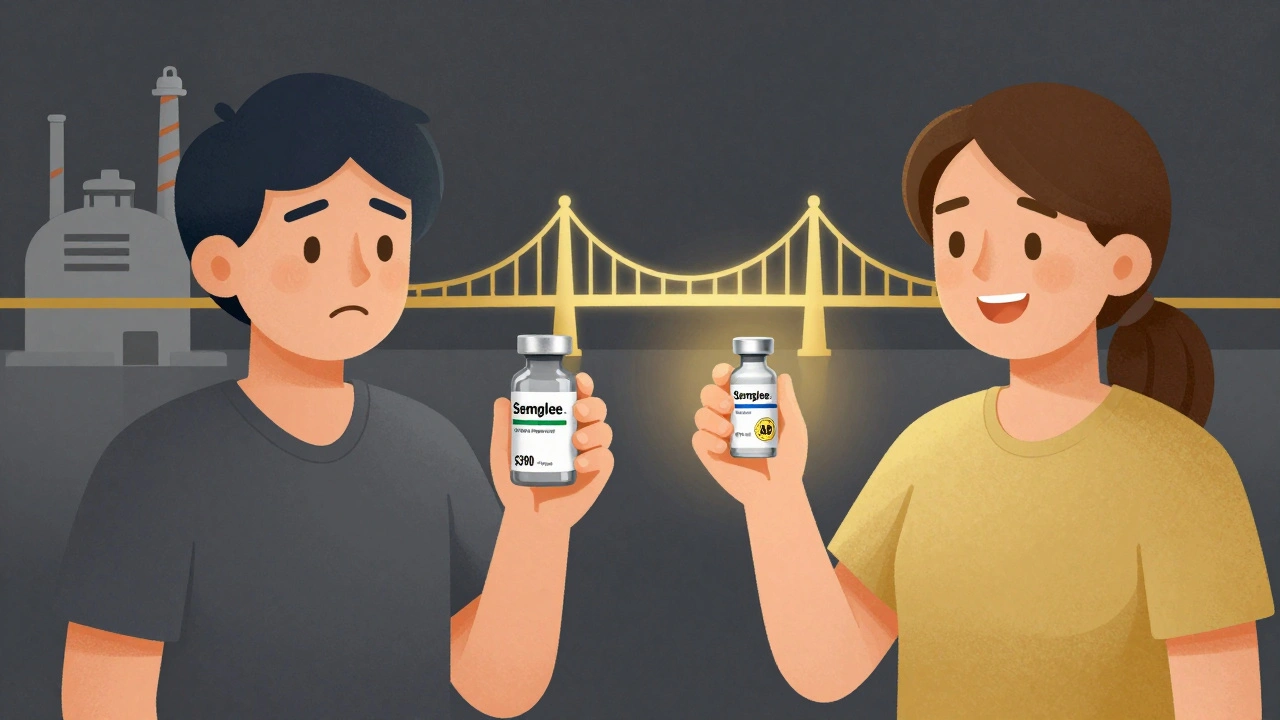
How Companies Succeed in Getting Approved
Successful generic companies don’t just submit paperwork. They build relationships. Nearly 80% of approved ANDAs in 2022 included a pre-ANDA meeting with the FDA. These are informal, non-binding discussions where manufacturers ask questions before spending millions on studies. It saves time and avoids costly rejections. Teams need expertise. A typical ANDA team includes regulatory affairs specialists, pharmaceutical scientists, and clinical pharmacologists. The average salary for a regulatory affairs professional is $115,000. First-time applicants often need 18 to 24 months to learn the system. The biggest hurdles? CGMP compliance (41.7% of RTR letters) and bioequivalence study design (28.3% of RTR issues). The application fee? $389,490 per ANDA. Facility fees range from $207,700 to $415,400 per year. It’s expensive. But compared to the cost of developing a new drug, it’s a bargain.What This Means for Patients
You don’t need to understand bioequivalence curves or CGMP standards to benefit. But knowing the FDA’s role helps you trust the system. When your pharmacist hands you a generic, it’s not a cheaper knockoff. It’s a drug that met the same high bar as the brand-name version-just without the marketing budget. The FDA doesn’t just regulate. It protects. It ensures that a pill made in a factory in New Jersey works the same as one made in a factory in Hyderabad. It keeps prices down without sacrificing safety. And as more complex generics-like biosimilars and long-acting injectables-enter the market, that role becomes even more critical. The next time you pick up a generic prescription, remember: behind that low price tag is a system designed to be fair, scientific, and relentless in its pursuit of patient safety.How long does it take the FDA to approve a generic drug?
The FDA aims to complete its review of a standard ANDA within 10 months. For priority applications-like first generics or drugs in shortage-the target is 8 months. But delays happen. In 2022, over 300 applications waited more than three years due to backlogs. The FDA’s new pilot program for U.S.-based manufacturers aims to cut review times by 30%.
Are generic drugs as safe as brand-name drugs?
Yes. The FDA requires generics to have the same active ingredient, strength, dosage form, and route of administration as the brand-name drug. They must also prove bioequivalence-meaning they deliver the same amount of drug into the bloodstream at the same rate. The agency inspects manufacturing facilities and monitors adverse events. Of the 22.7% of adverse reports citing generic inefficacy, 92.3% were found to be due to disease progression, not the drug itself.
Why do some people say generics don’t work as well?
Some patients notice differences in size, color, or inactive ingredients, which can affect how they feel-even if the drug works the same. Others may experience changes when switching from brand to generic, especially with narrow-therapeutic-index drugs like warfarin or levothyroxine. But these aren’t due to lower quality. The FDA investigates every complaint and has found no consistent evidence that generics are less effective. Patient education and consistent prescribing help reduce these perceptions.
What’s the difference between an ANDA and an NDA?
An NDA (New Drug Application) is for brand-name drugs and requires full clinical trials proving safety and effectiveness. An ANDA (Abbreviated New Drug Application) is for generics and only requires proof of bioequivalence to an already-approved brand. NDAs cost over $2 billion and take 10-15 years. ANDAs cost under $7 million and take 3-4 years. The FDA allows this shortcut because the original drug’s safety and efficacy are already established.
How does the FDA ensure generic drugs are made safely?
The FDA inspects all manufacturing facilities-both domestic and foreign-that produce generic drugs. They enforce Current Good Manufacturing Practices (CGMP), which cover everything from raw material testing to final product release. In 2023, 82.7% of generic facilities were inspected. If a facility fails, the FDA can refuse approval or even block imports. The agency also uses data from inspections and adverse event reports to identify and address risks.
Are all generic drugs listed in the FDA’s Orange Book?
Yes. The FDA’s Orange Book lists all approved drug products with therapeutic equivalence evaluations. Each generic drug gets an “AB” rating if it’s bioequivalent to the brand. If a drug has a different formulation or delivery method, it may get an “AB” with a qualifier or an “BX” rating, meaning it’s not considered substitutable. Pharmacists use the Orange Book to determine which generics can be swapped without a doctor’s approval.
parth pandya
December 3, 2025 AT 03:55so i just got my generic metformin and honestly? the pills look totally different from the brand. same script, same pharmacy, but now they're these little blue ovals instead of white ovals. i was paranoid for a week until i checked the orange book and saw it was AB-rated. turns out the dye changed. no effect on absorption. FDA's got this. just wish more people knew.
Joykrishna Banerjee
December 4, 2025 AT 07:01Let me elucidate the epistemological fallacy embedded in this narrative: bioequivalence is a statistical mirage constructed by regulatory capture. The 80-125% CI? A manufactured consensus. Real pharmacokinetics demands absolute identity-yet the FDA commodifies proximity as equivalence. This isn’t science. It’s neoliberal pharmacoeconomics dressed in lab coats. And don’t get me started on CGMP inspections in Hyderabad-half those facilities are barely one step above a garage operation with a laminated ‘ISO’ poster. 🤦♂️
Albert Essel
December 6, 2025 AT 01:54It’s easy to dismiss the FDA’s process as bureaucratic, but the reality is far more elegant. Every ANDA submission is a symphony of precision: from the chromatography curves to the stability testing under 40°C/75% RH. The fact that 90% of prescriptions are generics and the system still holds up? That’s not luck. That’s institutional rigor. I’ve reviewed hundreds of these files. The level of detail is staggering. People think ‘cheap’ means ‘low quality.’ They’re wrong.
Gavin Boyne
December 7, 2025 AT 10:18Oh wow, so the FDA is basically a glorified middleman that lets Indian and Chinese factories slap a label on a pill and call it ‘equivalent’? And we’re supposed to trust that? 😂 Tell me, when was the last time you saw a US-made generic insulin? Exactly. The whole system is a shell game. The ‘bioequivalence’ data? Probably cooked. The inspections? Rubber stamps. And don’t even get me started on the $389k fee-that’s just a bribe to keep the big players in control. Wake up, sheeple.
Charles Moore
December 8, 2025 AT 17:21Hey, I just wanted to say thanks for laying this out so clearly. I work in a rural clinic, and every day I see patients who skip doses because they can’t afford the brand. One lady told me she was terrified to switch to the generic because ‘it looked wrong.’ I showed her the Orange Book, explained the 80-125% thing in plain terms, and now she’s on it. It’s not magic-it’s just transparency. The FDA’s system isn’t perfect, but it’s the best we’ve got. Keep pushing the education.
Ignacio Pacheco
December 10, 2025 AT 06:37So let me get this straight: a $2.6B drug gets a $7M copy that’s ‘just as good’? And we’re supposed to believe that the original company didn’t spend decades refining the damn thing? The generic manufacturers aren’t doing anything new-they’re just riding coattails. But hey, if the FDA says it’s fine, I guess I’ll take the $98 insulin. Still… feels like we’re all just pretending the science is flawless. 🤔
Myson Jones
December 10, 2025 AT 18:40I appreciate the depth here. As someone who’s worked with generic manufacturers in the Midwest, I can tell you: the real heroes are the QC chemists in those labs, running HPLC runs at 3 a.m. because a single impurity could delay approval by months. They don’t get headlines. But they’re the ones making sure your pills don’t contain trace heavy metals. The system’s not glamorous-but it’s grounded in real, daily diligence. And that matters.
Gene Linetsky
December 11, 2025 AT 01:43They’re lying. The FDA doesn’t test the pills. They just read the papers. The real drugs are made in China, shipped here in containers, and the FDA never even sees them. They approve based on PDFs. And the ‘bioequivalence’? A scam. The studies use 24 healthy volunteers who are paid $500 to lie about how they feel. Then the FDA says ‘looks good’ and moves on. I’ve seen the emails. They know. They just don’t care.