
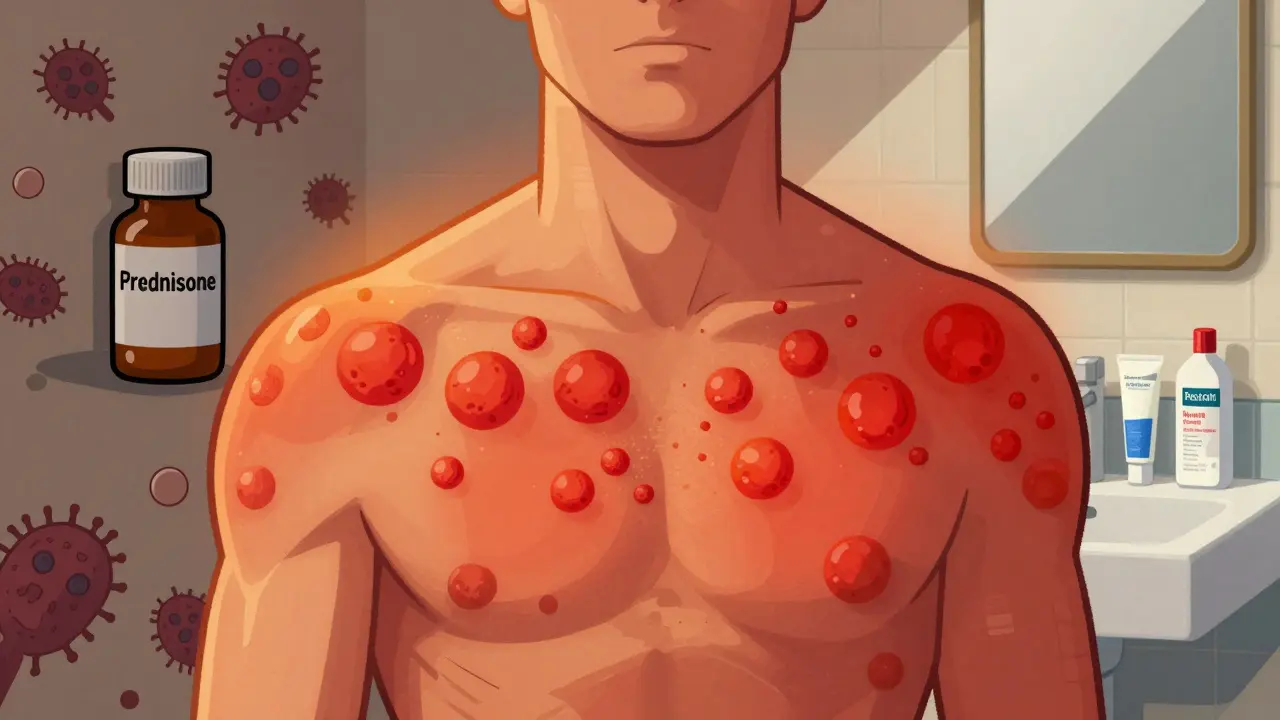
When you start taking steroids-whether for asthma, an autoimmune disease, or after a transplant-you don’t expect your skin to turn against you. But for many people, that’s exactly what happens. Within weeks of beginning treatment, red bumps appear on the chest, back, or face. They’re not the kind of breakout you can scrub away with face wash. These are steroid-induced acne, a direct side effect of the medication itself. And if you’re on high-dose steroids, you’re one of 10 to 20% of patients who will develop it.
Unlike regular acne, this isn’t caused by oily skin or clogged pores alone. It’s triggered by how steroids interact with your skin’s natural bacteria and immune response. Research from 1973 first linked corticosteroids to acne-like eruptions, and since then, we’ve learned more. The condition shows up as clusters of identical, red, inflamed bumps-often without blackheads or whiteheads at first. They cluster on the chest and upper back more than the face. In about 30-40% of cases, it’s not acne at all, but Malassezia folliculitis, a yeast overgrowth that causes itchy, uniform pimples. This distinction matters because treating one like the other won’t work.
Why Steroids Break Out Your Skin
Steroids-both medical corticosteroids like prednisone and illegal anabolic steroids-change how your skin behaves. They suppress your immune system, which sounds good for inflammation, but it lets bacteria and yeast grow unchecked. One key mechanism involves Toll-like receptor 2 (TLR2), a protein on your skin that normally helps fight off invaders. Steroids overactivate TLR2, making your skin overreact to Propionibacterium acnes, the bacteria that lives harmlessly on most people’s skin. This triggers inflammation, leading to those angry red bumps.
It’s not just about dosage. People on 20mg or more of prednisone daily are at higher risk. But even lower doses can cause problems if you’ve had acne before, or if you’re under 30. Teenagers and young adults are more sensitive. And if you’re using anabolic steroids for bodybuilding, the risk jumps even higher. In fact, dermatologists now see more cases of severe “bodybuilding acne” than ever before, partly because these drugs are easier to buy online-and often counterfeit.
How It Looks: Not Your Typical Acne
Regular acne varies: blackheads, whiteheads, cysts, pustules. Steroid acne is different. It’s uniform. Think dozens of identical small red bumps, all the same size, appearing suddenly. They often show up on the chest, shoulders, and upper back first. Facial breakouts happen too, but they’re less common. The lesions don’t respond to your usual acne routine-no amount of salicylic acid or benzoyl peroxide will fix it if the root cause is still there.
Some patients get a second type: Malassezia folliculitis. This looks like acne, but it’s caused by yeast. The bumps are itchy, shallow, and don’t develop comedones. They’re often mistaken for bacterial acne, leading to wrong treatments. If you’ve tried antibiotics and nothing worked, this might be your issue. A simple test: apply ketoconazole shampoo to the affected area. If the bumps fade within a week, it was yeast-not bacteria.
Topical Treatments That Actually Work
The good news? You don’t have to wait until you stop steroids to fix this. There are effective topical options that work even while you’re still on the medication.
- Tretinoin 0.05% cream or gel: This is the gold standard. A landmark 1973 study showed 85-90% clearance in patients using it daily, even while continuing prednisone. Start slow-every other night-to avoid irritation. Apply a pea-sized amount to the entire affected area, not just individual spots. Results take 6-12 weeks, but most see improvement by week 4.
- Benzoyl peroxide 5% wash: Use this as a body wash on the chest and back. Leave it on for 2-3 minutes before rinsing. It kills bacteria, reduces inflammation, and helps unclog pores. Use 3-4 times a week. Don’t use it with tretinoin on the same night-it can be too harsh.
- Ketoconazole 2% shampoo: For yeast-related folliculitis. Wet the skin, apply the shampoo like a mask, leave it on for 5-10 minutes, then rinse. Do this 2-3 times a week. It’s cheap, effective, and available over the counter.
- Selenium sulfide 2.5% shampoo: Another option for yeast. Use the same way as ketoconazole. Works well for persistent cases.
Important: Avoid scrubs, loofahs, or harsh exfoliants. Steroid skin is already fragile. Aggressive cleaning makes it worse. Stick to gentle cleansers and non-comedogenic moisturizers. Look for ingredients like ceramides or hyaluronic acid-they help repair your skin barrier, which steroids damage.
Oral Options: When Topicals Aren’t Enough
If your breakout is widespread or doesn’t improve after 8 weeks of topical treatment, you may need oral meds. But these aren’t one-size-fits-all.
- Doxycycline (100mg twice daily): Effective for bacterial acne and inflammation. Use for no longer than 3-4 months to avoid antibiotic resistance. Most dermatologists recommend this as a bridge, not a long-term fix.
- Spironolactone (25-50mg daily): Especially helpful for women. It blocks androgen hormones that worsen acne. Works best when combined with tretinoin. Side effects include increased urination and menstrual changes.
- Oral contraceptives: For women, pills with ethinyl estradiol and progestin can help regulate hormones. Not an option for men.
- Isotretinoin (Accutane): This is powerful. It shrinks oil glands and clears stubborn acne. But here’s the catch: if you’re using anabolic steroids, isotretinoin can trigger a dangerous condition called acne fulminans. This causes painful, ulcerated lesions and fever. There are documented cases of patients hospitalized after starting isotretinoin while still on bodybuilding steroids. For corticosteroid users (not anabolic), isotretinoin is often the best solution-but requires strict monitoring, pregnancy prevention programs (iPLEDGE), and blood tests.
Never start isotretinoin without seeing a dermatologist. And if you’re using anabolic steroids, don’t even consider it. The risk outweighs the benefit.
Lifestyle Adjustments That Help
Medication alone won’t fix everything. Your daily habits play a big role.
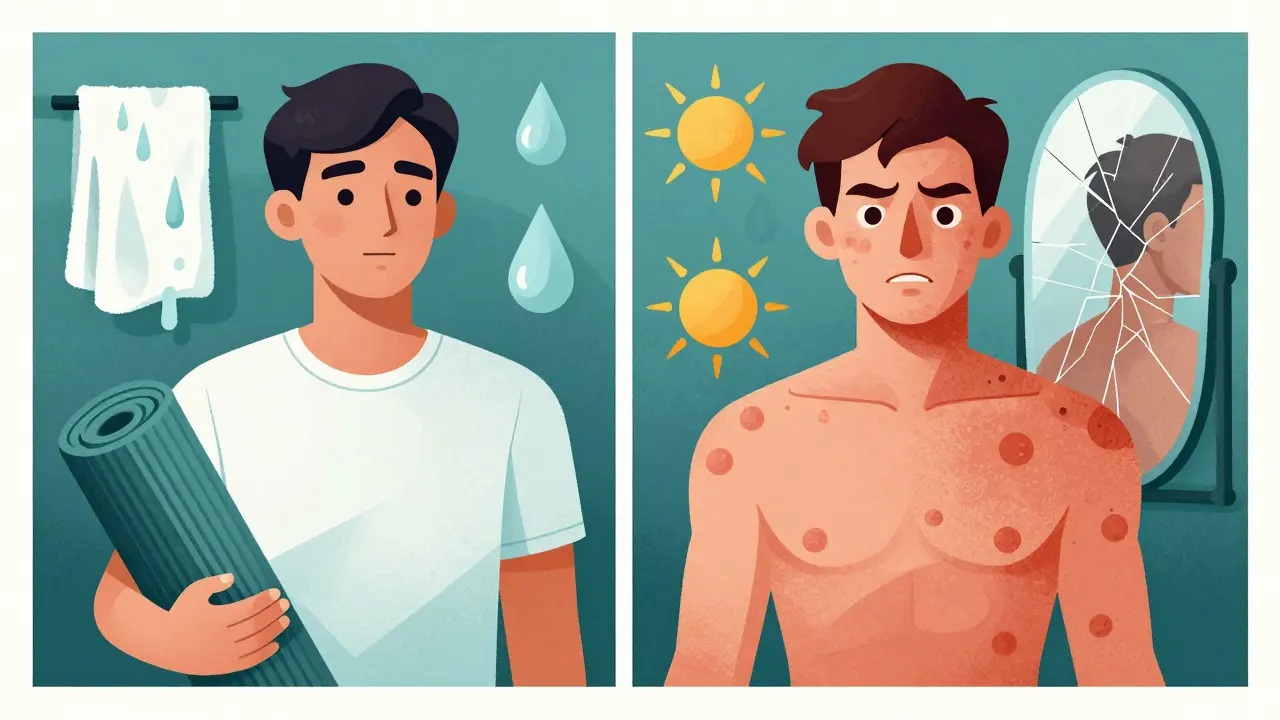
- Shower after sweating: Heat and sweat trap bacteria and yeast on skin. If you work out, shower within 30 minutes. Use a gentle, fragrance-free body wash.
- Change clothes daily: Especially workout gear. Sweat-soaked fabrics breed microbes. Opt for breathable cotton.
- Watch your diet: While sugar and dairy don’t cause steroid acne, they can worsen inflammation. Cut back on processed carbs and sugary drinks. Focus on vegetables, lean protein, and omega-3s from fish or flaxseed.
- Protect your skin from the sun: Both steroids and acne treatments increase sun sensitivity. Use a mineral sunscreen (zinc oxide or titanium dioxide) daily. Avoid tanning beds.
- Don’t pick or squeeze: This leads to scarring and infection. Steroid skin heals slower. Let it clear naturally.
What to Expect: Timeline and Recovery
Most steroid acne clears within 4 to 8 weeks after stopping the steroid. But if you’re on long-term therapy-for asthma, lupus, or a transplant-you can’t just quit. That’s why treatment starts with what you can control: topical care, hygiene, and avoiding triggers.
Improvement with tretinoin usually starts at 6 weeks. Full results take 3-4 months. If you’re using ketoconazole for yeast, you might see relief in just a few days. Patience is key. Don’t switch products every week. Stick with one routine for at least 8 weeks before deciding it’s not working.
Scarring is a real risk. The longer you wait to treat it, the higher the chance of permanent marks. That’s why dermatologists now recommend starting treatment as soon as lesions appear-even if you’re still on steroids.
What Doesn’t Work
There’s a lot of misinformation out there.
- Tea tree oil: May help mild acne, but not steroid-induced. Too weak, and it can irritate steroid-thinned skin.
- Over-the-counter retinol: Not strong enough. You need prescription tretinoin.
- Antibiotic creams alone: They stop working fast. Resistance builds quickly. Always combine with benzoyl peroxide.
- Home remedies like lemon juice or baking soda: These damage your skin barrier. Avoid.
If you’re using anabolic steroids, the only real solution is to stop. No topical treatment will fully clear the acne while you’re still cycling. And don’t believe online forums that say “isotretinoin fixes bodybuilding acne.” That’s a myth. It can make things catastrophic.
Can steroid acne go away on its own without treatment?
Yes, but only if you stop taking the steroid. For people on long-term medical steroids, the acne usually won’t clear on its own. Left untreated, it can lead to scarring, skin darkening, and ongoing inflammation. Early treatment with tretinoin or antifungal washes significantly improves outcomes and reduces long-term damage.
Is steroid acne contagious?
No. Steroid acne is not contagious. It’s caused by your body’s reaction to steroids, not by bacteria or yeast you can pass to others. You can’t catch it from sharing towels or touching someone with it. However, if it’s Malassezia folliculitis, the yeast is naturally present on most people’s skin-it only overgrows due to steroid use.
Can I use acne cleansers while on steroids?
Yes, but choose wisely. Avoid harsh, alcohol-based, or exfoliating cleansers. Stick to gentle, fragrance-free, non-comedogenic formulas. Benzoyl peroxide washes are safe and effective. Use them 3-4 times a week, not daily. Overwashing can strip your skin’s natural oils and make irritation worse.
Why does steroid acne take weeks to appear?
Steroids don’t cause acne instantly. It takes time for them to alter your skin’s immune response and microbiome. The process involves changes in oil production, bacterial overgrowth, and inflammation pathways. Most people notice breakouts 4 to 6 weeks after starting steroids, sometimes longer. This delay is why many patients don’t connect the dots until the rash is widespread.
Should I stop my steroid medication if I get acne?
No-not without talking to your doctor. Steroids are often prescribed for life-threatening or serious conditions like organ rejection, severe asthma, or autoimmune disease. Stopping them suddenly can be dangerous. Instead, treat the acne with topical solutions like tretinoin or ketoconazole. Your doctor may adjust your dose or add other medications to help manage side effects.
Steroid-induced acne is frustrating, but it’s treatable. You don’t have to choose between managing your health condition and your skin. With the right combination of topical care, lifestyle tweaks, and medical guidance, you can clear the breakout and protect your skin long-term. The key is acting early-not waiting until it’s severe.