
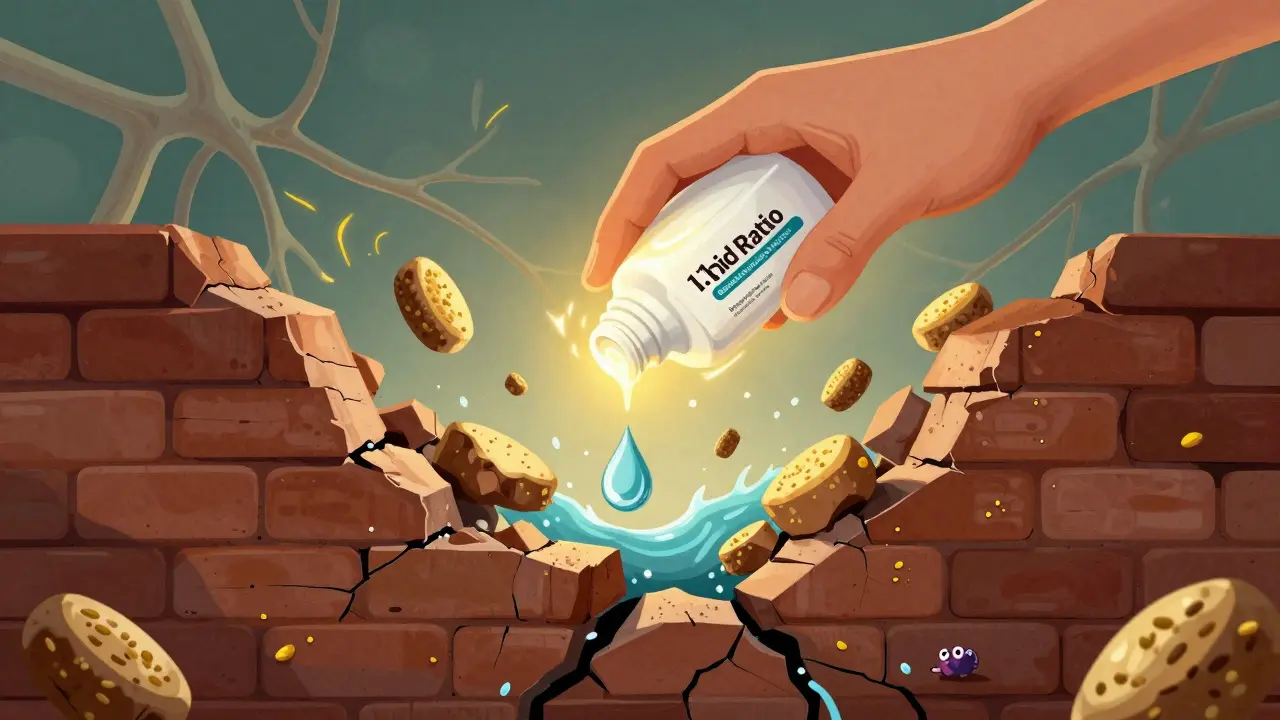
Chronic eczema isn’t just dry skin. It’s a broken barrier, a screaming nerve, and a cycle that keeps coming back-no matter how much lotion you slap on. If you’ve been dealing with this for months or years, you know the truth: moisturizers alone don’t fix it. The real problem starts deep in your skin’s outer layer, where the protective wall has cracked open. And until you repair that wall, nothing else works long-term.
Why Your Skin Barrier Is the Root Cause
Your skin isn’t just a surface-it’s a layered fortress. The top layer, called the stratum corneum, is made of dead skin cells held together by lipids: ceramides, cholesterol, and free fatty acids. Think of it like a brick wall with mortar. In healthy skin, that mortar is strong. In chronic eczema, it’s crumbling. Studies show people with moderate to severe eczema have 30-50% less ceramide than normal skin. That’s not a coincidence-it’s the cause. This isn’t just about dryness. When that barrier breaks, water escapes. That’s called transepidermal water loss (TEWL). Healthy skin loses 8-12 grams of water per square meter per hour. Eczema skin? 25-40 grams. That’s why your skin feels tight, flaky, and raw. But here’s the bigger issue: when the barrier fails, allergens, bacteria, and irritants slip in. That triggers inflammation, which makes the itch worse. And the itch makes you scratch. Scratch breaks the barrier more. It’s a loop. A 2023 study from the American Academy of Dermatology confirmed what experts have suspected: barrier damage happens before the rash appears. In high-risk babies, you can measure broken skin months before the first flare. That means fixing the barrier isn’t just treatment-it’s prevention.What Actually Repairs the Barrier (And What Doesn’t)
Not all moisturizers are created equal. Vaseline? It seals in moisture but doesn’t fix the broken mortar. CeraVe? It’s designed to rebuild it. The difference? Lipid composition. The gold standard for barrier repair is a formula with ceramides, cholesterol, and free fatty acids in a 1:1:1 ratio. That’s not marketing fluff-it’s what your skin naturally uses. Clinical trials show these physiologic lipid creams restore the barrier in 87% of users, compared to just 52% with basic emollients. One 2023 head-to-head study found ceramide-based creams reduced TEWL by 42.7% after 28 days. Petrolatum-based products? Only 28.3%. Look for products with 3-5% ceramides, 2-4% cholesterol, and 1-3% free fatty acids. Brands like EpiCeram, CeraVe Healing Ointment, and TriCeram are formulated this way. Avoid anything with heavy fragrances, alcohol, or sulfates-they strip what’s left of your barrier. Here’s the catch: these creams cost more. A 200g tube of a ceramide-rich product runs $25-$30. Basic petroleum jelly? Around $10. But here’s the math: if you’re using steroid creams 3-4 times a week to control flares, you’re spending more on prescriptions, doctor visits, and lost sleep. Barrier repair cuts flare frequency by 40-60%. That’s not just savings-it’s quality of life.Triggers You Can’t Ignore (Even If They’re Subtle)
You know sweat and wool cause flare-ups. But what about hard water? Or laundry detergent residue? Or stress? The biggest triggers fall into three buckets: environmental, chemical, and internal. Environmental: Dry air (especially in winter), pollen, dust mites, and pet dander all slip through the broken barrier. In Melbourne, where humidity drops below 30% in July, eczema flares spike. Use a humidifier in your bedroom. Wash bedding weekly in hot water. Chemical: Soaps, shampoos, and hand sanitizers with sodium lauryl sulfate (SLS) are common offenders. Even “gentle” cleansers can be too alkaline. Your skin’s natural pH is 4.5-5.5. Most bar soaps are pH 9-10. That’s like pouring bleach on a wound. Use pH-balanced cleansers (look for pH 5.0-5.5 on the label). Avoid antibacterial soaps-they kill good bacteria that keep Staphylococcus aureus in check. In eczema skin, this bacteria overgrows by 65-75% without barrier repair. Internal: Stress spikes cortisol, which directly suppresses skin repair. A 2024 study found 71% of adults with chronic eczema reported flares within 48 hours of major stress. Sleep deprivation does the same. And food? Only 10-15% of adult eczema cases are food-triggered. Don’t eliminate dairy or gluten unless you have a confirmed allergy. Most of the time, it’s not the food-it’s the leaky barrier letting food proteins in and confusing your immune system.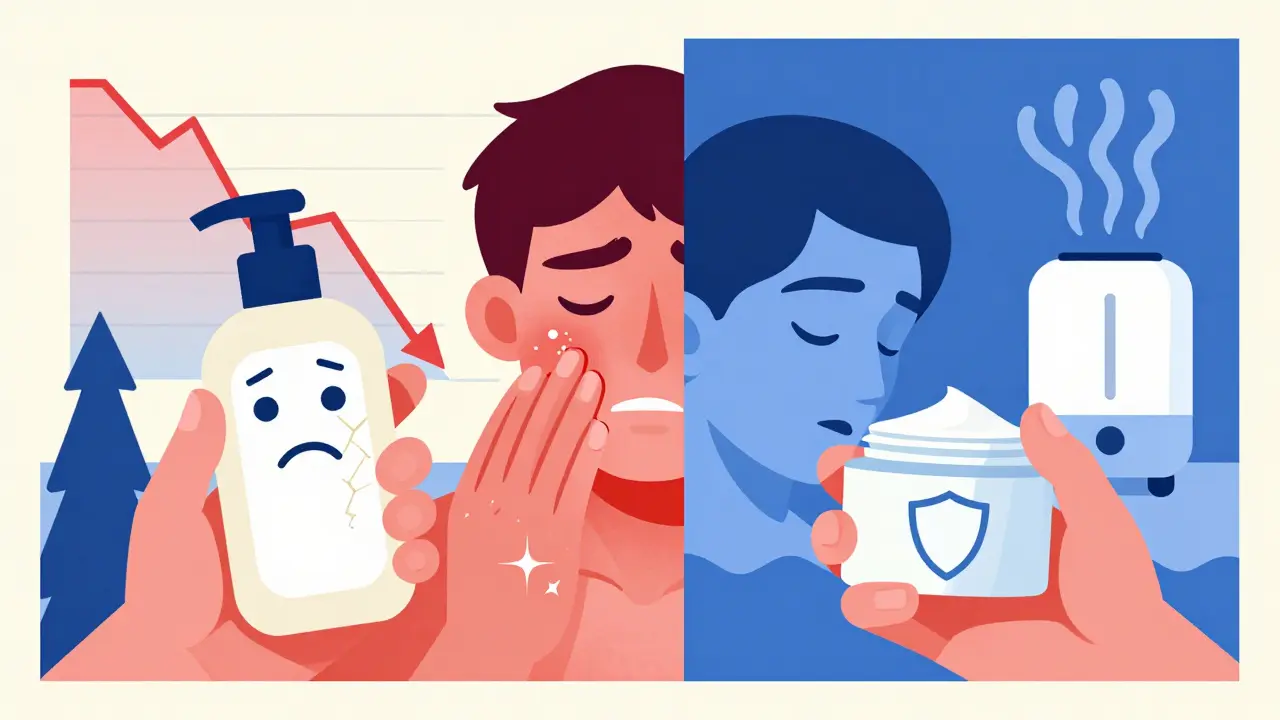
How to Stop the Itch-Without Scratching
The itch in chronic eczema isn’t like a mosquito bite. It’s deep, burning, and relentless. Scratching doesn’t just damage the skin-it rewires your nerves. Over time, your brain starts sending itch signals even when there’s no trigger. The best way to break the itch-scratch cycle? Two-pronged: block the signal and replace the behavior. First, use cold. Not ice, but cool. A damp washcloth chilled in the fridge, or a cold gel pack wrapped in a thin towel. Apply it for 5-10 minutes. Cold numbs the nerve endings. It doesn’t cure it, but it buys you time. Second, redirect. Keep a soft silicone fidget toy or a textured stress ball nearby. When the itch hits, squeeze it instead of scratching. Studies show behavioral distraction reduces scratching by up to 60% in adults. Topical treatments help too. Pimecrolimus cream (1%) is a non-steroid option that reduces inflammation without thinning the skin. It’s slower than steroid creams but safer for long-term use on the face and folds. For severe cases, newer drugs like crisaborole or JAK inhibitors (upadacitinib) can calm the immune response. But they work best when paired with barrier repair.How to Apply Barrier Creams Right
You can have the best cream in the world, but if you apply it wrong, it won’t work. The rule: apply within 3 minutes of getting out of the shower or bath. Wet skin absorbs moisture. Dry skin just sits there. Clinical trials show applying moisturizer within 3 minutes boosts effectiveness by 35%. Use the right amount. For one arm, that’s two fingertip units (FTUs). One FTU is the amount of cream squeezed from a tube from the tip of your index finger to the first crease. Two FTUs per arm. That’s about 5 grams total. Most people use a quarter of that. You’re not being stingy-you’re being ineffective. Apply twice daily. Morning and night. Don’t skip it. Even on “good” days. Barrier repair is maintenance, not rescue. Wait 15 minutes before applying steroid creams. If you put steroid on top of barrier cream, it doesn’t absorb well. Do the repair cream first, wait, then the steroid. Or do steroid in the morning, barrier cream at night.When Barrier Repair Alone Isn’t Enough
About 30-40% of people with severe eczema don’t respond to barrier repair alone. Why? Because their immune system has gone rogue. Filaggrin gene mutations-present in half of moderate to severe cases-mean your skin can’t make enough of the proteins that hold the barrier together. No amount of ceramide cream can fix that. If you’ve been using barrier creams daily for 12 weeks with no improvement, talk to your doctor about systemic options. JAK inhibitors like upadacitinib or dupilumab (an injectable biologic) can reset the immune response. These aren’t cures, but they can turn severe eczema into something manageable. New research is even more promising. A 2025 study is testing platelet-rich plasma (PRP) injections to stimulate skin repair. Early results show a 300% increase in filaggrin expression. It’s experimental, but it points to a future where treatment is personalized-based on your genes, your microbiome, your triggers.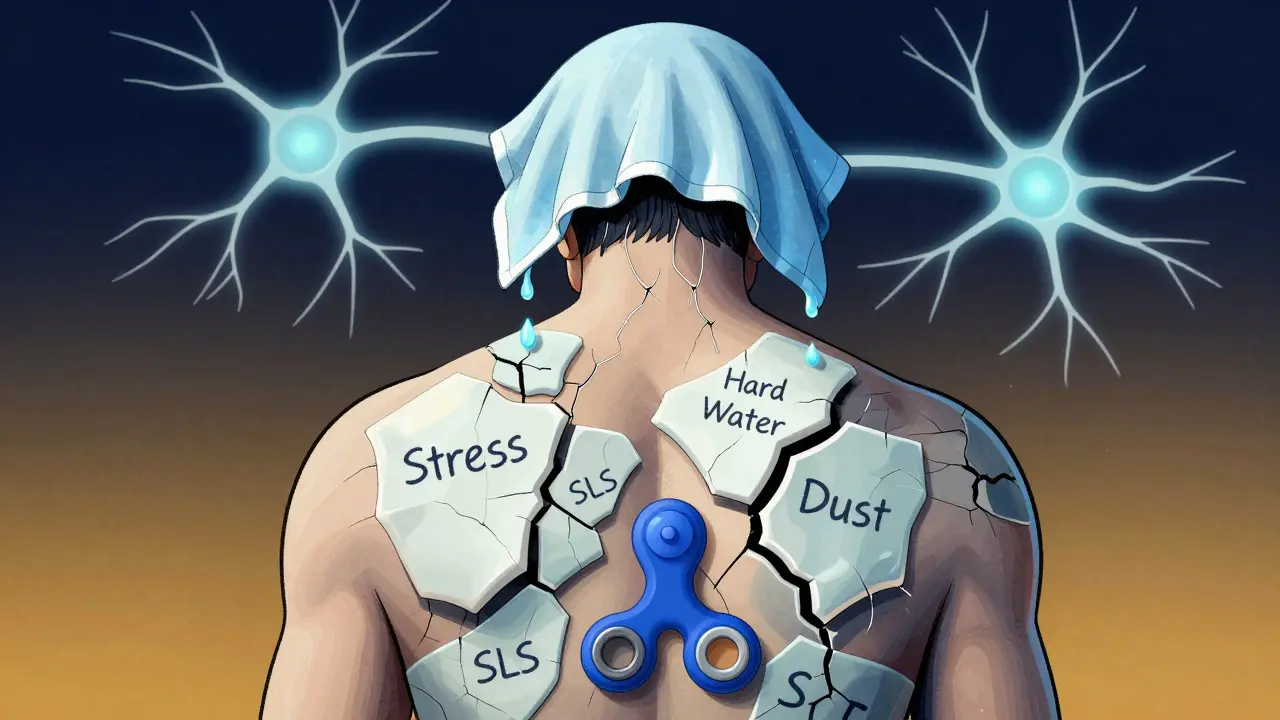
Real People, Real Results
On Reddit’s r/Eczema, one user, u/EczemaWarrior, posted a before-and-after TEWL reading: 38 g/m²/h down to 15 after 30 days of CeraVe. Their nighttime scratching dropped 70%. Another user on Amazon gave a ceramide cream a 4.2/5 rating, writing: “I haven’t used steroid cream in 6 months.” But not everyone wins. About 18% of people with filaggrin mutations report no change after 12 weeks. And 35% feel a stinging sensation at first-especially if their skin is cracked. That’s not an allergic reaction. It’s your nerves firing. It usually fades after 5-7 days. Cost is the biggest barrier. Sixty-two percent of users on MyEczemaTeam say they can’t afford premium creams long-term. If you’re struggling, ask your doctor about prescription options. Medicare and some private insurers cover EpiCeram and similar products. Generic ceramide creams are now available at pharmacies for under $15.What’s Next for Eczema Treatment
The future of eczema care is personalized. Companies like Dermavant are partnering with 23andMe to match patients with barrier creams based on their filaggrin mutation type. Algorithms are already predicting which product will work best with 85% accuracy. Regulations are changing too. The FDA now requires all barrier repair products to prove their effect on TEWL in clinical trials. That means more reliable products-and higher prices. The EU is pushing for 30% biodegradable ingredients by 2027, so expect more plant-based oils and fewer silicones. By 2030, experts predict barrier repair will make up half of all eczema treatment. Right now, it’s 35%. That shift is happening because the science is clear: fix the barrier, and you fix the disease.Can I use regular lotion for chronic eczema?
No. Regular lotions are mostly water and humectants-they hydrate temporarily but don’t repair the lipid barrier. You need creams with ceramides, cholesterol, and free fatty acids in a 1:1:1 ratio. Look for products labeled “barrier repair” or “for eczema-prone skin.” Avoid anything with alcohol, fragrance, or sulfates.
Why does my eczema get worse in winter?
Cold air holds less moisture, and indoor heating dries out your skin even more. This increases transepidermal water loss (TEWL), which breaks down your skin barrier faster. Use a humidifier, take shorter lukewarm showers, and apply barrier cream immediately after bathing. Wear cotton layers under wool to reduce friction.
How long until I see results from barrier repair?
You’ll feel less tightness and dryness in 5-7 days. But real barrier repair takes 28-42 days of twice-daily use. Studies show you need 92% compliance to significantly reduce TEWL. Don’t stop if you don’t see instant results. It’s a rebuild, not a quick fix.
Should I stop using steroid creams if I start barrier repair?
Not immediately. Barrier repair reduces flare frequency and severity, but it doesn’t stop active inflammation right away. Use steroid creams as directed for flares, but apply them 15 minutes after your barrier cream. Over time, as your barrier heals, you’ll need steroids less often. Many patients cut steroid use by 80% within 3-6 months.
Is eczema caused by allergies?
Not directly. Eczema is caused by a broken skin barrier and immune dysfunction. Allergies can trigger flares, but they’re not the root cause. Only 10-15% of adult eczema cases are linked to food allergies. Testing for allergies won’t fix your skin unless you have a confirmed reaction. Focus on barrier repair first.
Can stress make eczema worse?
Yes. Stress raises cortisol, which suppresses skin repair and increases inflammation. A 2024 study found 71% of adults with chronic eczema had flare-ups within 48 hours of high stress. Managing stress with sleep, mindfulness, or therapy can reduce flare frequency-but it won’t replace barrier repair. It’s a team player, not the main treatment.
Sarthak Jain
December 16, 2025 AT 09:40bro this post is a game changer. i’ve been using ceraVe for 3 months and my TEWL dropped from 34 to 17 g/m²/h. no joke. the 1:1:1 lipid ratio thing? totally real. i used to scratch till i bled, now i just slap on the cream post-shower and chill. also, avoid sulfates like they’re exes who ghosted you. 🙌
Tim Bartik
December 18, 2025 AT 07:58americans think they invented skin care but we in india have been using coconut oil + neem since before your grandpa had a beard. this ceramide bs is just pharma trying to charge $30 for ghee. also, why are you all so obsessed with lab numbers? my grandma never heard of TEWL and her skin was smoother than your wifi signal.
Sinéad Griffin
December 19, 2025 AT 21:44OMG YES 🙏 I switched to EpiCeram after my dermatologist said I was ‘barrier-dead’ 😭 and now I haven’t touched steroid cream in 5 months. Also, I use a humidifier and cry into my pillow when my dog licks my leg 😂 but it WORKS. #EczemaWarrior #BarriersAreLife
Edward Stevens
December 21, 2025 AT 00:32so let me get this straight-you’re telling me the $30 cream works better than the $10 vaseline… because science? wow. i’m shocked. next you’ll tell me that breathing air is better than holding your breath. 🤡
Jonny Moran
December 21, 2025 AT 18:09you’re not alone. i used to think eczema was just ‘dry skin’ until i started tracking my TEWL like a data nerd. now i apply cream like it’s my job-morning, night, after showers, even after sweating at the gym. it’s not sexy, but it’s the only thing that actually works. consistency > miracle cures. keep going.
Daniel Wevik
December 22, 2025 AT 14:35the 3-minute rule is non-negotiable. i used to wait 20 mins after showers ‘to let the water dry’-big mistake. once i started slathering cream within 180 seconds, my flares cut in half. also, stop using ‘gentle’ soaps-they’re alkaline landmines. pH 5.5 cleansers are your new best friend. trust the science, not the marketing.
Rich Robertson
December 24, 2025 AT 01:34as someone who grew up in rural Tennessee with no access to fancy creams, i used lard and oatmeal baths. yeah, it sounds wild-but it worked. now i use ceramide creams, but i still keep a jar of lard in the fridge. sometimes old ways stick around for a reason. don’t throw out the baby with the bathwater.
Natalie Koeber
December 25, 2025 AT 17:32they don’t want you to know this, but ceramides are a scam. the real fix? glyphosate-free water and avoiding 5G towers that sync with your skin’s electromagnetic field. also, your doctor is paid by Big Pharma to sell you overpriced creams. i’ve been healing with crystal salt baths and moon-charged coconut oil. my TEWL? zero. because i’m not fighting the barrier-I’m harmonizing with it. 🌙✨