
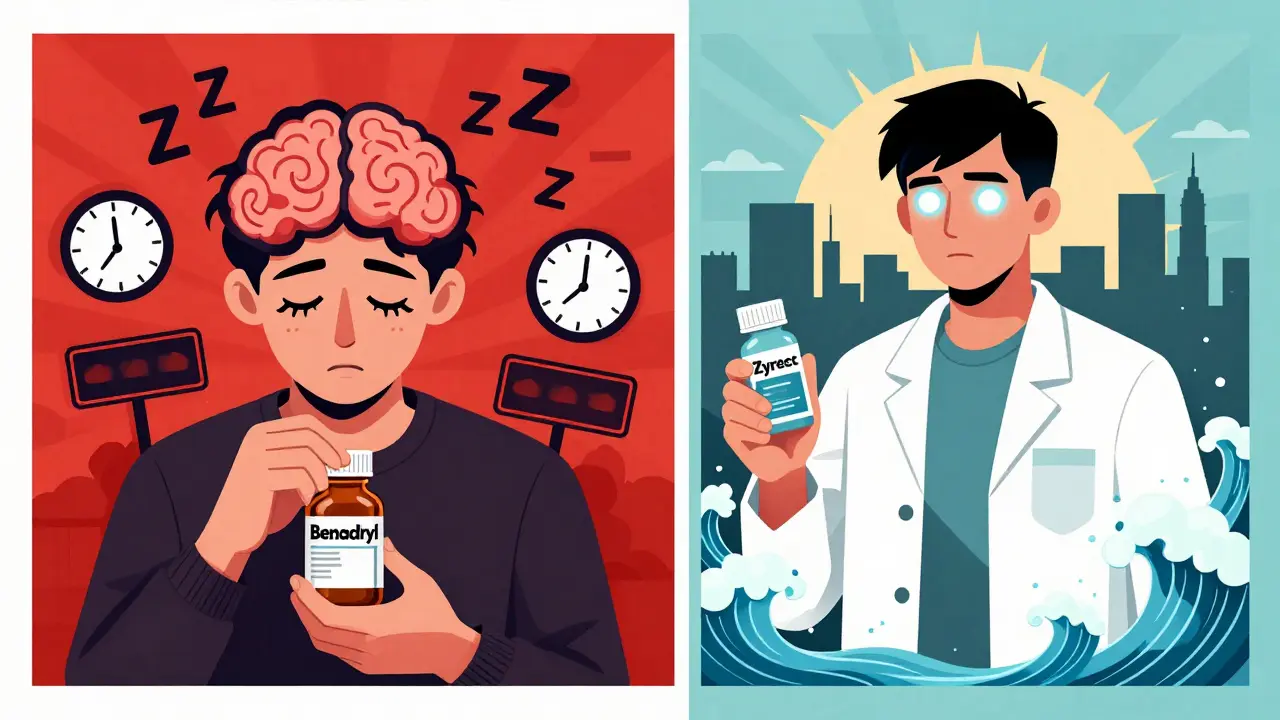
When your nose starts running, your eyes itch, or you break out in hives, antihistamines are often the first thing you reach for. But not all antihistamines are the same. Two main types exist-first-generation and second-generation-and choosing the wrong one can leave you groggy, dry-mouthed, or still suffering. The difference isn’t just about brand names. It’s about how they work in your body, what side effects you’ll feel, and whether they’ll let you drive, work, or sleep without trouble.
What First-Generation Antihistamines Do to Your Brain
First-generation antihistamines like Benadryl (diphenhydramine), Chlor-Trimeton (chlorpheniramine), and Phenergan (promethazine) were developed in the 1940s. They’re cheap, widely available, and fast-acting. If you have a sudden allergic reaction-say, from eating peanuts or getting stung by a bee-they can stop symptoms in under 30 minutes. That speed is why they’re still in many cold-and-flu combos and sleep aids. But here’s the catch: they cross the blood-brain barrier easily. That means they don’t just block histamine in your nose and skin-they also flood your brain. That’s why 50 to 60% of people who take them feel drowsy. It’s not just tiredness. It’s brain fog, slower reaction times, and trouble focusing. Studies show people on these meds perform like they’ve had a couple of drinks when tested on driving simulators. For older adults, the risk is even higher: chronic use has been linked to cognitive decline, similar to low-dose benzodiazepines. They also cause dry mouth, constipation, blurred vision, and trouble urinating-especially in men with prostate issues. These are anticholinergic effects, meaning they block a different brain chemical (acetylcholine) that controls bodily functions. That’s why pharmacists warn against using them long-term in people over 65.How Second-Generation Antihistamines Are Different
Second-generation antihistamines like Zyrtec (cetirizine), Claritin (loratadine), and Allegra (fexofenadine) were designed to fix the problems of the old ones. Developed in the 1980s and 1990s, they were built to stay out of the brain. Their molecules are either too large or too polar to slip through the blood-brain barrier. That’s why they’re called “non-drowsy.” In reality, about 10 to 15% of people still feel a little sleepy on them-especially cetirizine. But compared to Benadryl, that’s a huge improvement. A 2022 meta-analysis found second-generation antihistamines reduced nasal symptoms by 60 to 70%, while first-gen only hit 50 to 60%. They also last longer: one dose works for 12 to 24 hours. That means you take them once a day, not every four to six hours. They’re also safer for long-term use. No major link to dementia. No urinary retention. No blurred vision. That’s why the American Academy of Allergy, Asthma & Immunology now recommends them as first-line treatment for chronic allergies like hay fever or hives. Over 70% of all antihistamine prescriptions in 2023 were for second-generation drugs.When Speed Matters: First-Gen for Emergencies
Second-gen antihistamines aren’t perfect. They take longer to kick in-usually one to three hours. That’s fine for daily prevention, but if you’re mid-attack with swollen lips or a sudden rash, you need something faster. That’s where diphenhydramine shines. Emergency rooms still use it for acute allergic reactions because it works in minutes. Many people keep a bottle of Benadryl in their bag or car for this reason. One Reddit user wrote: “Benadryl saves me during sudden allergy attacks. Zyrtec just doesn’t act fast enough.” That’s why first-gen antihistamines still dominate over-the-counter cold medicine sales. They’re not gone-they’re just used differently.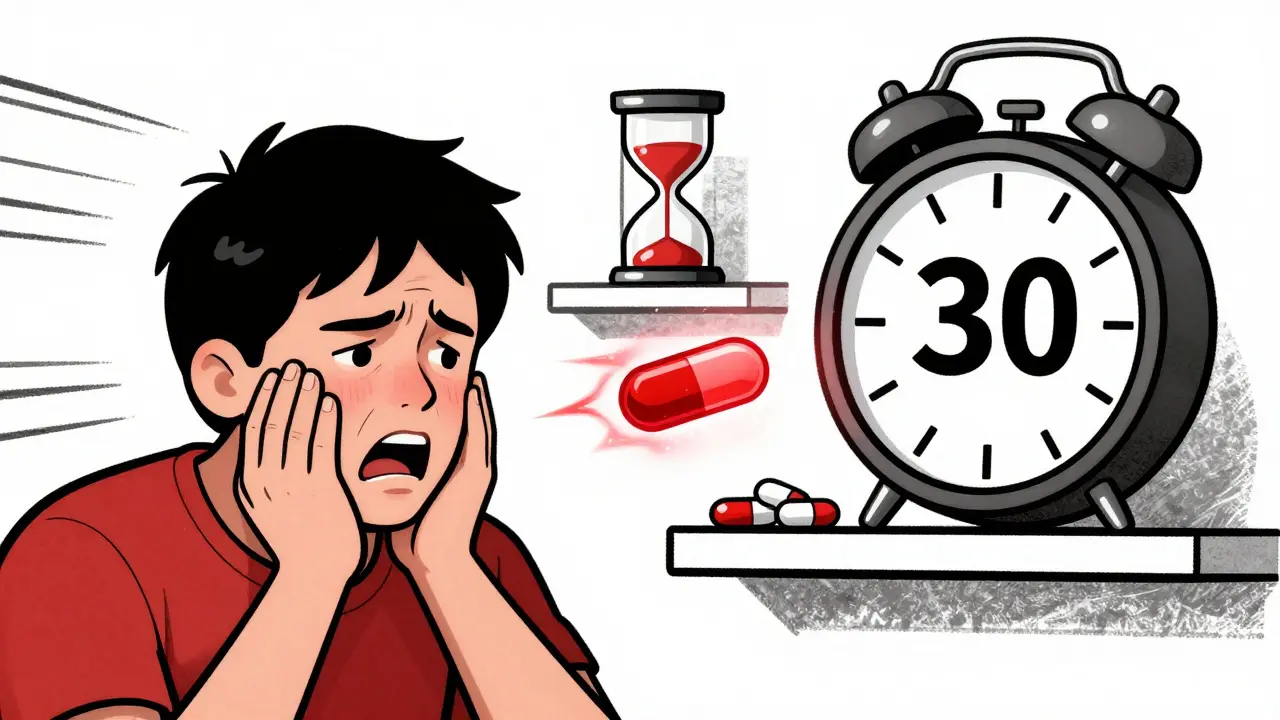
Cost and Accessibility: The Hidden Trade-Off
Price matters. A bottle of 100 generic diphenhydramine tablets costs $4 to $6. That’s less than 6 cents per dose. A 30-day supply of generic cetirizine or loratadine runs $10 to $15. Brand-name versions like Claritin or Zyrtec can hit $25 or more. For people without insurance, that’s a big difference. But here’s the real math: if you’re taking Benadryl four times a day, you’re spending $12 to $18 a month just to stay awake. And if you’re missing work or making mistakes because you’re drowsy, the hidden cost is higher. Second-gen antihistamines might cost more upfront, but they help you live normally.Which One Should You Choose?
There’s no single right answer-it depends on your life.- Choose second-generation if you have seasonal allergies, chronic hives, or need daily relief. Pick Zyrtec if your eyes are itchy. Choose Allegra if your stomach gets upset easily. Use Claritin if you want the mildest option.
- Choose first-generation only if you need fast relief during a sudden flare-up, or if you’re using it at night to help with sleep. Don’t use it during the day unless you’re not driving, working, or operating machinery.
What You Might Not Know About ‘Non-Drowsy’ Labels
Don’t assume “non-drowsy” means “no sleepiness.” The FDA says even second-generation antihistamines can cause drowsiness at higher doses. If you take two Zyrtec tablets instead of one, your risk of feeling sleepy jumps to 20%. Same with Claritin-doubling the dose doesn’t make it stronger, just sleepier. Also, some people metabolize these drugs differently. A small group of people are “slow metabolizers,” meaning the drug builds up in their system. That’s why some people feel tired on Zyrtec even at the standard dose. If that’s you, try Allegra instead. It’s less likely to cause drowsiness because it’s not processed by the same liver enzymes.What’s Next? The Future of Antihistamines
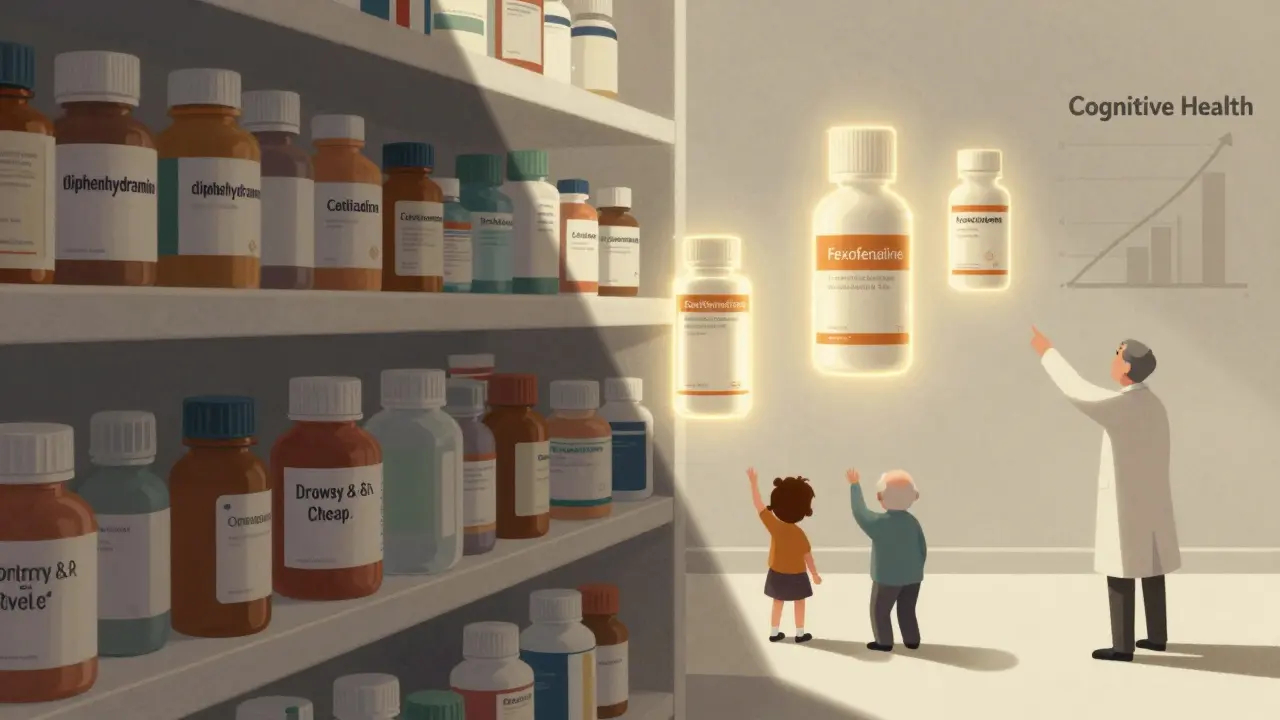
Third-generation antihistamines like desloratadine and levocetirizine are already here. They’re refined versions of second-gen drugs-more targeted, longer lasting, and even less likely to cause side effects. Desloratadine prescriptions rose 12% in early 2024. But they’re still just upgrades of what’s already available. Newer options like bilastine (approved in Europe but not yet in the U.S.) are showing better results for nasal congestion, which has been a weakness for second-gen drugs. And now, combination pills like fexofenadine plus pseudoephedrine are hitting the market, tackling both runny nose and congestion in one tablet. The bottom line? Antihistamines aren’t going away. Allergies are rising-30% of U.S. adults and 40% of kids have them. But the way we treat them is changing. The days of reaching for Benadryl every morning are fading. For most people, the smarter, safer, more effective choice is already on the shelf.Real People, Real Choices
WebMD user reviews tell the story. Zyrtec scores 7.8 out of 10. Benadryl? Only 6.2. The top complaint about Benadryl? “Makes me too sleepy for work.” The top praise for Zyrtec? “Finally found something I can take daily without side effects.” But on Drugs.com, 52% of users say diphenhydramine gives them better sleep than melatonin for allergy-related insomnia. That’s not a flaw-it’s a feature for some. In the end, it’s not about which one is “better.” It’s about which one fits your life.Can I take first-generation antihistamines every day?
It’s not recommended. First-generation antihistamines like Benadryl are designed for short-term use. Taking them daily increases your risk of dry mouth, constipation, urinary problems, and cognitive decline-especially if you’re over 65. Long-term use has been linked to dementia-like symptoms. If you need daily allergy relief, switch to a second-generation antihistamine like Zyrtec or Claritin.
Is Zyrtec better than Claritin?
Zyrtec (cetirizine) tends to work faster and stronger for most people, especially for itchy eyes and skin. Studies show it provides 15-20% more symptom relief than Claritin (loratadine) in moderate-to-severe allergic rhinitis. But Zyrtec is more likely to cause drowsiness-about 10-15% of users feel sleepy. Claritin is gentler and less likely to cause tiredness, making it a better choice if you’re sensitive to side effects.
Why does Allegra cause less drowsiness than Zyrtec?
Allegra (fexofenadine) is less likely to cross into the brain because of how it’s absorbed and metabolized. Unlike Zyrtec, it doesn’t rely heavily on liver enzymes that can vary between people. It’s also not active in the brain even at higher doses. That’s why it’s often recommended for people who still feel drowsy on other second-generation antihistamines.
Can antihistamines interact with other medications?
Yes, especially first-generation ones. They can interact with alcohol, sleeping pills, antidepressants, and muscle relaxants, making drowsiness worse. Some second-generation antihistamines like fexofenadine can be affected by grapefruit juice or antacids, which reduce absorption. Always check with a pharmacist before mixing antihistamines with other drugs.
Are second-generation antihistamines safe for kids?
Yes. Second-generation antihistamines like Zyrtec, Claritin, and Allegra are approved for children as young as 2 years old for allergies. They’re preferred over first-gen options because they don’t cause the same level of sedation or cognitive disruption. Always follow dosing instructions by age and weight-never give adult doses to children.
What should I do if my antihistamine stops working?
If your current antihistamine isn’t controlling symptoms after a week or two, try switching to another in the same class. For example, if Zyrtec isn’t helping, try Allegra or Claritin. If none work, you may need a nasal steroid spray, allergy shots, or a combination treatment. Don’t increase the dose-this can cause side effects without better results. Talk to your doctor or allergist.
Hannah Taylor
December 20, 2025 AT 03:32Jason Silva
December 21, 2025 AT 17:03mukesh matav
December 22, 2025 AT 02:08Peggy Adams
December 23, 2025 AT 22:42Sarah Williams
December 25, 2025 AT 01:33Theo Newbold
December 26, 2025 AT 20:20Jay lawch
December 28, 2025 AT 11:20Christina Weber
December 30, 2025 AT 06:17Cara C
December 31, 2025 AT 11:34Michael Ochieng
January 1, 2026 AT 17:00