
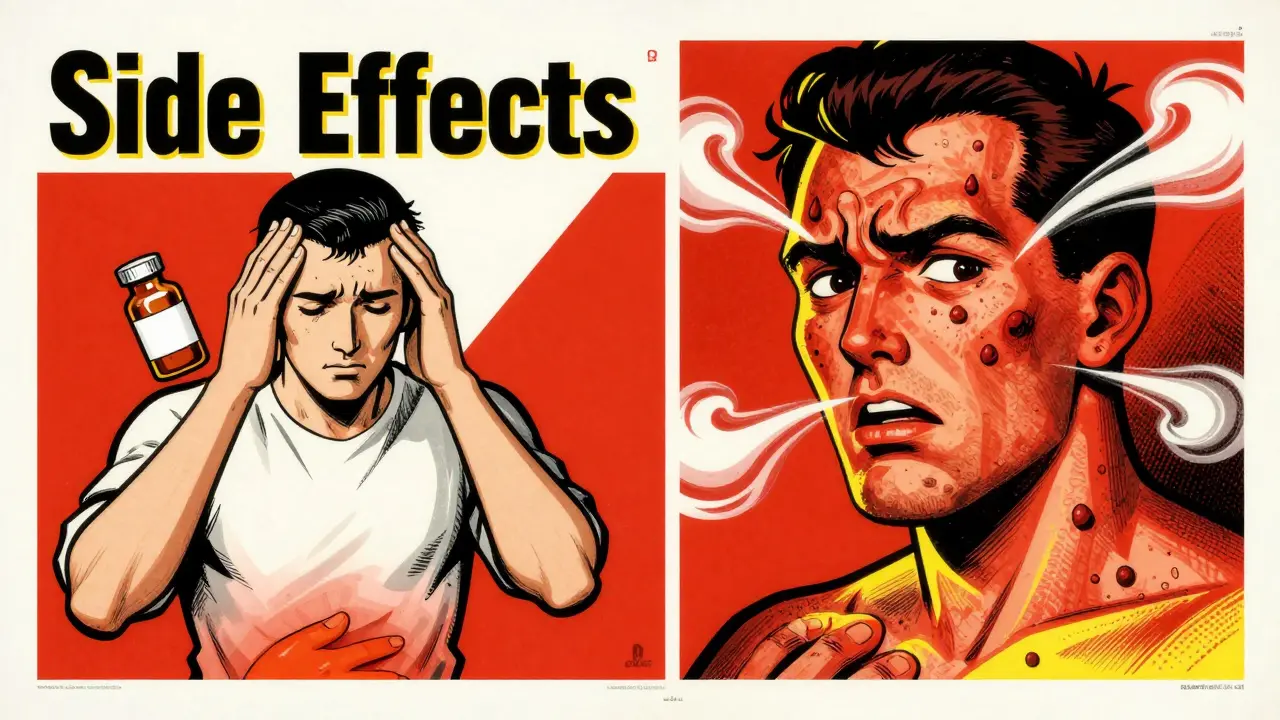
When you start a new medication, it’s normal to feel unsure about what’s normal and what’s dangerous. Is that headache just your body adjusting, or is it something serious? Did your stomach upset come from the pill, or is it an allergic reaction? These aren’t just small worries - they affect what drugs you can take for years to come. Many people think they’re allergic to penicillin, but most aren’t. Others avoid important meds because they mistook a side effect for an allergy. That’s not just inconvenient - it can be dangerous.
Know the Difference Between Side Effects and Allergies
Side effects and allergic reactions are not the same thing. Side effects are predictable, common, and often mild. They happen because the drug affects more than just its target. For example, statins for cholesterol can cause muscle aches in 5-10% of people. Antibiotics like amoxicillin often cause diarrhea in 15-30% of users. These aren’t signs your body is rejecting the drug - they’re just side effects. And here’s the good news: 60-70% of these go away on their own within 2-4 weeks as your body adjusts.
Allergic reactions are different. They’re your immune system overreacting. It doesn’t matter how small the dose is - even a tiny amount can trigger it. Symptoms include hives, swelling of the face or throat, trouble breathing, or a sudden drop in blood pressure. These are emergencies. If you have any of these, stop the medication and get help right away.
The problem? People mix them up. A 2022 study from UCSF found that 70% of patients who say they’re allergic to a drug are actually just experiencing a side effect. That means they’re avoiding meds they could safely use. And when people avoid penicillin because they think they’re allergic - even if they’re not - they end up on stronger, broader antibiotics. That increases antibiotic resistance. In fact, patients wrongly labeled as penicillin-allergic get 63% more broad-spectrum antibiotics, according to JAMA.
What to Say When You Notice Something New
Don’t wait until your next appointment. If something feels off, track it. Write down:
- What you took (name and dose)
- When you took it
- When the symptom started (hours? days?)
- What it felt like (itchy? dizzy? stomach cramps?)
- How bad it was (on a scale of 1-10)
- Did it get better when you skipped a dose?
Bring this log to your appointment. Research from UC San Diego shows that patients who bring written logs reduce miscommunication by 37%. That’s huge. You’re not just describing a feeling - you’re giving your provider hard data.
When you talk to your doctor, use clear, specific language:
- “I started taking metformin last Tuesday. On Thursday, I got nausea and diarrhea. It happens every time I take it, but it fades after a few hours.”
- “I took ibuprofen and broke out in red, itchy bumps within 30 minutes. My lips swelled up.”
These details matter. Mayo Clinic found that patients who say, “I experienced [symptom] within [timeframe] after taking [dose] of [medication]” get accurate assessments 89% of the time. Those who just say, “It made me feel weird,” only get it right 52% of the time.
Ask the Right Questions
Don’t be shy. Your care team expects these questions. In fact, they want you to ask them. Here are exact phrases you can use:
- “What are the most common side effects of this medication? How many people actually get them?”
- “What symptoms would mean this is an allergic reaction and I need to stop immediately?”
- “Is this symptom something that usually goes away, or should I be worried it’s permanent?”
- “Are there other medications in a different class that might avoid this issue?”
These aren’t just questions - they’re tools. The American Medical Association’s 2023 guidelines say that patients who ask these kinds of questions reduce mislabeling by 45%. That means fewer people get stuck with worse, more expensive, or riskier drugs because of a misunderstanding.

Bring Your Medication Bottles
Don’t just list your meds - bring them. Physical bottles. The ones with the labels still on.
UCLA Health found that bringing actual bottles to appointments reduces communication errors by 28%. Why? Because names get mixed up. “I took the blue pill” doesn’t mean the same thing to everyone. “I took 500 mg of metformin ER” does. Also, you might be taking a generic version your doctor doesn’t know about. Or you might be taking a combo pill you forgot to mention.
And if you’ve ever had a reaction before? Bring that info too. Even if it was years ago. You might think it’s irrelevant. But if you had a rash after taking amoxicillin in 2018, that could still be important. Providers need the full picture.
Don’t Assume You’re Allergic Just Because It Felt Bad
Many people think: “I felt awful after this pill - I must be allergic.” But feeling bad doesn’t equal allergic.
Common side effects that get mistaken for allergies:
- Nausea from metformin
- Drowsiness from first-generation antihistamines like Benadryl
- Headaches from blood pressure meds
- Itchy skin from statins
- Diarrhea from antibiotics
These are all common. They don’t mean your immune system is attacking the drug. They mean the drug affects your gut, brain, or muscles - and that’s normal. If you’re not having hives, swelling, or trouble breathing, you’re likely not having an allergic reaction.
And here’s the big one: 90% of people who think they’re allergic to penicillin aren’t. That’s not a guess. That’s from the American Academy of Allergy, Asthma & Immunology. You can get tested. A simple skin test can clear you in minutes. Why risk being stuck with a less effective drug for the rest of your life?
Use the S.O.A.P. Method to Communicate Clearly
There’s a simple framework your provider already uses: S.O.A.P.
- Subjective: What did you feel? (e.g., “I had a rash on my arms.”)
- Objective: What can be measured? (e.g., “The rash appeared 2 hours after taking the pill and lasted 8 hours.”)
- Assessment: What do you think it is? (e.g., “I think it’s an allergy.”)
- Plan: What should we do next? (e.g., “Can we try a different antibiotic? Or test for penicillin allergy?”)
Using this structure helps your provider understand you faster. A Johns Hopkins study showed it improves understanding by 41%. You’re not just complaining - you’re helping them solve the problem.

What Happens If You Don’t Speak Up?
Ignoring symptoms doesn’t make them go away. It makes them worse.
A patient in a University Health case study had chronic headaches for months. Her doctor thought it was stress. She got three different prescriptions - none worked. Then someone noticed she started her blood pressure med right before the headaches began. The med was the cause. She stopped it. Headaches vanished.
And the cost? A 2023 analysis found that mislabeling side effects as allergies adds $1,200-$2,500 per person per year to healthcare costs. That’s because you get more expensive drugs, more tests, more follow-ups.
Plus, you’re at higher risk for antibiotic resistance. If you avoid penicillin because you think you’re allergic - but you’re not - you’re more likely to get a stronger, broader antibiotic. That kills good bacteria and helps superbugs grow.
Tools to Help You Track
The American Pharmacists Association launched the Medication Reaction Tracker app in January 2023. It’s free. It guides you through logging symptoms, timing, and severity. It even tells you whether your reaction sounds more like a side effect or allergy based on clinical guidelines. Over 87,000 people have downloaded it.
The FDA now requires all new medication guides to clearly separate side effects from allergic reaction symptoms. Look for the section that says: “Call your doctor right away if you have…” - those are the red flags.
And if you’ve ever been told you’re allergic to a drug? Ask for a referral to an allergist. A simple test can clear you in one visit. You might be able to go back to the best drug for your condition.
Final Thought: Your Voice Matters
Medications save lives. But they only work if you can take them safely. If you don’t know the difference between a side effect and an allergy, you’re flying blind. You might be avoiding a drug that could help you - or staying on one that’s making you sick.
Don’t guess. Don’t assume. Don’t wait. Write it down. Bring the bottles. Ask the questions. Use the S.O.A.P. method. You’re not being difficult - you’re being smart. And your care team will thank you for it.
How do I know if my reaction is a side effect or an allergy?
Side effects are common, predictable, and often mild - like nausea, drowsiness, or a headache. They usually appear within hours to days and often fade as your body adjusts. Allergic reactions involve your immune system and include hives, swelling, trouble breathing, or anaphylaxis. These happen quickly - often within minutes - and require immediate medical attention. If you’re unsure, track the timing, symptoms, and whether they get worse with each dose.
Can I outgrow a drug allergy?
Yes - especially with penicillin. Studies show up to 90% of people who think they’re allergic to penicillin aren’t. Allergies can fade over time, especially if you haven’t been exposed in years. A simple skin test by an allergist can confirm whether you’re still allergic. If you’re cleared, you can safely use penicillin again - and avoid stronger, riskier antibiotics.
What should I do if I think I’m having an allergic reaction?
Stop taking the medication immediately. If you have hives, swelling of the face or throat, trouble breathing, or dizziness, call emergency services or go to the ER. Do not wait. Even if symptoms seem mild at first, they can worsen quickly. Afterward, schedule an appointment with your doctor or allergist to confirm whether it was truly an allergy or just a side effect.
Why do doctors sometimes miss side effects?
Doctors see hundreds of patients a week. If you don’t clearly describe when symptoms started, how they feel, and how they relate to your dose, it’s easy to miss the connection. A 2023 Johns Hopkins study found that using the S.O.A.P. method (Subjective, Objective, Assessment, Plan) improves provider understanding by 41%. Bringing a symptom log or your medication bottles also helps prevent misunderstandings.
Can I still take a drug if I had a side effect before?
Yes - often. Most side effects are temporary. For example, 60-70% of people who get nausea from metformin or drowsiness from antihistamines find it fades within 2-4 weeks. If the symptom was mild and didn’t involve your immune system (no rash, swelling, or breathing issues), you may be able to continue with adjustments - like taking it with food, changing the time of day, or lowering the dose. Always check with your provider first.
phyllis bourassa
March 5, 2026 AT 23:53Roland Silber
March 6, 2026 AT 10:01Patrick Jackson
March 7, 2026 AT 17:40Adebayo Muhammad
March 8, 2026 AT 01:57Pranay Roy
March 9, 2026 AT 17:06Joe Prism
March 10, 2026 AT 20:55Andrew Poulin
March 11, 2026 AT 10:46amber carrillo
March 11, 2026 AT 11:38Aaron Pace
March 13, 2026 AT 09:53Joey Pearson
March 15, 2026 AT 08:09Amina Aminkhuslen
March 15, 2026 AT 21:24Tim Hnatko
March 17, 2026 AT 12:22Sean Callahan
March 17, 2026 AT 20:39