
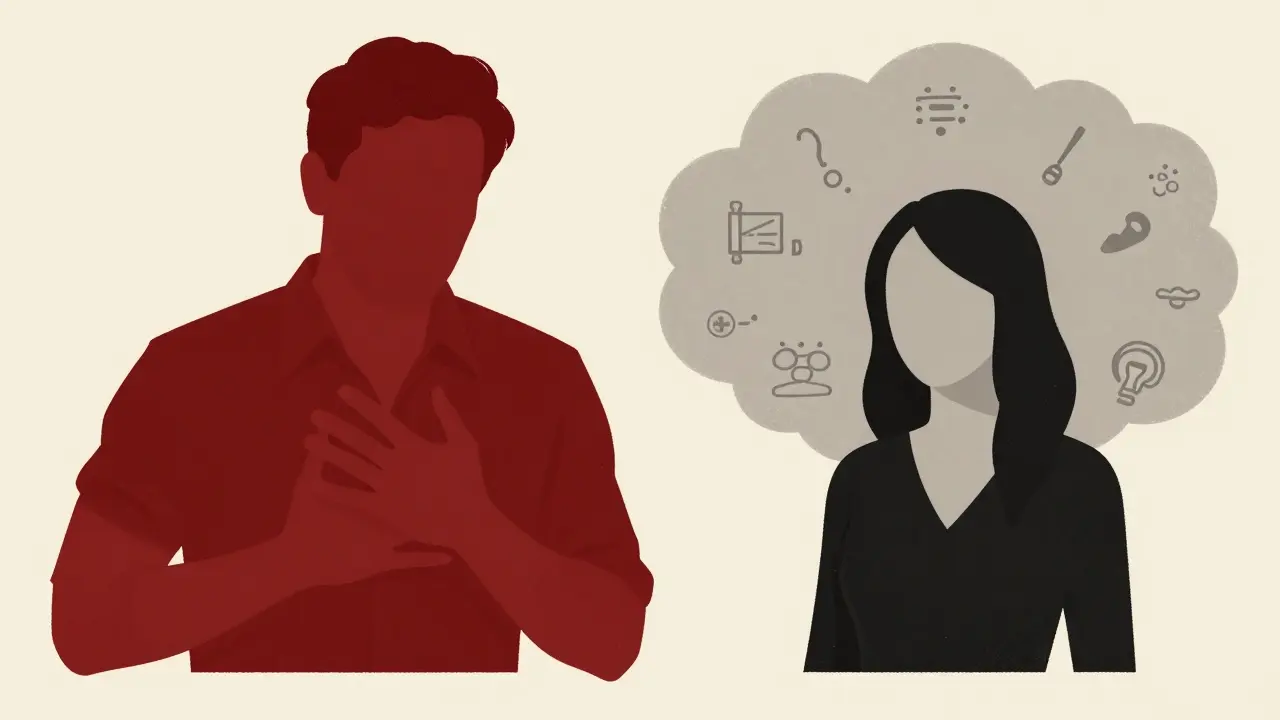
For decades, the image of a heart attack has been the same: a middle-aged man clutching his chest and collapsing. This "Hollywood heart attack" is a dangerous stereotype because it ignores how women's heart disease is a leading cause of death globally that often presents with subtle, atypical symptoms. In fact, many women don't even realize heart disease is their primary health threat. According to the American Heart Association, only 44% of women correctly identify it as their number one killer, despite it claiming one in five female lives in the US.
The problem isn't just a lack of awareness; it's a legacy of medical bias. For years, major studies like the Framingham Heart Study focused almost exclusively on men. This created a massive diagnostic gap. When women go to the ER with heart issues, they are often dismissed as having anxiety or indigestion. This isn't just a nuance-it's a matter of life and death. Women under 55 are seven times more likely than men to be sent home without proper cardiac testing, which leads to a 50% higher mortality rate within a year for those misdiagnosed.
Why Women Experience Heart Disease Differently
It's not just about "different symptoms"; it's about different biology. Women's arteries are generally smaller, and their hearts can react differently to stress and hormones. While men often deal with major blockages in the large coronary arteries, women are twice as likely to develop microvascular disease, which affects the tiny vessels of the heart. This doesn't always show up on a standard angiogram, making it harder to catch.
There are also conditions that hit women far more frequently. For instance, Spontaneous Coronary Artery Dissection (SCAD)-where a tear occurs in a heart artery-and Takotsubo Syndrome (also known as broken heart syndrome) are significantly more common in women. These conditions can trigger a heart attack even in women who have no traditional risk factors like high cholesterol or smoking.
Spotting the "Atypical" Symptoms
If you're waiting for crushing chest pain to know something is wrong, you might be waiting too long. While chest pain is still common, 43% of women experience heart attacks without any chest discomfort at all. Instead, look for signs that feel "off" or unrelated to the heart.
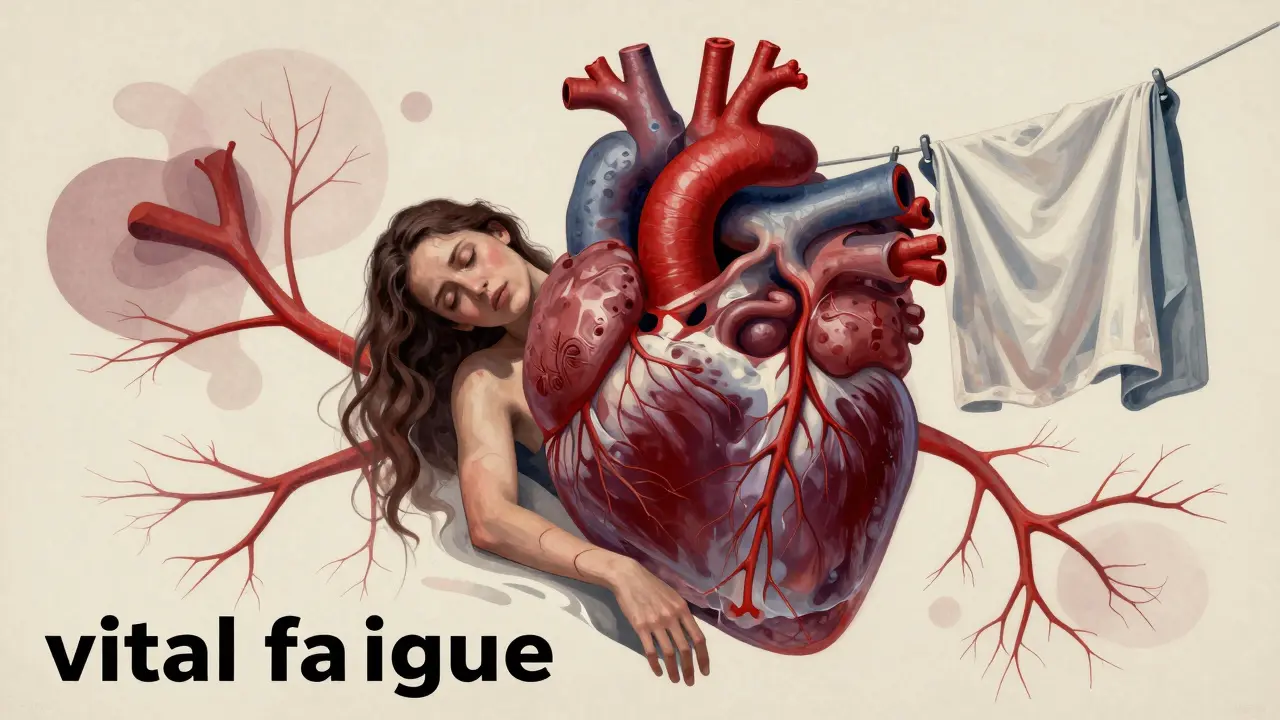
One of the most overlooked red flags is "vital fatigue." This isn't just being tired after a long day; it's an overwhelming exhaustion that makes simple tasks, like making the bed or folding laundry, feel impossible. About 71% of women who have had a heart attack report this specific type of fatigue. When combined with shortness of breath during activities you used to handle easily, it's a signal to call a doctor immediately.
Other common signs include:
- Pain or discomfort in the jaw, neck, back, or arms (reported by 45% of women).
- Nausea or vomiting, which is often mistaken for a stomach flu or food poisoning.
- Sudden light-headedness or dizziness.
- A feeling of pressure or tightness in the chest rather than a "sharp" pain.
| Symptom | Women (%) | Men (%) |
|---|---|---|
| Chest Pain/Pressure | 65% | 90% |
| Jaw, Back, or Arm Pain | 45% | 28% |
| Shortness of Breath | 42% | 29% |
| Nausea | 36% | 18% |
| Extreme Fatigue | 34% | 16% |
Managing Your Heart Health Risks
Prevention for women requires looking beyond the standard "blood pressure and cholesterol" checklist. We need to consider the unique biological milestones women go through. For example, pregnancy complications like preeclampsia can increase the risk of future heart disease by a staggering 80%. If you've had high blood pressure during pregnancy, your heart health needs to be a permanent part of your medical conversations.
Hormonal shifts during menopause also play a huge role. As estrogen levels drop, the protective effects on the cardiovascular system diminish. It's also important to recognize that mental stress is 37% more likely to trigger angina pain in women than in men. Managing stress isn't just about "wellness"; it's a clinical necessity for heart protection.
To stay proactive, keep a log of your cardiac history, including:
- Pregnancy history: Note any instances of gestational diabetes or preeclampsia.
- Menstrual and Menopausal status: Track when you entered menopause and any associated symptoms.
- Family history: Be specific about which female relatives had heart issues and at what age.
- Symptom tracking: If you experience unexplained fatigue for more than two weeks, get it checked.
Breaking Through the Diagnostic Gap
Because women's symptoms are often misinterpreted as anxiety, you have to be your own strongest advocate in the exam room. If you feel something is wrong, don't let a provider tell you it's just "stress" without a cardiac test to prove it. Use specific language: instead of saying "I feel tired," say "I am experiencing vital fatigue that prevents me from doing daily chores." This triggers a different clinical response.
The good news is that technology is catching up. The Corus CAD test is a newer diagnostic tool validated specifically for women, offering about 88% accuracy in assessing coronary artery disease risk-far better than the 72% accuracy of traditional stress tests. Additionally, the rise of Women's Cardiovascular Centers of Excellence means there are now specialized facilities designed to reduce the diagnostic delays that have plagued women for decades.
The Path Forward
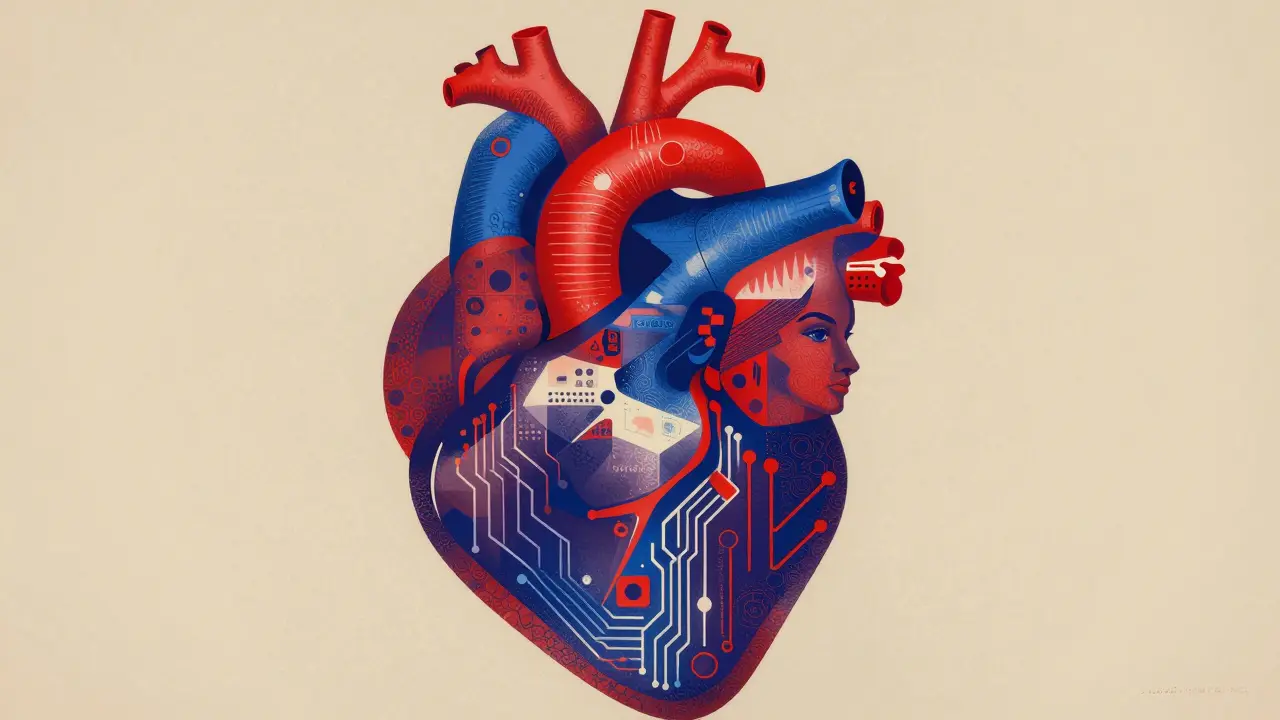
We are moving toward a world of precision medicine where a woman's heart is treated as a distinct biological entity, not just a smaller version of a man's. AI-powered tools are being trained on gender-specific data to help ER doctors spot heart attacks in women faster, potentially reducing misdiagnosis by 40% in the coming years. Initiatives like "Go Red for Women" have already helped millions recognize the signs, but the goal is to move from awareness to action.
Your heart doesn't follow a script, and it certainly doesn't follow a Hollywood movie. By recognizing that shortness of breath, nausea, or extreme fatigue could be a heart warning, you take the power back from a biased system and give yourself the best chance at a long, healthy life.
Why do women's heart attack symptoms differ from men's?
Women's symptoms differ due to anatomical and physiological differences. Women have smaller arteries and are more prone to microvascular disease, which affects the tiny blood vessels of the heart. Because these issues don't always cause the massive blockages seen in men, they don't always produce the classic "crushing" chest pain, leading instead to symptoms like fatigue, nausea, and shortness of breath.
What is "vital fatigue" and why is it important?
Vital fatigue is an extreme level of exhaustion that interferes with basic activities of daily living, such as making a bed or dressing. It occurs in roughly 71% of women who experience a heart attack. It is critical because it often appears as a primary warning sign weeks before an event, yet it is frequently dismissed as aging or general tiredness.
How does pregnancy affect long-term heart health?
Pregnancy can act as a "stress test" for the cardiovascular system. Complications such as preeclampsia or gestational hypertension can increase the risk of developing heart disease later in life by up to 80%. Women with this history should have more frequent cardiac screenings as they age.
Can stress actually cause a heart attack in women?
Yes. Women are 37% more likely than men to experience angina (chest pain) triggered by mental stress. Furthermore, extreme emotional distress can lead to Takotsubo Syndrome, also known as "broken heart syndrome," where the heart muscle weakens suddenly, mimicking a heart attack.
What should I do if I suspect a heart attack but have no chest pain?
If you experience a combination of shortness of breath, unusual nausea, jaw or back pain, and extreme fatigue, seek emergency care immediately. Clearly tell the triage nurse or doctor that you suspect a cardiac event and list your specific symptoms. Request a cardiac evaluation regardless of the lack of chest pain, as many women experience "silent" or atypical heart attacks.
Goodwin Colangelo
April 5, 2026 AT 18:27Glad to see this getting some traction. I've worked with a few patients who were basically gaslit by their doctors until things got critical. The tip about using specific phrasing like "vital fatigue" instead of just "tired" is a game changer for getting the staff to actually listen and run the right tests.
Beth LeCours
April 7, 2026 AT 01:40Too long.
Will Baker
April 8, 2026 AT 13:03Oh sure, because everything in modern medicine is just a giant conspiracy to keep women sick. Maybe the doctors are just bad at their jobs instead of some deep-rooted systemic bias. It's just so convenient to blame a "legacy of bias" when the reality is probably just human error.
Divine Manna
April 9, 2026 AT 20:39The intersection of biological determinism and institutional negligence is a fascinating study in human fallibility. One must wonder if the medical establishment's failure to acknowledge microvascular disease is a symptom of a larger epistemological crisis where the "male default" is treated as the universal truth. It is quite frankly an intellectual embarrassment that we are only now discussing the nuances of SCAD and Takotsubo Syndrome as primary considerations rather than rare anomalies. The lack of gender-stratified data in early longitudinal studies didn't just create a gap; it created a void. To suggest that women are merely "smaller versions of men" is not only scientifically inaccurate but philosophically reductive. We are witnessing the slow collapse of a monolithic medical model in favor of precision medicine, though the cost of this transition has been paid in female lives. It is the height of hubris to assume that a single physiological template could ever encompass the complexity of human cardiovascular health across all genders. Only by dismantling these archaic structures can we hope to achieve true medical equity.
Brian Shiroma
April 10, 2026 AT 20:04Right, because the medical industry is just famously known for being incredibly efficient and totally unbiased. Shocking that they forgot to study half the population for decades.
Joey Petelle
April 11, 2026 AT 12:04Imagine actually believing that a fancy AI is going to save us from the sheer incompetence of the healthcare system. It's a total joke. We're basically just guinea pigs for "precision medicine" now while the elites keep their specialized centers for themselves. Absolute garbage.
Aysha Hind
April 12, 2026 AT 06:14This whole thing reeks of a pharmaceutical shill op to push those "specialized" tests. Wake up people. They create the "gap" and then sell you the Corus CAD test as the only solution. It's a loop of profit designed to keep us anxious and paying. The "vital fatigue" thing is just a way to make every woman feel like she's dying so she spends more on screenings. Absolute circus!
Jenna Carpenter
April 12, 2026 AT 16:35my mom went thru this and the docter told her it was just a panic attack. so scary that they ignore the actual signs just cuz we dont have the "manly" chest pain
Joseph Rutakangwa
April 13, 2026 AT 11:04important stuff here. stay vocal
Ace Kalagui
April 15, 2026 AT 10:13I really feel it is so vital that we all share these stories with our loved ones because the more we talk about it the less power the bias has over us and I honestly believe that if we just keep pushing for better education in our local clinics we can make a huge difference for the next generation of women who might otherwise be ignored by the system.
angel sharma
April 16, 2026 AT 17:26This is the kind of awareness that saves lives and we must spread this information to every corner of the globe because no one should suffer just because they don't fit a stereotype and I am so fired up to see people finally demanding the healthcare they deserve regardless of their gender or where they live!
Sam Hayes
April 17, 2026 AT 14:42the point about preeclampsia is huge and honestly not talked about enough in postpartum care. definitely something to mention to your GP if you had a rough pregnancy
Branden Prunica
April 18, 2026 AT 19:09THE HORROR of being told it's just anxiety while your heart is literally failing! I can't even imagine the trauma of that ER visit. It is a nightmare! A complete and utter nightmare!
Vicki Marinker
April 19, 2026 AT 13:55I find the claim that AI will reduce misdiagnosis by 40% to be laughably optimistic. It is merely replacing one flawed human heuristic with another flawed algorithmic one. Why bother with a new tool when the old one worked just as well at ignoring women?
Dee McDonald
April 20, 2026 AT 18:11GET YOUR SCREENINGS NOW! Stop waiting for the "perfect" time or for the symptoms to be obvious. If you're feeling off, push the doctors until they give you a real answer!