
When you’re seeing more than one doctor, pharmacist, or specialist, keeping track of your medications isn’t just a chore-it’s a matter of life and death. Every year, over 1.5 million people in the U.S. suffer harm from medication errors, and nearly 7,000 die because of them. Many of these mistakes happen not because of bad doctors, but because no one is making sure all the providers know what the others are doing. If you’re managing five, six, or even ten different medications, you’re not alone. But you need to take charge-because no one else will.
Why Medication Communication Breaks Down
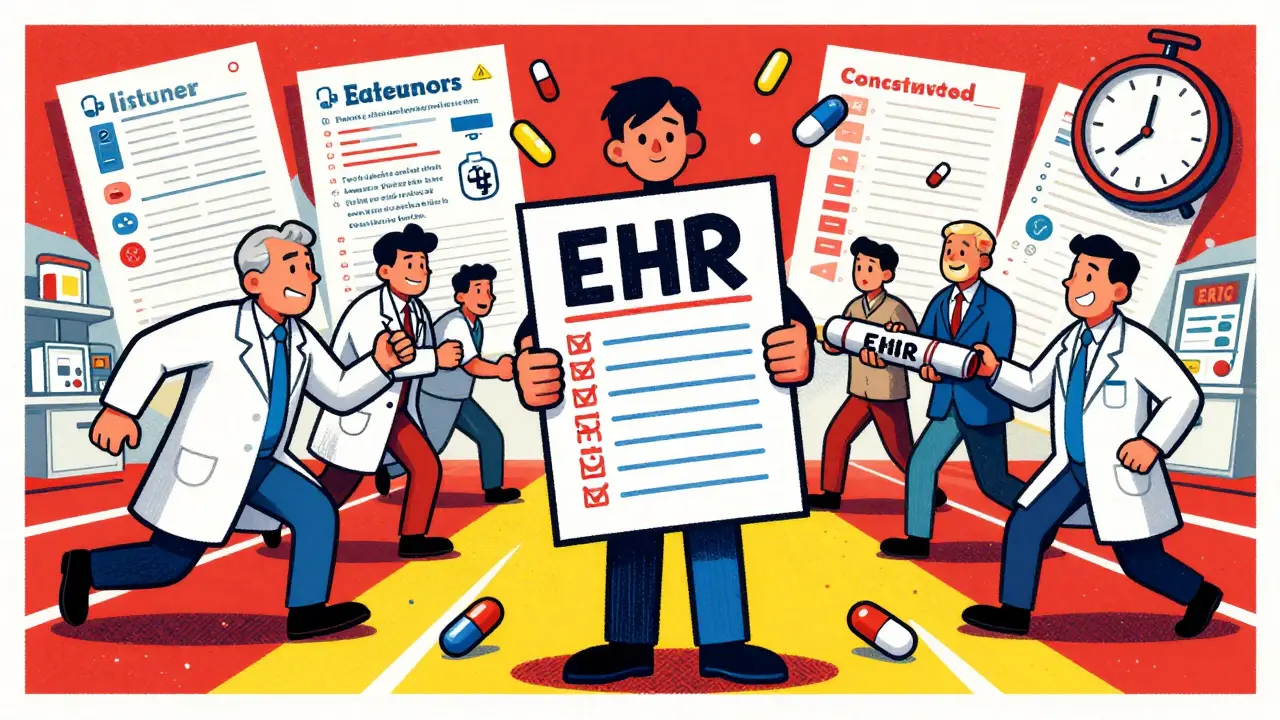
Think of your healthcare team like a relay race. Each provider gets the baton-your prescription, your lab results, your symptoms-and runs their leg. But if they don’t pass the baton properly, someone drops it. That’s what happens when a cardiologist prescribes a new blood thinner without checking with your primary care doctor, or when a pain specialist adds another opioid without knowing you’re already on one from your rheumatologist.
Research from the National Institutes of Health shows that patients seeing three or more providers are over three times more likely to have dangerous drug interactions. Specialists initiate 41% of new medications that clash with existing ones, and 57% of patients say their specialists never consult their main doctor before changing prescriptions. Meanwhile, electronic health records (EHRs)-meant to solve this problem-often don’t talk to each other. A 2023 report found that only 38% of providers can access your full medication history across different hospitals or clinics.
The Four Essential Pieces of Every Medication List
You don’t need a fancy app or a hospital portal. You need a simple, updated list. And it must include four things, every time:
- Name of the medication (include both brand and generic if you know them)
- Dosage (e.g., 10 mg, 500 mg, 2 sprays)
- Frequency (e.g., once daily, twice a week, as needed)
- Purpose (e.g., “for high blood pressure,” “for nerve pain,” “to prevent blood clots”)
This isn’t just advice-it’s a proven method. A 2022 study found that patients who kept this exact list and updated it after every appointment reduced medication errors by 37%. Write it down. Keep a copy in your wallet. Send a photo to a trusted family member. Bring it to every visit-even if you think they already have it.
Who Should Be on Your Team
You’re not just a patient-you’re the captain of your care team. The people who should be talking to each other include:
- Your primary care provider (they should be the hub)
- All specialists (cardiologist, endocrinologist, neurologist, etc.)
- Your pharmacist (yes, the one at your local pharmacy-they’re trained for this)
- Your home care nurse or caregiver (if applicable)
- Family members or caregivers who help you manage meds
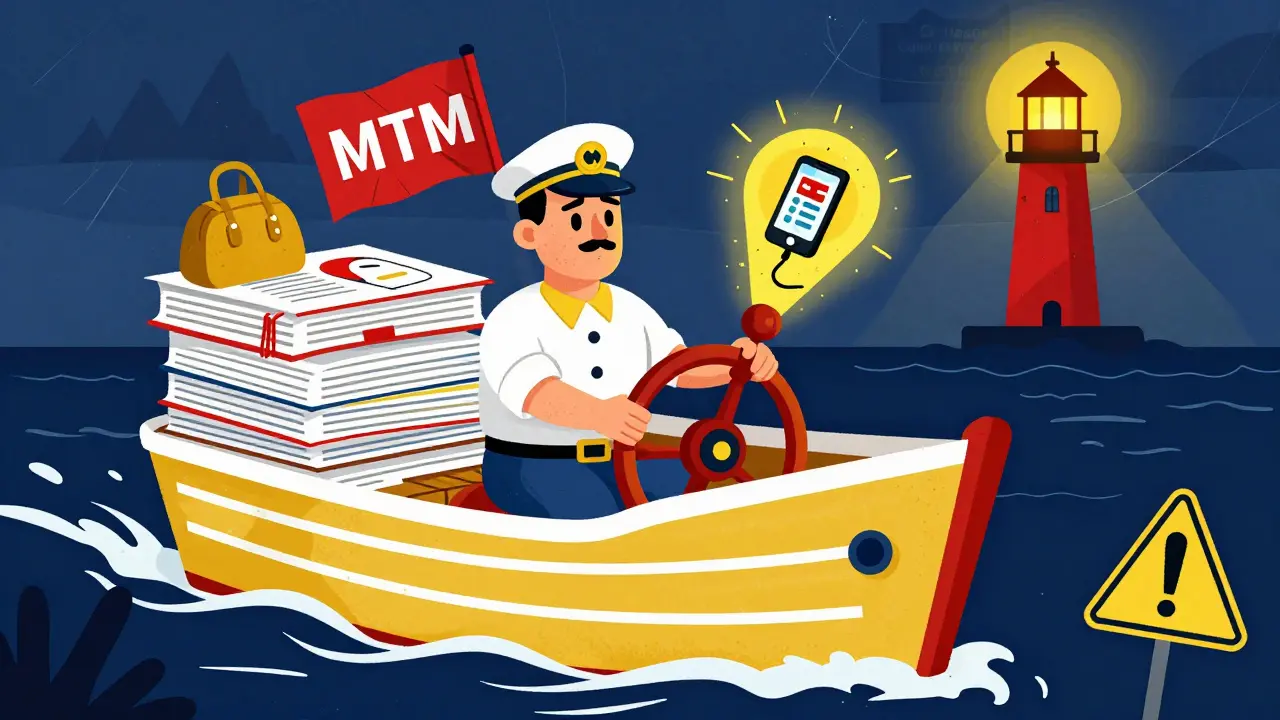
Pharmacists are the hidden heroes here. A 2023 study found that patients who worked directly with a clinical pharmacist had 32% higher adherence to their meds and 63% higher confidence that their regimen was safe. Most independent pharmacies will now offer a free Medication Therapy Management (MTM) session-ask for it. They’ll review everything, flag interactions, and even call your doctors to clarify prescriptions.
How to Make Providers Talk to Each Other
Waiting for them to coordinate? That’s risky. You need to push for it. Here’s how:
- Ask for a care coordinator. If you’re in an Accountable Care Organization (ACO) or Medicare Advantage plan, you likely have one. Ask who they are and how to reach them. ACO patients had 27% fewer hospital readmissions due to better communication.
- Request a medication reconciliation. This is a formal process where your meds are reviewed at every transition-discharge from the hospital, after a specialist visit, or when you switch providers. Ask: “Can we do a full med review before I leave today?”
- Use the Teach-Back Method. After a provider explains a new medication, say: “Just to make sure I got it right, can you have me explain it back?” Studies show this cuts misunderstandings by 45%.
- Bring your list to every appointment. Even if they have an EHR. Don’t assume it’s updated. Say: “Here’s what I’m taking as of today. Can we check this against your records?”
Track What’s Going On in Your Body
Doctors don’t see you every day. You do. Keep a simple health journal for two weeks before each appointment. Write down:
- Any new side effects (dizziness, nausea, sleep changes)
- When you missed a dose or felt worse
- Changes in mood, appetite, or energy
- Any falls, confusion, or unusual symptoms
A 2023 study from UC San Francisco found that patients who did this had 22% fewer adverse drug events. You’re not just reporting symptoms-you’re giving your providers data they can’t get any other way.
What to Do When Things Go Wrong
Let’s say you end up in the ER because of a bad interaction. Or you realize two doctors prescribed the same drug in different doses. Here’s what to do:
- Call your primary care provider first-they’re your anchor.
- If they’re unavailable, contact your pharmacist. They can often stop a dangerous interaction faster than a doctor can.
- Write down exactly what happened: which meds, when, and what symptoms you had.
- Ask for a copy of your medication history from each provider. You have the right to it.
And don’t be afraid to say: “I think there’s a conflict here. Can we check this together?”
The Future Is Here-And It’s Working
Some systems are fixing this. Mayo Clinic now uses AI tools that scan all your meds and flag interactions in under a minute. CMS is requiring all participating practices to do formal medication reconciliation by 2024. Independent pharmacies are expanding MTM services-by 2025, 78% will offer them.
But none of this matters if you don’t act. The system won’t fix itself. The responsibility falls on you. Because if no one else is tracking your meds, you are.
Quick Summary
- Always carry a complete medication list with name, dosage, frequency, and purpose.
- Ask for a medication reconciliation at every provider change.
- Use the Teach-Back Method: repeat instructions back to your provider.
- Involve your pharmacist-they’re trained to catch interactions.
- Keep a health journal of side effects and symptoms.
What if my doctors won’t talk to each other?
You have the right to request that your providers share information. Ask your primary care doctor to send a summary of your medications to each specialist. If they refuse, contact your pharmacy-they can often fax or electronically send a complete list. You can also use a patient portal to download your records and bring them to appointments. If you’re on Medicare, your care coordinator can help facilitate communication.
Can a pharmacist really help me if I’m seeing multiple doctors?
Yes-more than you think. Pharmacists are the only healthcare professionals trained specifically to review drug interactions, dosages, and duplications across all medications. Many offer free Medication Therapy Management (MTM) services. During a 30-minute session, they’ll review every pill, supplement, and OTC drug you take, call your doctors to clarify prescriptions, and even create a printed summary you can share. Patients using MTM services see 32% higher adherence and fewer ER visits.
Why do specialists often prescribe without checking what others have done?
It’s not always negligence-it’s often system failure. Most EHRs don’t communicate between hospitals or clinics. A specialist may not have access to your full history, or they may be focused on one condition (like heart disease) and unaware of another (like kidney issues). A 2022 study found that 83% of patients assumed their providers talked to each other-when in reality, they rarely did. That’s why you need to be the one who connects the dots.
How often should I update my medication list?
Update it after every change-whether it’s a new prescription, a dose change, or stopping a medication. Also update it before every appointment, even if you think nothing changed. A 2023 study showed that 40% of medication errors happened because the list was outdated. Keep it digital and paper. Share it with someone you trust. Don’t rely on memory.
Is there a way to get all my medication records in one place?
Yes. Under the 21st Century Cures Act, you have the legal right to access your complete medical records. Download them from each provider’s patient portal. Use a free tool like Microsoft Health Vault or Apple Health to consolidate them. Or simply keep a printed, updated list in your wallet. The goal isn’t perfection-it’s having a reliable source you can show to any provider, anytime.
Next Steps
If you’re managing multiple medications right now, start today:
- Write down every medication you take, including vitamins and supplements.
- Call your pharmacy and ask if they offer Medication Therapy Management.
- Bring your list to your next appointment and ask: “Can we check this against your records?”
- Start a simple journal: write down how you feel each day.
- Share your list with one trusted person-your spouse, child, or caregiver.
You don’t need to be an expert. You just need to be consistent. Because when it comes to your meds, no one else is watching out for you the way you can.
Sabrina Sanches
March 14, 2026 AT 17:08Alex MC
March 15, 2026 AT 04:09rakesh sabharwal
March 16, 2026 AT 12:42Aaron Leib
March 17, 2026 AT 11:12Dylan Patrick
March 18, 2026 AT 10:20Kathy Leslie
March 18, 2026 AT 10:41Amisha Patel
March 19, 2026 AT 10:25Elsa Rodriguez
March 19, 2026 AT 23:25Serena Petrie
March 20, 2026 AT 13:43Buddy Nataatmadja
March 22, 2026 AT 08:10mir yasir
March 24, 2026 AT 07:09Stephanie Paluch
March 24, 2026 AT 21:32tynece roberts
March 25, 2026 AT 18:36Hugh Breen
March 26, 2026 AT 08:59