
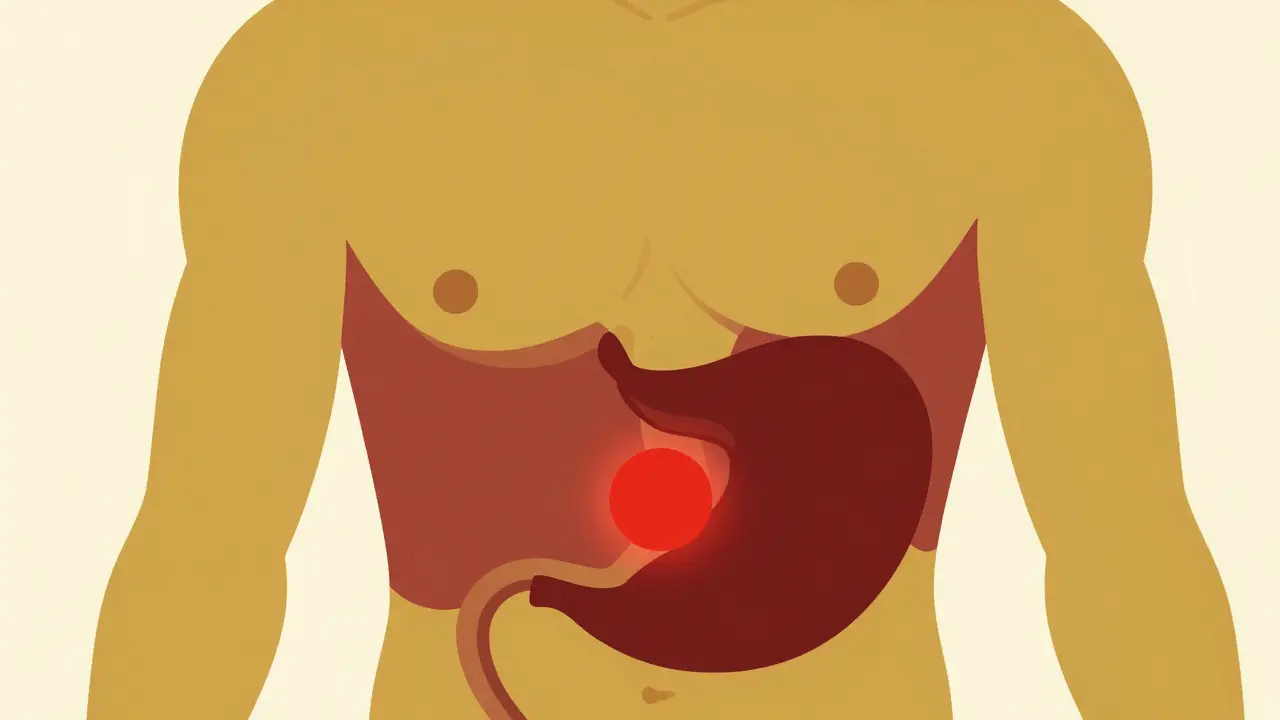
Imagine going in for a routine CT scan to check out some abdominal pain or perhaps a kidney stone, only for your doctor to tell you they found a mass on your adrenal gland. You weren't looking for it, and you feel perfectly fine, yet here is a medical finding that sounds intimidating. This is exactly what an adrenal incidentaloma is: a mass larger than 1 cm discovered by chance during imaging for something else. While the word "tumor" often sparks panic, the reality is that about 80% of these are benign, non-functioning growths that won't ever cause a problem. However, the other 20% can be hormonally active or malignant, which is why a systematic workup is non-negotiable.
| Type | Prevalence | Clinical Urgency | Typical Action |
|---|---|---|---|
| Benign Non-functioning | ~80% | Low | Observation / No action |
| Functional (Hormone Producing) | 5-10% | High | Surgical removal |
| Malignant (Cancer/Metastasis) | 2-8% | Very High | Urgent surgical intervention |
The First Hurdle: Determining if the Mass is "Active"
When a doctor finds an adrenal mass, the first question isn't just "is it cancer?" but "is it doing something?" Adrenal glands are chemical factories. If a tumor starts pumping out hormones autonomously, it can wreck your blood pressure, metabolism, and electrolyte balance. The goal of the initial evaluation is to rule out these "functional" tumors.
The most critical thing to exclude immediately is pheochromocytoma, a rare but dangerous tumor that secretes catecholamines (like adrenaline). If a surgeon operates on a patient with an undiagnosed pheochromocytoma, the anesthesia or the physical manipulation of the gland can trigger a massive release of hormones, leading to a life-threatening hypertensive crisis. To prevent this, every single patient with an incidentaloma needs plasma-free metanephrines or a 24-hour urinary test to ensure the mass isn't an adrenaline-fueled time bomb.
Next, doctors check for subclinical Cushing's syndrome. This happens when a tumor secretes cortisol independently of the body's needs. Because the excess isn't always obvious, the standard test is the 1 mg dexamethasone suppression test. If your serum cortisol stays above 1.8 μg/dL after the test, it suggests the tumor is acting autonomously. This is tricky because it often presents subtly, yet it's linked to higher risks of heart disease and diabetes.
Finally, if you have high blood pressure or low potassium levels, your team will screen for primary hyperaldosteronism. This involves measuring the plasma aldosterone concentration and renin activity. About 4% of these incidentalomas are aldosterone-producing adenomas, which can drive stubborn hypertension that doesn't respond well to standard meds.
Reading the Images: Size and Density
While blood tests tell us if the tumor is active, imaging tells us if it looks dangerous. An unenhanced CT scan is the gold standard here. Radiologists look at the "attenuation" of the mass, measured in Hounsfield units (HU). If the density is below 10 HU, there is a 70-80% chance it is a simple, benign lipid-rich adenoma. These are generally the "leave it alone" cases.
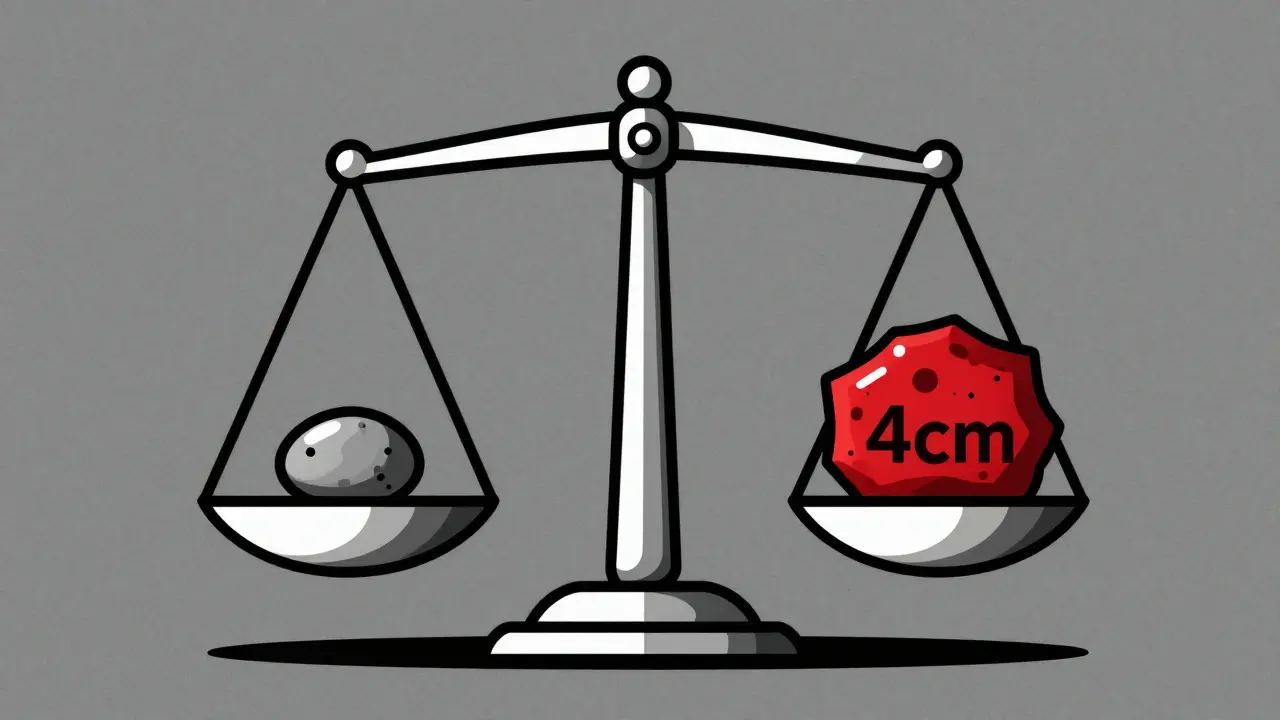
However, if the mass is dense, has irregular borders, or shows "heterogeneous enhancement" (meaning it doesn't absorb contrast evenly), the red flags go up. The most objective marker of risk is size. A mass under 4 cm is rarely malignant. But once a tumor crosses the 4 cm threshold, the risk of adrenocortical carcinoma climbs. Specifically, masses larger than 6 cm carry a 25% risk of being cancerous. If the mass is growing rapidly-say, increasing by more than 1 cm in a year-surgery becomes the primary recommendation regardless of whether it's producing hormones.
When is Surgery Necessary?
Not every bump on an adrenal gland needs to be cut out. In fact, unnecessary surgery carries its own risks, including permanent adrenal insufficiency. Surgeons typically follow a strict set of criteria to decide when to operate.
- Hormonal Activity: Any tumor that is functionally active (secreting cortisol, aldosterone, or adrenaline) should be removed. The benefits of stopping the hormone excess far outweigh the risks of surgery.
- Size and Growth: Any lesion larger than 4 cm is usually flagged for removal due to the increased malignancy risk.
- Imaging Suspicion: If the CT scan shows irregular margins or high density that doesn't look like a typical adenoma, a surgeon will likely intervene.
- Malignancy: Confirmed adrenocortical cancer or metastases from other organs (like the lung) require surgical management where feasible.
For those with a pheochromocytoma, the surgery requires a special preamble. You can't just walk into the OR. Patients must undergo alpha-blockade therapy for 7 to 14 days before the procedure. This stabilizes the blood pressure and prevents the "adrenaline storm" that can occur when the tumor is touched.
The Management Gap: Why a Specialist Matters
Evaluating an adrenal mass isn't a one-person job. It requires a multidisciplinary team. You need a radiologist to interpret the HU values, an endocrinologist to parse the complex hormone tests, and a surgeon to execute the removal. Many community hospitals lack immediate access to specialized tests like plasma metanephrines, and there is a known 15-30% variability in how different radiologists interpret these scans.
This is why specialized centers often see better outcomes. When a team works together, they avoid the two biggest mistakes: over-operating on benign lumps and missing a malignant or functional tumor. For the 10-15% of cases that fall into a "gray zone"-where the image is indeterminate but hormones are normal-periodic surveillance every 6 to 12 months is the safest bet.
Does every adrenal mass need to be removed?
No. About 80% of adrenal incidentalomas are benign, non-functioning adenomas. If the mass is smaller than 4 cm, has low density (below 10 Hounsfield units) on a CT scan, and isn't producing excess hormones, it usually requires no surgery and sometimes no further follow-up.
What is the most dangerous mistake in managing these masses?
The most critical error is performing surgery or a biopsy on an undiagnosed pheochromocytoma. Because these tumors secrete massive amounts of adrenaline, manipulating them without proper alpha-blockade medication can cause a lethal spike in blood pressure during the operation.
How do doctors test for "hidden" hormone production?
Doctors use specific biochemical tests. For cortisol, they use the 1 mg dexamethasone suppression test. For adrenaline, they measure plasma-free metanephrines. For aldosterone, they check the ratio of aldosterone to renin in the blood, typically only if the patient has hypertension or low potassium.
What happens if the mass is between 1 cm and 4 cm and non-functional?
If the mass is non-functional and looks benign on imaging, it is often just monitored. Some guidelines suggest no routine follow-up for clearly benign adenomas, while others recommend a repeat scan at 6-12 months to ensure there is no rapid growth.
Can these tumors be cancerous?
Yes, but it is rare. Primary adrenocortical carcinoma occurs in about 2% of cases. The risk increases significantly if the tumor is larger than 4 cm or grows rapidly. Metastatic disease (cancer spreading from another organ to the adrenal gland) is also a possibility, occurring in about 5% of incidentalomas.
What to do next
If you've just discovered an adrenal mass, the first step is to gather all your imaging reports and blood work. If you are seeing a general practitioner, ask for a referral to an endocrinologist to ensure the biochemical screening is comprehensive. Don't let the term "incidentaloma" alarm you, but don't ignore it either. Confirm that you have been screened for pheochromocytoma and autonomous cortisol secretion, as these are the most critical safety checks. If your mass is over 4 cm or producing hormones, seek a consultation with a surgical specialist who focuses on endocrine surgery.
william wang
April 16, 2026 AT 16:24The emphasis on alpha-blockade for pheo is spot on. It's one of those things where the prep is just as critical as the actual surgery to avoid a hypertensive crisis on the table.