
Brand vs Generic Medications: What Really Matters for Safety and Cost
When you pick up a prescription, you might see two options: the familiar brand name or a cheaper generic. But are they really the same? Brand vs generic, the difference between a drug sold under its original company name and its chemically identical copy after patent expiration. Also known as brand name drugs and generic equivalents, this choice affects your wallet, your routine, and sometimes your health. The FDA says generics must match the brand in active ingredient, strength, dosage form, and how they work in your body. That’s the rule. But rules don’t always tell the whole story.
Take warfarin, a blood thinner with a narrow therapeutic index where tiny changes in dose can cause bleeding or clots. Switching between brand and generic versions—even if they’re technically equivalent—can shake up your INR levels. That’s not because the generic is weaker or flawed. It’s because of differences in inactive ingredients, how fast the pill breaks down, or even the shape of the tablet. These small changes matter when your body is finely tuned. The same goes for extended-release medications, formulations designed to release drugs slowly over hours to reduce side effects like nausea or dizziness. A generic version might release the drug too fast or too slow, changing how you feel—even if the label says it’s the same.
Manufacturing changes can trigger FDA reviews, and not all generics are made the same. One batch might come from a factory in India, another from the U.S., and the fillers, dyes, or coating can vary. For most people, this makes zero difference. But for those on statins, cholesterol drugs that can cause muscle damage when mixed with other medications, or those managing migraine with aura, a neurological condition where hormonal changes or drug shifts can spike stroke risk, even a small shift in how a drug behaves can be dangerous. That’s why some doctors avoid switching patients on critical meds unless absolutely necessary.
Cost matters. Generics save billions. But savings shouldn’t come at the cost of stability. If your blood pressure, mood, or heart rhythm is under control on a brand, switching to generic isn’t always a win. And if you’re on a tight budget, ask your pharmacist: Is this generic from a reliable source? Have others had issues with it? The answer might surprise you.
What you’ll find below isn’t a list of which generics are ‘better.’ It’s a collection of real cases where brand vs generic choices made a measurable difference—in heart safety, liver health, dosing accuracy, and even hearing protection. These aren’t theoretical debates. They’re stories from people who noticed changes after a switch, or doctors who learned the hard way that ‘equivalent’ doesn’t always mean ‘identical.’
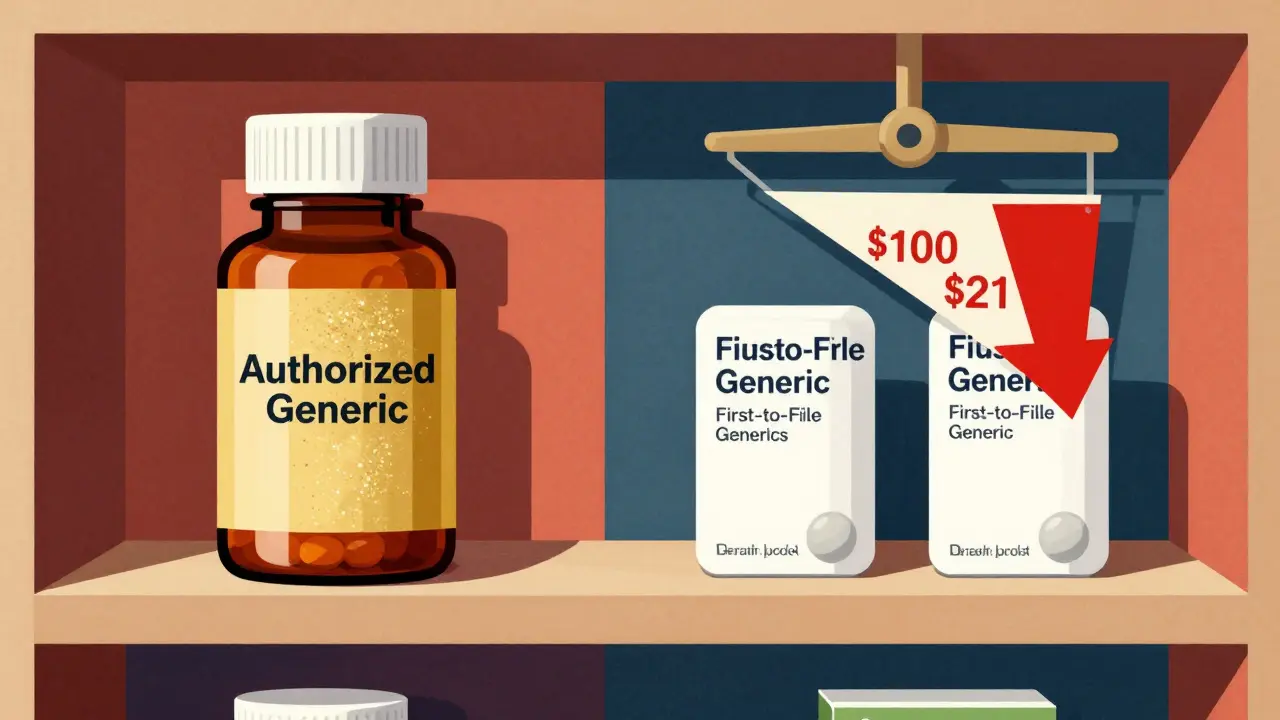
Cost Comparison: Authorized Generics vs First-to-File Generics - What You Really Pay
Authorized generics and first-to-file generics both lower drug costs, but authorized generics drive prices down faster and deeper. Learn how they differ, why prices drop more when both are on the market, and what it means for your prescription costs.
Read more
Inactive Ingredient Differences: Why Your Generic Medication May Feel Different
Generic medications save money but sometimes cause unexpected side effects due to different inactive ingredients. Learn why your body might react differently - and what to do about it.
Read more