

Switching from a brand-name drug to a generic version can save you hundreds of dollars a year. But sometimes, people swear the generic doesn’t work the same. They feel more tired, get stomach upset, or notice their anxiety flaring up - even though the active ingredient is supposed to be identical. If this sounds familiar, you’re not imagining it. The difference isn’t in what’s healing you - it’s in what’s holding it together.
What Are Inactive Ingredients, Really?
Every pill you take has two kinds of ingredients: the active one that treats your condition, and everything else - the inactive ingredients. These are also called excipients. They don’t cure anything. But they do a lot of heavy lifting behind the scenes.
Think of them like the scaffolding around a house. The active ingredient is the living space. The inactive ingredients are the frame, the nails, the paint, and the insulation. Without them, the pill wouldn’t hold shape, wouldn’t dissolve properly, or might break down too fast in your stomach. Common ones include:
- Fillers like lactose or microcrystalline cellulose - to give the tablet the right size
- Binders like povidone or hydroxypropyl methylcellulose - to hold the powder together
- Disintegrants like croscarmellose sodium - so the pill breaks apart when it hits your stomach
- Coatings like hydroxypropyl methylcellulose - to make it easier to swallow or control release
- Preservatives like sodium benzoate - to keep the medicine from spoiling
- Dyes and flavorings - mostly for appearance or taste, especially in liquids or chewables
The FDA says all these ingredients must be safe. That’s true - for most people. But safety for the majority doesn’t mean safety for everyone.
Why Do Generics Feel Different?
By law, a generic drug must contain the same active ingredient, in the same strength, and work the same way as the brand-name version. The FDA requires it to be bioequivalent - meaning your body absorbs it within 80% to 125% of the brand-name drug. That’s a wide window, but it’s still tight enough for most drugs to work just as well.
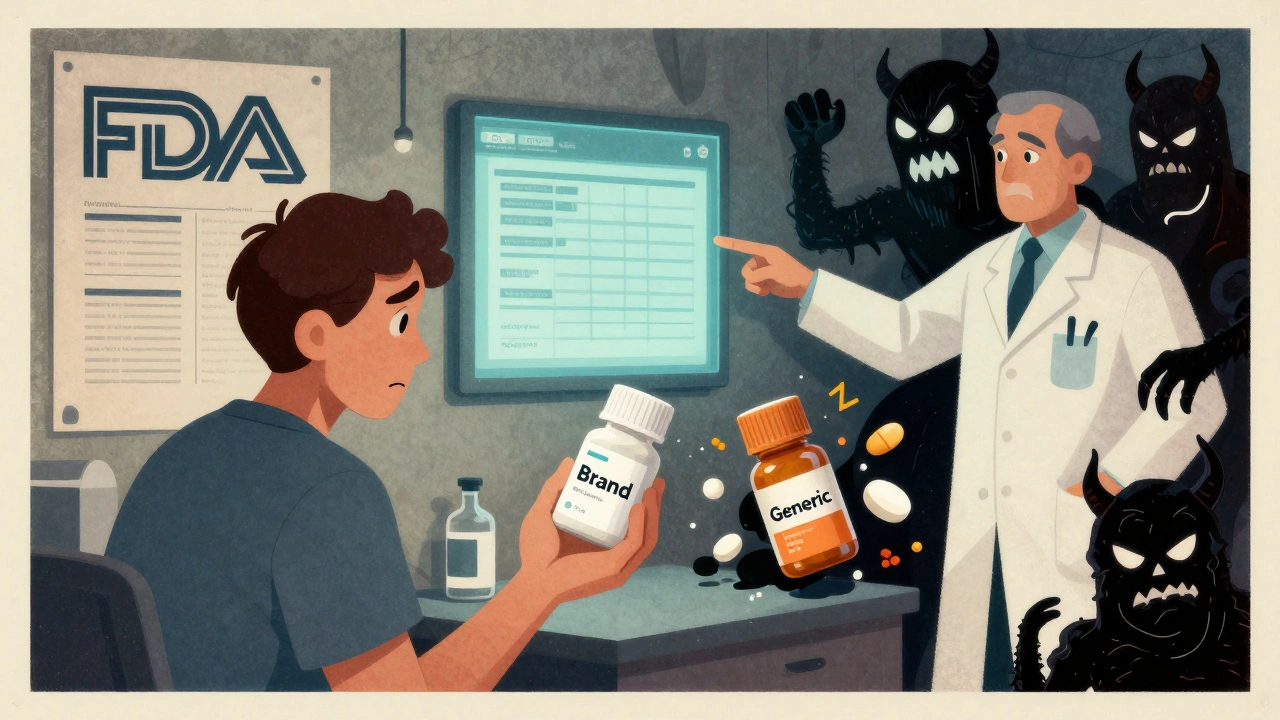
But here’s the catch: the FDA doesn’t require generics to match the brand’s inactive ingredients. That means your generic version of sertraline might use corn starch instead of lactose. Or it might use a different dye. Or a different coating that dissolves 10 seconds slower.
For 95% of people, this doesn’t matter. A 2021 study in JAMA Internal Medicine looked at 2,000 patients who switched from brand to generic. Only 1% had to switch back because of real problems. But that 1%? They felt it. Hard.
Patients with sensitive systems - like those on thyroid meds, blood thinners, or antidepressants - are more likely to notice changes. Why? Because their bodies need very precise drug levels. Even a tiny shift in how fast the pill dissolves can push levels just outside the safe zone.
Who’s Most at Risk?
Not everyone reacts the same. Certain groups are more likely to notice differences:
- People with lactose intolerance: About 40% of oral medications contain lactose as a filler. If you can’t digest it, you might get bloating, gas, or diarrhea - even if the active drug is working fine.
- People with dye allergies: Red #40, Blue #1, or other artificial colors can trigger rashes or headaches in sensitive individuals. These are often used to make pills look different from the brand name - a legal requirement, not a medical one.
- People with sulfite sensitivity: Found in some injectables and liquid forms, sulfites can cause asthma flare-ups in 3-10% of asthmatics.
- People with phenylketonuria (PKU): Some chewable or effervescent tablets use aspartame, which breaks down into phenylalanine - dangerous for those with PKU.
- People on narrow therapeutic index drugs: These include levothyroxine (Synthroid), warfarin (Coumadin), digoxin, and some seizure meds. Small changes in absorption can mean the difference between underdosing and overdosing.
A 2022 Consumer Reports survey found that among people who noticed side effects after switching, 12% blamed lactose, 8% blamed dyes, and 5% blamed sulfites. These aren’t rare issues. They’re common triggers - and they’re rarely listed in bold on the label.
What You Can Do
You don’t have to suffer through a bad generic. Here’s how to take control:
- Check the ingredient list. Look on the pharmacy’s website or ask for the “Drug Facts” sheet. It’s not always easy to find, but it’s there. Search for terms like “lactose,” “FD&C Red No. 40,” or “sodium benzoate.”
- Keep a symptom diary. For two to four weeks after switching, write down how you feel - sleep, energy, digestion, mood, pain levels. Note the date and time. This helps your doctor spot patterns.
- Ask your pharmacist. Pharmacists see this every day. They can tell you if your new generic uses different fillers than your old one. Some even have databases that compare excipients across brands.
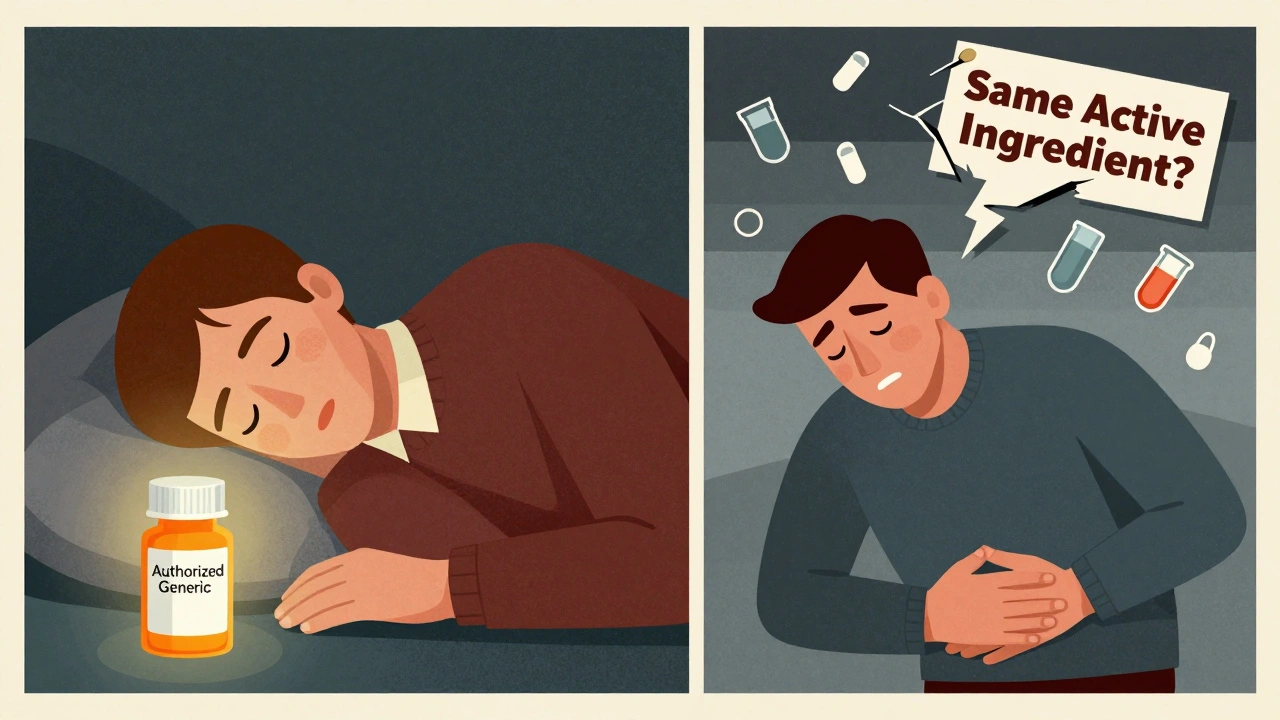
- Request an authorized generic. These are made by the original brand company but sold under a generic label. They have the exact same inactive ingredients - just cheaper. Ask if one exists for your drug.
- Don’t assume all generics are the same. Two different generic versions of the same drug can have totally different fillers. If one makes you feel off, try another brand of generic. You might find one that works.
The Bigger Picture
Generics save the U.S. healthcare system over $2 trillion a decade. That’s not just money - it’s access. Millions of people couldn’t afford their meds without them. The system works for 95% of people. That’s a win.
But for the 1-2% who feel worse after switching, the system feels broken. And they’re right to feel that way. The problem isn’t the generic. It’s the lack of transparency. Most people don’t know what’s in their pills. They assume “same active ingredient = same experience.” It’s not that simple.
Things are starting to change. The FDA’s new Inactive Ingredient Database, launching in early 2024, will list every excipient approved for use - and how much is allowed. The CARES Act now requires clearer labeling of common allergens in meds. Some manufacturers are already offering “clean label” generics with fewer additives.
For now, you’re not powerless. You just need to know what to look for.
When to Call Your Doctor
Not every change means you need to switch back. But if you notice any of these after switching to a generic:
- Worsening of your original symptoms
- New side effects that started right after the switch
- Lab results that changed (like TSH levels for thyroid meds or INR for blood thinners)
- Severe allergic reactions (rash, swelling, trouble breathing)
Call your doctor. Don’t wait. Bring your medication bottle. Point to the inactive ingredients. Ask: “Could this be the issue?”
Most doctors will agree: if a generic is making you feel worse, it’s not in your head. It’s in the filler.
Are generic medications as safe as brand-name drugs?
Yes, for the vast majority of people. The FDA requires generics to meet the same strict standards for strength, purity, and effectiveness as brand-name drugs. The active ingredient is identical, and bioequivalence testing ensures your body absorbs it the same way. But safety isn’t just about the active ingredient - it’s also about what’s in the pill besides that. Some people react to differences in inactive ingredients, like lactose or dyes, which aren’t required to match the brand version.
Why do generics look different from brand-name drugs?
By law, generic drugs can’t look exactly like the brand-name version. That’s to avoid trademark infringement. So they change the color, shape, or size. But that’s cosmetic. The real difference is often in the inactive ingredients - the fillers, coatings, and dyes - which can vary between manufacturers. Two generics of the same drug might look completely different and still be equally effective.
Can inactive ingredients cause side effects?
Absolutely. While they don’t treat your condition, inactive ingredients can cause reactions in sensitive people. Lactose can trigger bloating or diarrhea in those who are intolerant. Artificial dyes can cause headaches or rashes. Sulfites can worsen asthma. Even small amounts can matter if you’re allergic or intolerant. These reactions are rare overall, but they’re real - and they’re often missed because doctors don’t always ask about them.
Which medications are most likely to have problems with generics?
Drugs with a narrow therapeutic index are most sensitive to changes. These include levothyroxine (for thyroid), warfarin (a blood thinner), digoxin (for heart failure), and some seizure medications like phenytoin. Even a small change in how quickly the drug is absorbed can push levels into a dangerous range. For these drugs, some doctors prefer to stick with the same manufacturer - brand or generic - to avoid variability.
How can I find out what’s in my generic medication?
Ask your pharmacist for the “Drug Facts” sheet or the full prescribing information. You can also search the FDA’s website or use tools like DailyMed (dailymed.nlm.nih.gov) to look up the drug by name and see its full ingredient list. Look for terms like “lactose,” “FD&C Red No. 40,” “sodium benzoate,” or “soy lecithin.” If you have allergies or intolerances, this is the first step to avoiding problems.
Should I avoid generics altogether?
No. Generics are safe, effective, and save lives by making treatment affordable. For over 90% of people, switching to a generic makes no difference at all. The issue isn’t generics - it’s lack of awareness. If you’ve had a bad experience, don’t give up on generics. Instead, work with your pharmacist to find a different generic version, or ask about an authorized generic - which uses the same inactive ingredients as the brand name, but at a lower price.
Bee Floyd
December 2, 2025 AT 10:13Been on generic levothyroxine for two years now. First bottle felt like someone turned my brain off. Fatigue, brain fog, zero motivation. Switched to another generic-same active ingredient, different filler-and boom, back to normal. Turns out the first one used lactose. I’m mildly intolerant and didn’t even know it mattered in pills. Pharmacist had to pull up the sheet. Mind blown.
Turns out, the FDA doesn’t require them to list excipients on the bottle. You gotta dig. It’s wild we’re expected to just trust the label when half the problem is invisible.
Lydia Zhang
December 3, 2025 AT 00:46Same generic. Different results. Just sayin.
Jack Arscott
December 3, 2025 AT 21:36This is why I always ask for the authorized generic. 🤓 Same exact stuff as brand, just cheaper. No guesswork. No weird stomach stuff. My pharmacist keeps a spreadsheet. She’s a legend.
Also, if you’re on warfarin? Don’t switch generics unless you’re ready for a trip to the clinic. INR jumps like a jackrabbit.
Courtney Co
December 5, 2025 AT 02:22Oh my god I’m not crazy?? I switched from brand Zoloft to generic and started having panic attacks at 3am every night. Thought I was losing my mind. Then I read the label. Lactose. I’m lactose intolerant. I didn’t even think about it being in a pill. I cried. I called my doctor. She was like ‘yeah, that happens.’ Like it’s normal?!
Now I get the authorized generic. Costs more but I’m not screaming into a pillow at 3am anymore. Why isn’t this on the bottle? Why do I have to be the one to figure this out?!
Irving Steinberg
December 6, 2025 AT 01:16So you’re telling me I’m allergic to blue dye in my antidepressant and no one told me??
My head’s been throbbing for weeks. I thought it was stress. Turns out it’s FD&C Blue No. 1. Who the hell puts dye in a pill meant to fix your brain??
Also why do they even need color? So we can tell our meds apart? I’m not a toddler.
Also also I’m not paying extra for the brand. I’ll just take the one without the blue. Easy.
Also also also I’m never trusting another pill again 😭
Shashank Vira
December 6, 2025 AT 10:05One must consider the metaphysical implications of pharmaceutical excipients. The active ingredient is the soul-the essence of therapeutic intent. The excipient, however, is the vessel. It is the scaffolding of modern pharmacology’s materialist dogma. When one alters the vessel, one alters the soul’s expression in the body. This is not science-it is alchemy without the mysticism.
And yet, the FDA, that bureaucratic temple of reductionist empiricism, permits this transmutation without scrutiny. The patient becomes the unwitting laboratory. We are not subjects-we are sacrificial offerings to the altar of cost-efficiency.
It is no wonder the psyche unravels. The body remembers what the mind forgets. The filler is not inert. It is a silent whisper of corporate indifference.
Jaswinder Singh
December 7, 2025 AT 21:17Bro I switched to generic metformin and got diarrhea for 3 weeks. Thought I had food poisoning. Then I checked the label-lactose again. I’m Indian. We’ve been lactose intolerant since birth. Why is this still a thing? Pharmacist said ‘it’s cheaper’ like that’s an excuse.
Now I order my meds from Canada. Same active ingredient, no lactose. Costs the same. Why are we letting this happen? Someone needs to sue these companies.
Walker Alvey
December 9, 2025 AT 18:55Wow. So people are surprised that chemicals in pills can affect them?
Next you’ll tell me sugar makes you fat.
It’s called chemistry. If you have a sensitivity, don’t take the pill. Or better yet, don’t take pills at all. Go drink some turmeric tea and meditate. Maybe your anxiety is just your soul crying out for authenticity.
Meanwhile, I’ll be taking the generic that doesn’t make me feel like a zombie. Thanks for the free healthcare.
Adrian Barnes
December 11, 2025 AT 16:44Let me be blunt: the fact that you’re even having this conversation reveals a profound lack of medical literacy. The FDA’s bioequivalence standards are among the most rigorous in the world. If you feel different, it’s likely psychosomatic. Or you’re not taking it consistently. Or you’re self-diagnosing based on internet anecdotes.
Excipients are not ‘toxic.’ They’re approved. Millions take generics daily without issue. Your anecdote is not data. Your discomfort is not evidence. Your emotional response is not a clinical finding.
Do you also blame the paint on your car for your bad mood? This is not a conspiracy. It’s pharmacology. Stop overcomplicating it.
Jeremy Butler
December 13, 2025 AT 10:27It is a matter of profound ethical concern that the regulatory framework governing pharmaceutical excipients remains insufficiently transparent to the lay consumer. The absence of mandatory labeling of allergenic or intolerant-inducing excipients on over-the-counter packaging constitutes a failure of informed consent, a foundational principle of biomedical ethics.
Moreover, the commercial incentive to utilize low-cost, high-volume excipients-such as lactose, which is derived from bovine sources and carries significant allergenic potential-demonstrates a prioritization of fiscal efficiency over patient autonomy.
The FDA’s Inactive Ingredient Database, while a step forward, remains inaccessible to the average patient without specialized search skills. This is not merely an oversight-it is a systemic disenfranchisement of the vulnerable population. Reform is not optional. It is imperative.
Priyam Tomar
December 15, 2025 AT 10:14Lol you guys are acting like this is some secret conspiracy. Everyone knows generics have different fillers. I’ve been a pharmacist for 15 years. I’ve seen people freak out over color changes. You think your body is that sensitive? Maybe you’re just stressed.
And no, you don’t need to switch to the authorized generic. That’s a marketing ploy. The active ingredient is the same. The rest is noise.
Also, if you’re allergic to dye, you should’ve told your doctor before they prescribed anything. It’s not the pill’s fault you didn’t disclose your allergies.
Stop being so fragile. Take the pill. Get over it.
Kay Lam
December 15, 2025 AT 16:35I’ve been on levothyroxine for 11 years. Switched from Synthroid to a generic because my insurance forced it. First week I felt like I was dragging a concrete block through my brain. Sleep was gone. My heart was racing. My TSH went from 1.2 to 5.8. My endocrinologist was like ‘oh, that happens sometimes.’
I switched to a different generic-same drug, different manufacturer-and my TSH went back to 1.1. The first one had a coating that dissolved too slow. The second one didn’t. That’s it.
My pharmacist has a whole binder of which generics work for which patients. She’s basically a detective. I asked her why this isn’t standardized. She said because it’s cheaper to just make them all different. So the drug companies can make more money selling you the brand again when you get fed up.
And now they’re putting aspartame in chewable vitamins. I have a kid with PKU. I have to read every label like it’s a legal contract. I’m exhausted. Why is this so hard? Why isn’t there a simple app? Why can’t the FDA just make them all the same? It’s not like we’re trying to cure cancer here. It’s thyroid medicine. It’s not rocket science.