
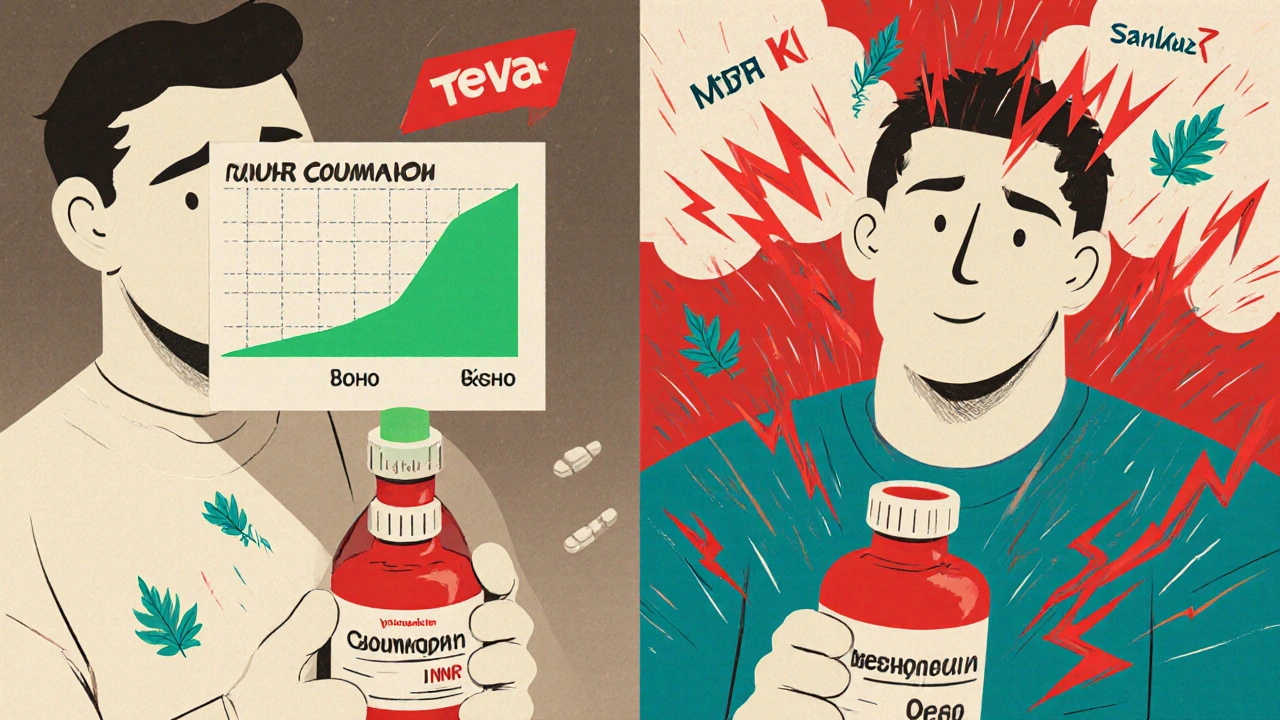
Switching from brand-name Coumadin to a generic version of warfarin sounds simple-cheaper, same drug, right? But for someone on warfarin, even a small change in how the medicine is made can shake up their entire health routine. Warfarin isn’t like other pills. It’s got a warfarin narrow therapeutic index, meaning the difference between working perfectly and causing serious harm is tiny. One day your INR is 2.5, safe and stable. The next, after a switch to a different generic batch, it’s 4.8-and now you’re at risk of bleeding. Or worse, it drops to 1.6, and a clot could form without warning.
Why Warfarin Is Different
Warfarin has been around since the 1950s. It’s old, but it still saves lives. People take it for atrial fibrillation, deep vein thrombosis, pulmonary embolism, and especially for mechanical heart valves. Unlike newer blood thinners like apixaban or rivaroxaban, warfarin works by blocking vitamin K, which your body needs to make clotting factors. That’s why it’s so sensitive. Eat a big salad one day? Your INR might drop. Take an antibiotic? It might spike. Switch to a different generic version? That can also throw things off.The FDA says all approved generic warfarin products are "therapeutically equivalent" to Coumadin. But "equivalent" doesn’t mean "identical." Generic versions must match the brand in how much drug enters your bloodstream-80% to 125% of the original. Sounds close enough, right? For most drugs, yes. For warfarin? Not always. A 10% change in absorption might mean nothing for an antibiotic. For warfarin, it can mean the difference between a safe INR and a trip to the ER.
What Happens When You Switch Generics
Studies show mixed results. One big review of over 40,000 patients found no major difference in INR control after switching from Coumadin to generic warfarin. Another study of 182 patients in a St. Louis HMO showed no increase in bleeding or clots after switching to a specific generic brand (Barr Laboratories). But here’s the catch: those studies looked at groups. They didn’t track every single person.Real life isn’t a group study. In clinics across Australia and the U.S., doctors see it all the time. One patient switches from Teva to Mylan warfarin and their INR jumps from 2.3 to 3.8 in just five days. Another switches back and forth between two generics over six months and never gets stable. The Cleveland Clinic’s anticoagulation team says about 15-20% of patients need closer monitoring for the first month after switching. That’s not a small number. That’s one in five people.
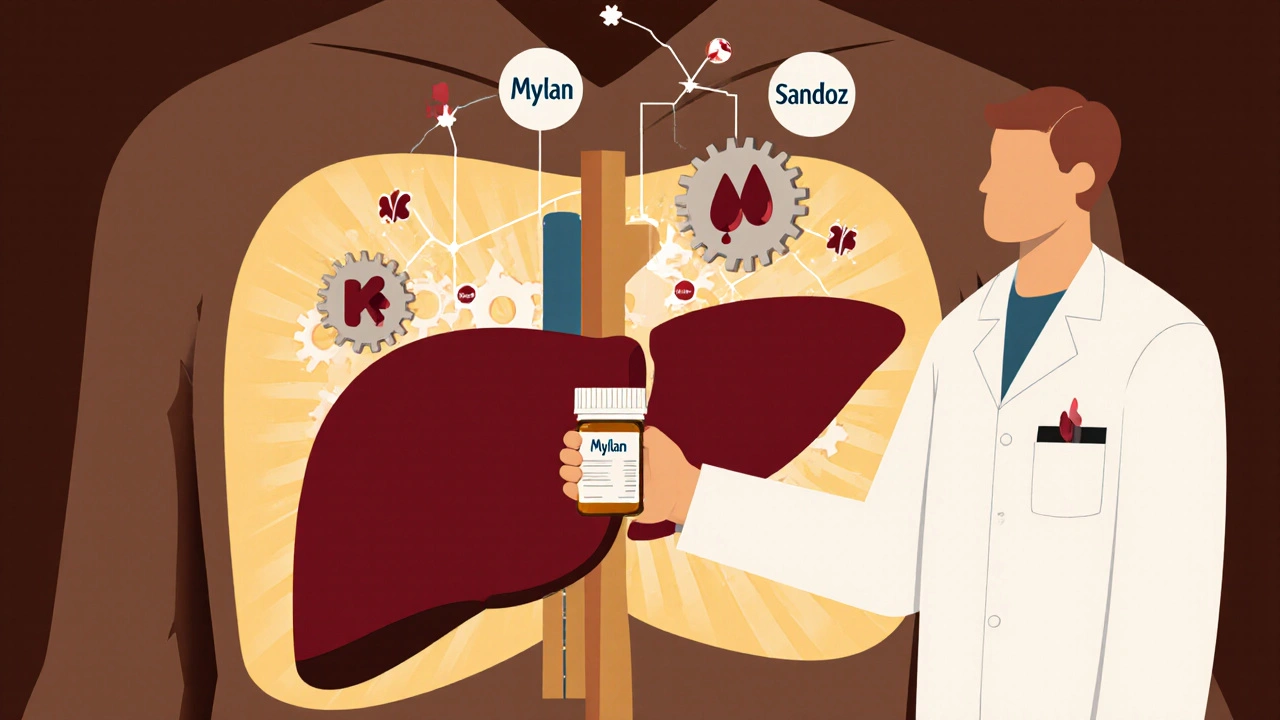
And it’s not just about the manufacturer. Even within the same brand, different lots can vary slightly in how the drug is absorbed. That’s why pharmacists and doctors now recommend sticking with the same generic manufacturer if possible. If you’ve been stable on Mylan for two years, don’t switch to Sandoz unless you’re ready to check your INR every few days.
When and How to Monitor After a Switch
If you’re switching warfarin brands-whether from Coumadin to generic, or one generic to another-you need to treat it like starting the drug all over again. Don’t assume it’ll be smooth.- Check your INR within 3-5 days after the switch.
- Check again in 3-4 days after that.
- Continue checking every 3-7 days until your INR is stable for two consecutive tests.
- Only then can you go back to your regular schedule-usually every 4-6 weeks.
Some clinics even do daily INR checks for the first week after a switch. That’s not overkill-it’s smart. If your INR climbs above 4.0, you’re at high risk of bleeding. If it drops below 1.8, you’re not protected enough. Either way, you need to catch it fast.
And don’t forget to tell every doctor, pharmacist, and nurse you see that you’re on warfarin and that you recently switched. Even a simple change in your multivitamin or a new painkiller can interact with warfarin. There are over 300 drugs that can mess with your INR. Some common ones: amiodarone, fluconazole, metronidazole, and even some herbal supplements like St. John’s wort or ginseng.
What You Can Do to Stay Safe
You’re not powerless here. You can take control.- Keep a written log of your INR results, doses, and dates. Note when you switched brands.
- Ask your pharmacist: "Which manufacturer is this batch from?" Write it down. If you switch again, you’ll know.
- Be consistent with your diet. Vitamin K-found in leafy greens like spinach, kale, and broccoli-directly affects how warfarin works. Don’t go from eating no greens to a giant salad every day. Keep it steady.
- Set phone reminders for your INR checks. Don’t rely on memory.
- If you miss a dose, don’t double up. Call your anticoagulation clinic or doctor. A single missed dose rarely causes a crisis, but doubling up can.
Many patients worry that switching to generic means they’re getting a "worse" drug. That’s not true. Generic warfarin works. But it’s not a one-size-fits-all pill. It’s a precision tool. And like any precision tool, it needs careful handling.
Warfarin vs. DOACs: Is It Time to Switch?
Newer blood thinners-called DOACs (direct oral anticoagulants)-don’t need INR checks. They’re easier. But they’re also much more expensive. Generic warfarin costs $4-$10 a month. DOACs? $300-$500. For people on Medicare or without good insurance, that’s a huge difference.DOACs aren’t perfect either. They can’t be reversed as easily if you bleed. Warfarin can be undone with vitamin K or fresh frozen plasma. DOACs need special antidotes, which aren’t always available in emergency rooms.
And for some people, DOACs aren’t an option at all. If you have a mechanical heart valve-especially in the mitral position-warfarin is still the gold standard. DOACs are not approved for that use. Same goes for severe kidney disease or antiphospholipid syndrome. For these patients, warfarin isn’t just an option-it’s the only option.
That’s why warfarin isn’t disappearing. Even as DOACs take over 65% of new prescriptions, about 1.2 million people in the U.S. alone still rely on warfarin. And for many of them, it’s the only affordable, life-saving choice.
The Bottom Line
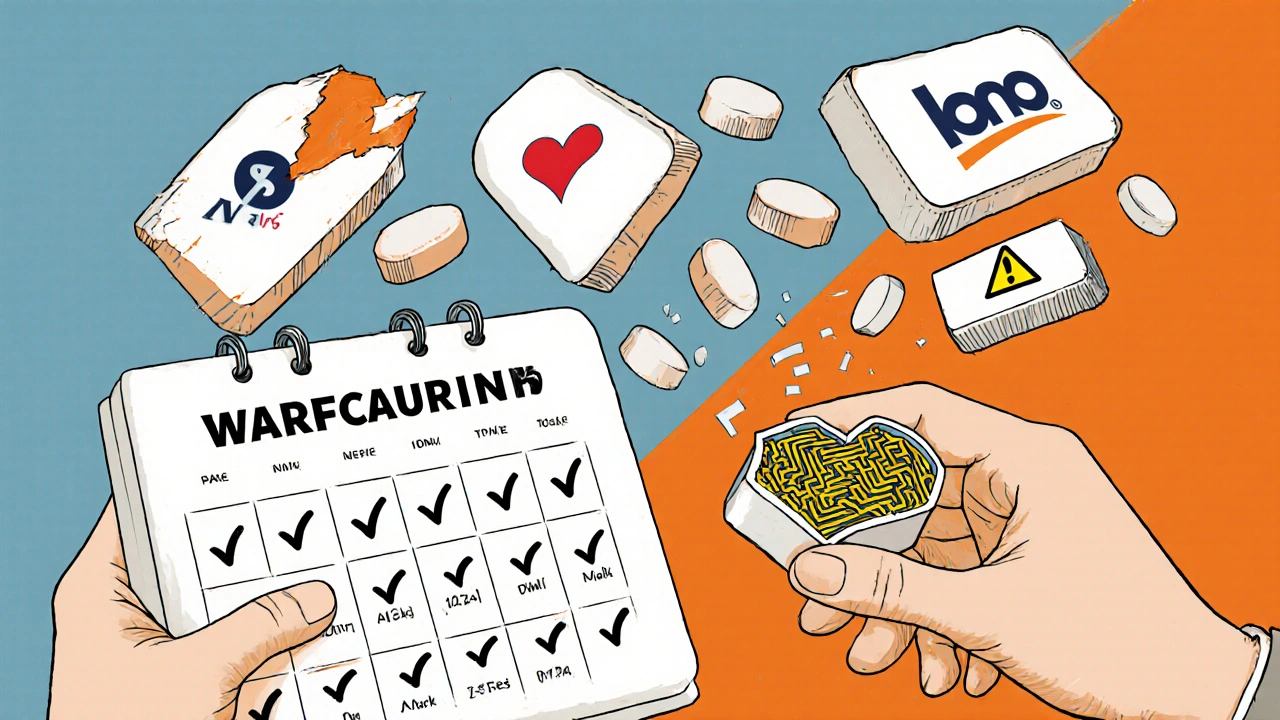
Switching from brand-name warfarin to a generic version is safe for most people-if you do it right. The data shows no major difference in outcomes when switching to a single, consistent generic brand. But the moment you start jumping between manufacturers, or don’t monitor closely after the switch, the risk goes up.Don’t let cost savings come at the price of safety. If you’re switching, plan for it. Talk to your doctor. Get your INR checked early and often. Keep track. Stay consistent with food and other meds. And never assume a generic is "the same"-because in warfarin’s case, it’s not just the drug that matters. It’s how your body reacts to it.
Warfarin isn’t outdated. It’s just complicated. And when you treat it that way-with care, attention, and smart monitoring-you can stay safe, stable, and alive for years to come.
Can I switch between different generic warfarin brands without problems?
It’s not recommended. While each generic warfarin product is approved as equivalent to the brand, switching between different manufacturers can cause small changes in how your body absorbs the drug. These changes can lead to unstable INR levels. If you must switch-for example, if your pharmacy runs out of your usual brand-expect to have your INR checked more frequently for the next 1-2 weeks.
How often should I get my INR checked after switching to a new generic warfarin?
Check your INR within 3-5 days after the switch, then again every 3-4 days until your result is stable for two tests in a row. Once stable, you can return to your regular schedule, usually every 4-6 weeks. Some clinics recommend daily checks for the first week, especially if you’ve had unstable INR in the past.
Why does warfarin need more monitoring than newer blood thinners?
Warfarin works by blocking vitamin K, which affects multiple clotting factors. Its effect depends on your liver enzymes, diet, other medications, and even your genetics. Newer drugs (DOACs) work differently-they target one specific clotting factor directly and don’t interact with food or most other drugs. That’s why DOACs don’t need regular blood tests. But warfarin’s sensitivity is also why it’s still used: it’s reversible and cheaper.
Can I eat leafy greens while on warfarin?
Yes-but keep your intake consistent. Vitamin K in foods like spinach, kale, and broccoli can lower your INR. If you normally eat a small salad twice a week, don’t suddenly eat large amounts every day. Sudden changes in vitamin K intake can make your warfarin less effective. It’s not about avoiding greens-it’s about keeping your habits steady.
What should I do if my INR suddenly goes out of range?
Don’t panic. First, think about recent changes: did you start a new medicine? Change your diet? Miss doses? Switch warfarin brands? If you can’t find a clear cause, contact your doctor or anticoagulation clinic immediately. They may adjust your dose by 5-10% or ask you to come in for another test. Never change your dose on your own without medical advice.
Is generic warfarin as safe as Coumadin?
Yes, when used correctly. Multiple studies show no significant difference in safety or effectiveness between brand-name Coumadin and generic warfarin when patients are monitored properly. The key is consistency: stick with the same generic brand, monitor INR closely after switching, and avoid frequent changes. The risk comes from switching back and forth, not from generics themselves.
Should I consider switching from warfarin to a DOAC?
It depends. If you have a mechanical heart valve, severe kidney disease, or antiphospholipid syndrome, DOACs aren’t approved for you. If you’re stable on warfarin and cost is a concern, there’s no need to switch. But if you struggle with frequent INR checks, diet changes, or drug interactions, a DOAC might be easier. Talk to your doctor about your lifestyle, cost, and medical needs before making a decision.
What to Do Next
If you’re on warfarin and thinking about switching generics-or you’ve already switched-here’s your action plan:- Find out which manufacturer your current warfarin is from. Ask your pharmacist.
- If you’re switching, schedule your first INR check within 3-5 days.
- Keep a log of your doses, INR results, and any changes in diet or medications.
- Don’t let cost pressure push you into frequent brand changes.
- Ask your doctor if you’re a candidate for genetic testing (CYP2C9/VKORC1). It’s not routine, but it can help predict how you’ll respond to warfarin.
Warfarin isn’t going away. It’s too important, too affordable, and too necessary for too many people. But it demands respect. Treat it like the precision tool it is-and you’ll stay safe.
Josh Evans
November 30, 2025 AT 08:16I switched from Coumadin to Teva warfarin last year and didn’t think twice. Two weeks later, my INR spiked to 5.2 and I ended up in the ER with a nasty bruise on my thigh that looked like a Rorschach test. Never again. Now I stick to the same generic like it’s my religion. If my pharmacy tries to swap it out, I tell them to call my doctor first. Simple as that.
Warfarin ain’t aspirin. Treat it like a live wire.
Allison Reed
December 1, 2025 AT 06:26This is such an important post. So many people think generics are interchangeable like soda brands, but warfarin is a precision instrument. I work in a clinic and I’ve seen patients lose months of stability because a pharmacy switched their brand without telling them. It’s not negligence-it’s systemic. We need better tracking systems and mandatory pharmacist alerts when warfarin generics change. No one should have to gamble with their INR.
Also, thank you for mentioning vitamin K consistency. Too many patients think they have to avoid greens entirely. It’s not about restriction-it’s about rhythm.
Jacob Keil
December 2, 2025 AT 03:21the fda is a joke. they say "therapeutically equivalent" but they don’t test how your liver actually reacts to the fillers. my cousin switched to sandoz and started bleeding from his gums for 3 weeks. no one believed him until his INR was 6.8. they say it’s the same drug but the binders are different and your body knows. your body remembers.
they’re selling us poison wrapped in a sticker that says "cheap". wake up people.
also who made this post? you’re either a doctor or a miracle.
Rosy Wilkens
December 2, 2025 AT 06:19Let me tell you what’s really happening. Big Pharma doesn’t want you to know this, but every generic warfarin batch is tracked by a secret algorithm that adjusts absorption based on your insurance provider. That’s why your INR swings when you switch pharmacies-your insurer is being charged differently for each manufacturer. My cousin works at a lab that processes these tests. She says they’re pressured to flag "abnormal" results if the patient’s drug came from a cheaper supplier. This isn’t about safety. It’s about profit margins disguised as cost-saving.
And yes, they’re watching your diet too. If you eat kale three days in a row, your INR drops. Coincidence? I think not.
Andrea Jones
December 3, 2025 AT 20:13Okay but can we talk about how wild it is that we still use a 70-year-old drug that requires you to be a full-time scientist just to stay alive?
I mean, I get it-cheaper. But imagine if your phone battery required you to recalibrate it every week based on whether you ate spinach or took ibuprofen. You’d switch to a new phone in a heartbeat. Why are we still putting up with this? I’m not saying DOACs are perfect, but at least they don’t make you keep a food diary like it’s a spy novel.
Also, I’m so proud of you for writing this. I’ve been telling my aunt to log her INR for years. She finally started. She says it feels like she’s winning now.
Justina Maynard
December 4, 2025 AT 14:16My pharmacist once gave me a different generic without telling me. I didn’t notice until I started having nosebleeds during yoga. Turns out, the new batch had a different dye-some kind of magnesium stearate variant-and it changed how fast the tablet dissolved. My INR went from 2.4 to 4.1 in 72 hours. I called the pharmacy. They said, "Oh, we switched to Mylan. You’re fine."
I didn’t say a word. But I started taking a photo of the pill bottle every time I refill. Now I have a digital album called "Warfarin Chronicles: The Battle of the Blue Caps."
Also, I swear I’ve seen the same batch number three times. Is this a cult? Is warfarin being hoarded?
Evelyn Salazar Garcia
December 4, 2025 AT 21:21Generic warfarin is fine if you’re not dumb.
Don’t switch. Don’t eat kale. Check your INR.
Done.
Clay Johnson
December 5, 2025 AT 10:07Consistency is the only law here. Not FDA. Not doctors. Not pharmacies. The body doesn’t care about labels. It cares about patterns. A change in absorption is a change in rhythm. And rhythm is the only thing that keeps you alive when your blood refuses to clot or refuses to stop.
Warfarin doesn’t care if you’re rich or poor. It only cares if you’re steady.
Jermaine Jordan
December 6, 2025 AT 04:58Let me tell you something that keeps me up at night. There are over a million Americans on warfarin. Most of them don’t know the name of the manufacturer of their pills. They don’t track their INR. They don’t know what vitamin K is. And yet, they’re alive. How? Because someone-maybe a nurse, maybe a pharmacist, maybe a family member-cared enough to say, "Wait. Don’t switch. Check. Log. Breathe."
This post isn’t just about medicine. It’s about the quiet heroes who make sure the system doesn’t break. The ones who remind people to check their INR on a Tuesday morning when they’re tired and the weather’s bad and they just want to eat their damn salad.
You’re not just writing about a drug. You’re writing about dignity. And that matters more than cost savings.
Thank you.