
Medication Reminders: Stay on Track with Your Pills and Avoid Dangerous Mistakes
When you’re taking multiple medications, medication reminders, systematic prompts to take drugs at the right time to ensure safety and effectiveness. Also known as pill schedules, they’re not just helpful—they can be life-saving. Missing a dose of blood thinners like warfarin, thyroid meds like levothyroxine, or antibiotics can turn a simple treatment into a medical emergency. The FDA reports that nearly half of all patients don’t take their meds as prescribed. And it’s not because they’re forgetful—it’s because most systems are poorly designed.
Good medication reminders aren’t just alarms on your phone. They’re part of a larger system that includes dosing accuracy, the ability to measure and deliver the exact amount of medication needed to avoid underdosing or overdose, and understanding how drug interactions, when two or more medications affect each other’s absorption, metabolism, or effect change your needs. For example, taking levothyroxine with a protein shake? That’s a known interaction that can drop your thyroid levels. A reminder to take it on an empty stomach isn’t just nice—it’s essential. Same with warfarin: missing a dose or mixing it with ibuprofen can send your INR through the roof. These aren’t abstract risks. Real people end up in the ER because their reminder system failed.
It’s not just about remembering to take the pill. It’s about remembering how to take it. Some meds need to be swallowed whole. Others can’t be crushed. Liquid doses require precise tools like oral syringes, not kitchen spoons. And if you switch from brand to generic, even small changes in inactive ingredients can throw off your body’s response. That’s why medication reminders need to include instructions—not just times. People who use simple, visual pill organizers paired with phone alerts see 40% fewer missed doses. But only if the system fits their real life. A reminder that goes off at 7 a.m. won’t help if you don’t wake up until 9.
What you’ll find below isn’t a list of apps or gadgets. It’s real-world advice from people who’ve been there: how to handle expired inhalers without risking your health, why generic switching can mess with your INR, how to time thyroid meds around breakfast, and what to do when your body reacts to a new pill formulation. These aren’t theory pieces. They’re fixes for actual mistakes people make every day because no one taught them how to manage their meds properly. Whether you’re juggling five prescriptions or just trying not to forget your blood pressure pill, the solutions here are simple, proven, and built for real life—not perfect conditions.
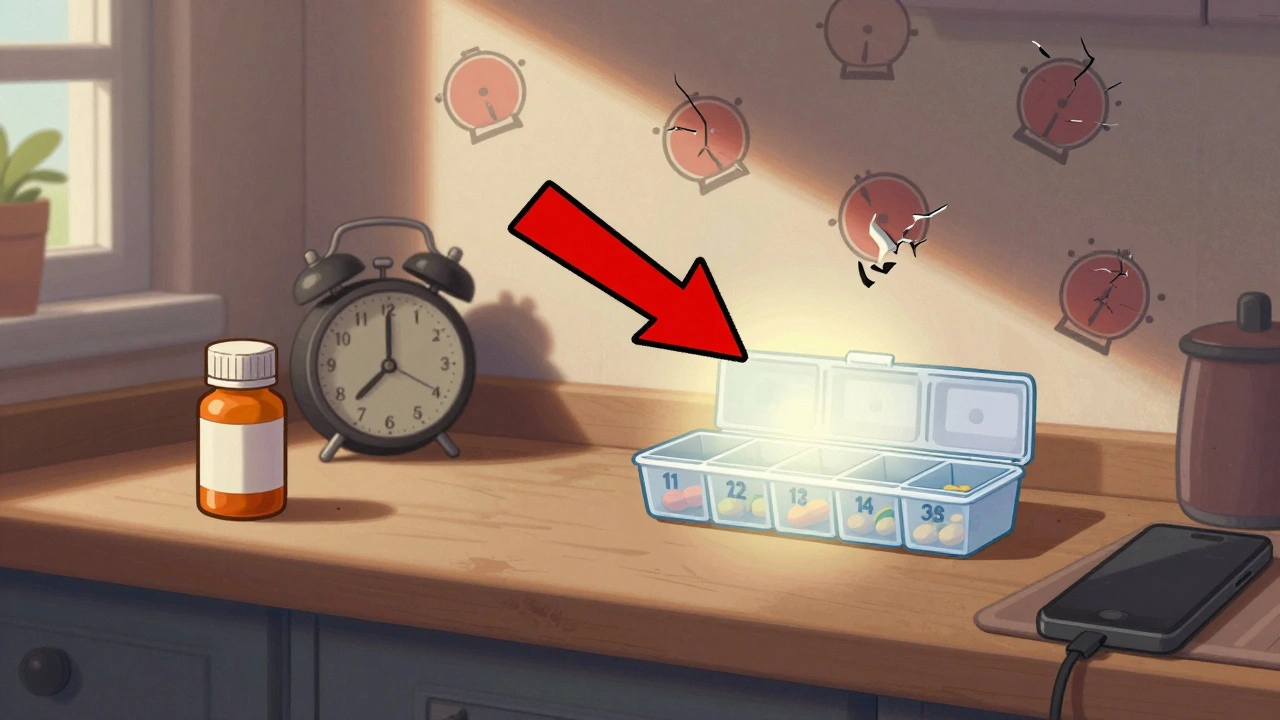
Setting Up Medication Reminders and Alarms That Work: A Practical Guide for Better Adherence
Learn how to set up medication reminders and alarms that actually work - with step-by-step tips, app recommendations, and real-world fixes for missed doses. Stop guessing. Start remembering.
Read more