
Hatch-Waxman Act: How It Shapes Generic Drugs and Drug Access
When you pick up a generic version of your prescription, you’re benefiting from a law passed in 1984 called the Hatch-Waxman Act, a U.S. law that created a pathway for generic drugs to enter the market without repeating costly clinical trials. Also known as the Drug Price Competition and Patent Term Restoration Act, it’s the reason you can buy the same medicine for a fraction of the price. Before this law, brand-name companies could block generics by extending patents or making it nearly impossible for others to prove their versions worked the same way. Hatch-Waxman changed all that.
The law gives generic drug makers a clear path to approval by letting them file an Abbreviated New Drug Application, a streamlined FDA submission that proves bioequivalence without redoing full safety trials. It also lets brand-name companies get extra patent time to make up for delays during FDA review — a trade-off that keeps innovation alive while opening the door to cheaper options. This balance is why you now see generics for everything from blood pressure pills to antidepressants. Without Hatch-Waxman, many of these drugs would still cost hundreds of dollars a month.
It’s not just about price. The Hatch-Waxman Act also shaped how drug patents work, how long exclusivity lasts, and even how lawsuits between brand and generic companies play out. You’ll see its fingerprints in every generic drug you buy, every time you save money at the pharmacy, and every time a new generic hits the market after a patent expires. It’s the hidden engine behind drug affordability in the U.S.
What you’ll find in the posts below are real-world examples of how this law affects your health decisions — from how expired inhalers get replaced with generics, to why statins or blood pressure meds cost less today than they did 20 years ago. You’ll also see how patent cliffs, generic competition, and drug shortages tie back to the rules set by Hatch-Waxman. This isn’t just policy — it’s personal. It’s in your wallet, your medicine cabinet, and your next prescription.
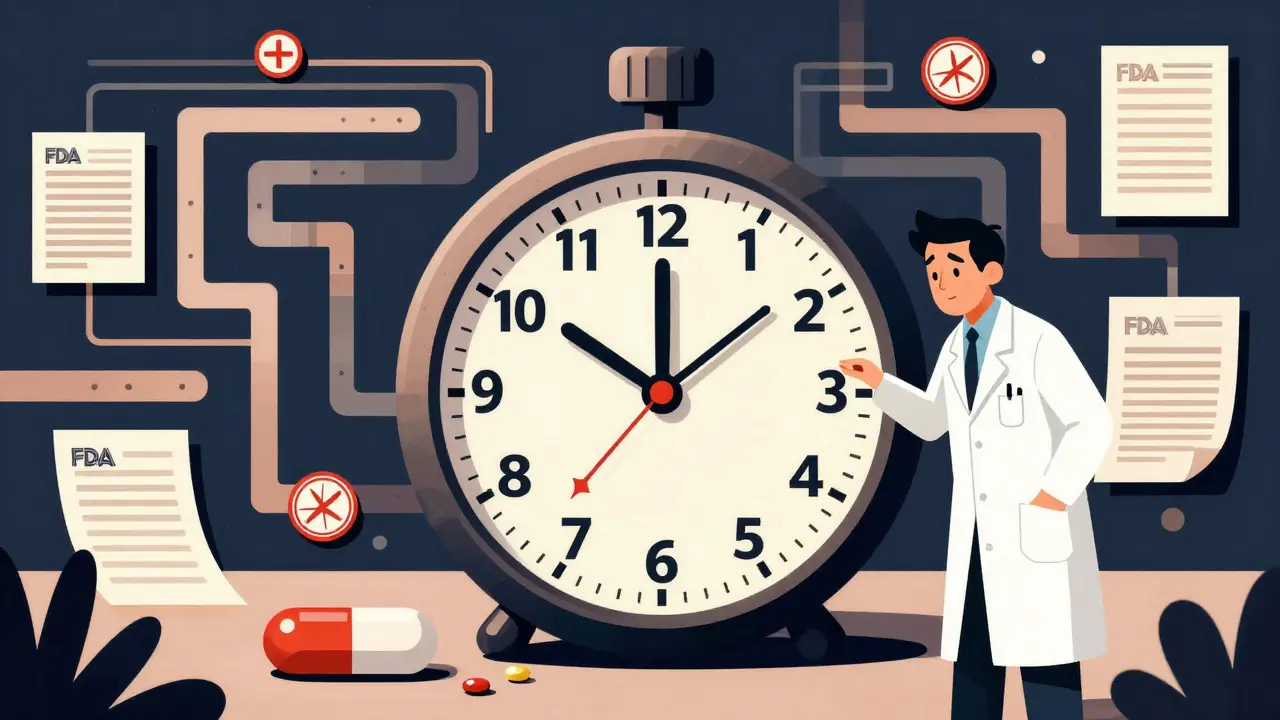
Effective Patent Life: Why Market Exclusivity for Drugs Is Shorter Than You Think
Effective patent life for drugs is often just 10-13 years, not the full 20 years, due to long development times. Secondary patents and regulatory rules stretch exclusivity-but at a cost to patients and competition.
Read more
Generic Drug Availability: How Patents Delay Access After Expiration
Generic drugs don't become available right after patents expire. Legal delays, regulatory hurdles, and strategic patenting push back access by years - costing patients billions. Here's how the system really works.
Read more