
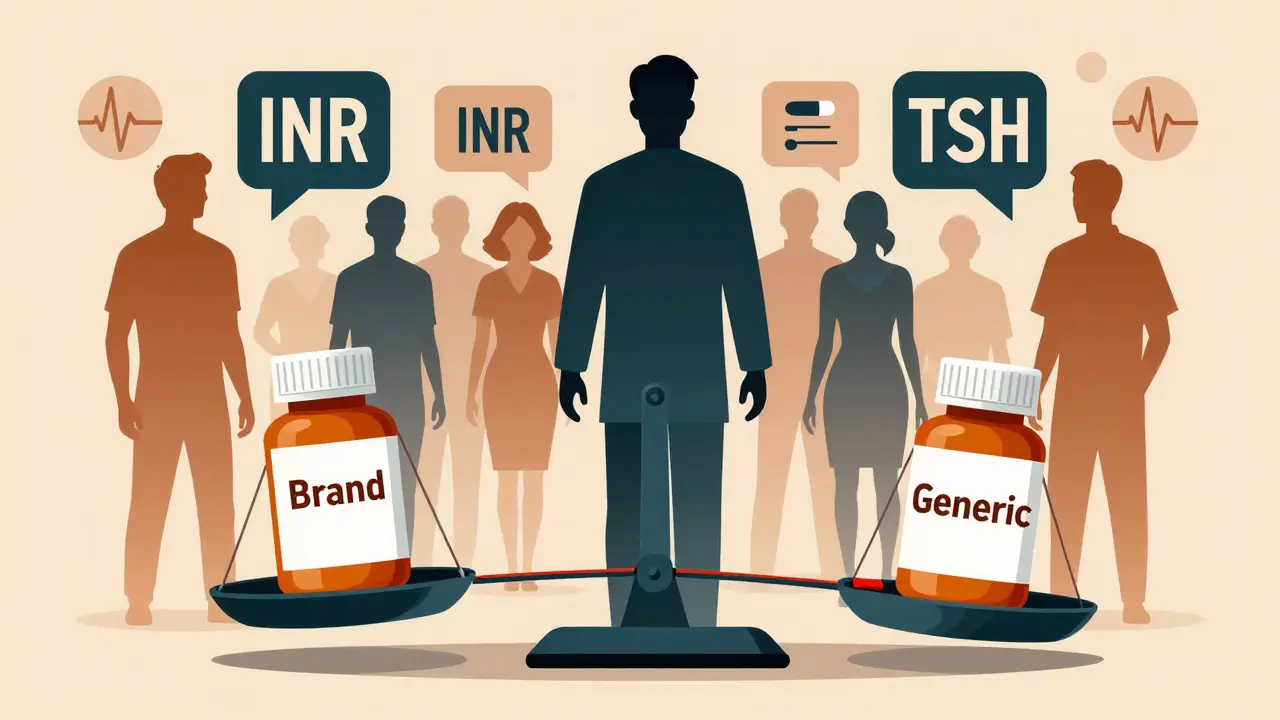
Switching from a brand-name drug to a generic version sounds simple-same active ingredient, lower cost, right? But for some medications, that switch can trigger real, sometimes dangerous, changes in how your body responds. Doctors don’t just guess when to adjust doses after switching to generics. They rely on science, patient history, and hard data. And when it comes to NTI drugs-narrow therapeutic index medications-even tiny differences can mean the difference between healing and harm.
What Makes a Drug an NTI Drug?
Not all generics need dose changes after switching. Most people can swap out their generic ibuprofen or metformin without a second thought. But for drugs with a narrow therapeutic index, the window between an effective dose and a toxic one is razor-thin. These are the medications where a 5% change in blood concentration can cause side effects-or make the drug stop working entirely.
Examples include:
- Levothyroxine (for thyroid conditions)
- Warfarin (a blood thinner)
- Phenytoin and carbamazepine (anti-seizure drugs)
- Tacrolimus and cyclosporine (immunosuppressants after transplants)
- Digoxin (for heart rhythm)
The FDA defines NTI drugs as those where small changes in dose or blood levels can lead to serious treatment failure or life-threatening side effects. These drugs aren’t just sensitive-they’re unforgiving. A patient on warfarin might need an INR between 2.0 and 3.0. Go to 3.5? Risk of bleeding. Drop to 1.8? Risk of stroke. That’s why switching generics here isn’t like swapping coffee brands.
Why Do Generic Switches Sometimes Cause Problems?
Legally, generic drugs must prove they’re bioequivalent to the brand. That means their absorption rate and peak concentration in the blood must fall within 80-125% of the original. Sounds fair? For most drugs, yes. For NTI drugs? Not always.
Here’s the catch: two generics can both meet that 80-125% rule, but still differ from each other by more than 20%. A patient stable on Generic A might switch to Generic B, which is at the top end of the acceptable range. Their blood levels jump. Their INR spikes. Their seizures return. Their transplant gets rejected.
Studies show the numbers don’t lie:
- After switching warfarin generics, 23% of patients needed a dose change within 30 days (Ericson et al., 2017).
- 18.7% of transplant patients on tacrolimus required dose adjustments within two weeks of switching to a generic version (Greenberg et al., 2016).
- One hospital system found that 68.9% of pharmacists observed clinically significant effects after switching warfarin generics.
Even small changes matter. Levothyroxine patients report fatigue, weight gain, and brain fog after switching-even when their TSH levels are technically "normal." That’s because the body’s response to thyroid hormone isn’t linear. A 12.5 mcg increase might be all it takes to restore energy, but only if the doctor knows to look for it.
When Do Doctors Actually Adjust the Dose?
Doctors don’t automatically change doses every time a generic switch happens. But they do when:
- The patient has a history of unstable control (e.g., frequent seizures, INR fluctuations, or rejection episodes)
- The switch is between two different generic manufacturers (not just switching from brand to generic)
- The patient reports new symptoms-fatigue, dizziness, palpitations, mood changes-soon after the switch
- Therapeutic drug monitoring (TDM) shows a shift in blood levels beyond 10-20% of the previous steady state
For example:
- After switching warfarin, many clinics now require an INR check within 7-14 days. If the value changes by more than 10%, they adjust the dose.
- For phenytoin, serum levels are checked within two weeks. If they drop more than 20%, the dose is increased.
- For levothyroxine, TSH is retested at 6-8 weeks. If it’s outside the target range, the dose is fine-tuned-even if the change is just 12.5 mcg.
These aren’t guesses. They’re protocols backed by clinical guidelines from the American Epilepsy Society, the American College of Clinical Pharmacy, and hospital pharmacy systems like UF Health.

What Patients Should Watch For
If you’re on one of these high-risk medications, you’re not just a passive recipient of a pharmacy’s choice. You’re a critical part of the safety net.
Pay attention to:
- Unexplained fatigue, weight gain, or cold intolerance (levothyroxine)
- Bruising, nosebleeds, dark stools (warfarin)
- Tremors, headaches, or tingling (phenytoin)
- Fever, nausea, or high blood pressure (tacrolimus)
- Irregular heartbeat, dizziness, or vision changes (digoxin)
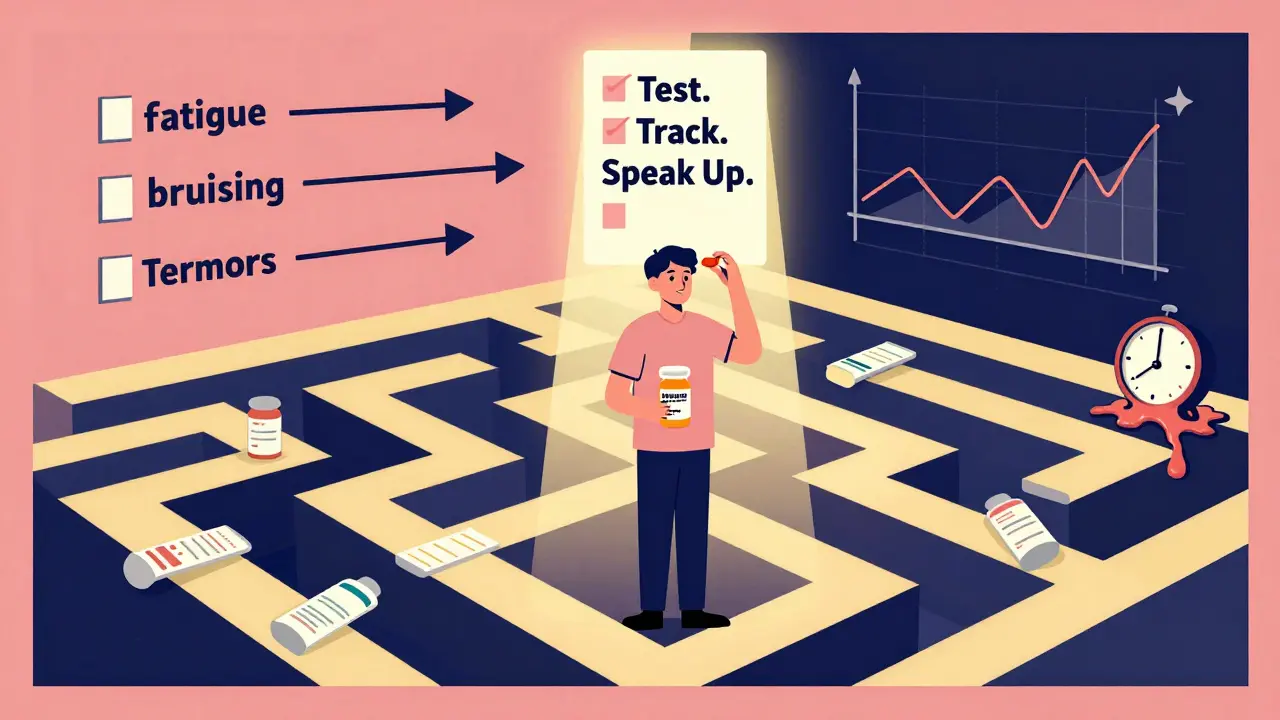
These aren’t "just side effects." They’re signals. If you notice them after a generic switch, don’t wait for your next appointment. Call your doctor. Bring your pill bottle. Show them the name of the new generic. That information matters.
Also, keep a log. Note when you switched, what symptoms started, and when they improved or worsened. This helps your doctor spot patterns. One patient on Reddit described going from feeling fine to having seizures within two weeks after a generic switch. Her doctor had no idea until she showed him the bottle.
Why Some Doctors Still Say It’s Fine
Not every expert agrees that dose changes are needed after switching generics. Some argue that the vast majority of patients don’t experience issues. The FDA still maintains that generics are therapeutically equivalent. A 2020 JAMA editorial by Dr. Robert Temple claimed concerns are often overstated.
And yes-many patients switch without a problem. One person on a health forum said their TSH stayed perfectly stable after switching from Synthroid to generic levothyroxine. No change. No symptoms. No adjustment needed.
But that’s not the whole story. The problem isn’t that generics are unsafe. It’s that they’re not all the same. And for NTI drugs, "not the same" can be dangerous.
What’s changing now? The FDA is considering tighter bioequivalence standards for NTI drugs-shifting from 80-125% to 90-111%. That would mean generics have to be much more consistent. But until that rule is final, the risk remains.
What You Can Do Right Now
If you’re on a narrow therapeutic index drug, here’s what to do:
- Know your drug. Is it on the NTI list? Ask your pharmacist or look up your medication in the FDA’s Orange Book.
- Ask your doctor: "Should I stay on the same generic?" Some prescribers will write "Do Not Substitute" on the prescription. That’s legal and effective.
- Request a copy of the pharmacy label every time you fill your script. Note the manufacturer name.
- Get blood tests done 1-2 weeks after any switch. Don’t wait for symptoms.
- If you feel off, speak up. Don’t assume it’s "just stress" or "aging."
Insurance companies and pharmacy benefit managers often push for the cheapest generic. But your health isn’t a cost center. If your doctor recommends staying on one brand or generic, you have the right to appeal a formulary change.
The Bigger Picture
NTI drugs make up just 11% of the generic market-but they account for billions in healthcare spending because of the complications they cause. Hospitals, transplant centers, and academic medical facilities are already implementing policies to prevent random switches. Community pharmacies? Not so much.
Specialty generics are emerging-brands like Teva’s "TacroBell" for tacrolimus, which show tighter consistency in clinical trials. These aren’t just "generic" anymore. They’re engineered for stability.
Right now, the system is a patchwork. Regulations lag behind real-world outcomes. But patients who understand their meds, track their symptoms, and advocate for monitoring can avoid the pitfalls.
Switching to generics saves money. But it shouldn’t cost you your health. When it comes to NTI drugs, the right dose isn’t just about the pill in the bottle. It’s about your body’s response-and the vigilance of the people who care for you.
Do all generic medications need dose adjustments after switching?
No. Most generic medications-like antibiotics, blood pressure pills, or antidepressants-don’t require dose changes after switching. The risk is limited to drugs with a narrow therapeutic index (NTI), where even small changes in blood levels can cause harm. These include levothyroxine, warfarin, phenytoin, tacrolimus, and digoxin.
How long after switching to a generic should I get blood tests?
For NTI drugs, blood tests should be done within 1-2 weeks after switching. For warfarin, INR checks are recommended within 7-14 days. For levothyroxine, TSH levels are typically checked at 6-8 weeks. If your doctor doesn’t suggest testing, ask for it. Early detection prevents serious complications.
Can I ask my doctor to write "Do Not Substitute" on my prescription?
Yes. In the U.S., prescribers can legally write "Do Not Substitute" or "Dispense as Written" on prescriptions for NTI drugs. This prevents the pharmacy from automatically switching you to a different generic. It’s a simple step that can protect your stability.
Why do some people have no issues after switching generics?
Many patients do switch without problems. The body can tolerate small variations in some cases. But for others-even those with the same diagnosis-the same change can trigger symptoms. This is why individual monitoring matters. Just because it worked for someone else doesn’t mean it will work for you.
Are newer generics safer than older ones?
Some newer generics, especially those made by companies specializing in NTI drugs, have tighter manufacturing controls and show less variability in clinical studies. For example, Teva’s TacroBell tacrolimus has demonstrated lower within-subject variability than standard generics. But unless your doctor or pharmacist specifies a particular brand, you may still get a different one each time.