
Drug Side Effects: What You Need to Know About Common and Dangerous Reactions
When you take a medication, you’re not just targeting the problem—you’re also affecting your whole body. Drug side effects, unintended physical or mental reactions caused by medications. Also known as adverse drug reactions, they can be mild, like a dry mouth or drowsiness, or serious enough to land you in the hospital. These aren’t rare accidents. They happen every day, often because people don’t realize how common or dangerous they can be.
Some drug interactions, harmful combinations when two or more medications are taken together turn safe drugs into risks. For example, mixing blood thinners with common painkillers like ibuprofen can cause internal bleeding. Statins, great for lowering cholesterol, can trigger muscle damage when taken with certain antibiotics. Even over-the-counter cough syrups can lead to breathing problems if misused. And then there’s liver toxicity, damage to the liver caused by medications or supplements—something that can sneak up on you from pills you’ve been taking for months, like acetaminophen or herbal products. These aren’t theoretical risks. They show up in real patients, often after being ignored too long.
It’s not just about the drug itself. Your age, other health conditions, and even your diet can change how your body handles a medication. Someone with kidney issues might need a lower dose of atorvastatin. A person with sleep apnea could face worse breathing problems on opioids. And if you’re taking multiple prescriptions, the chances of a hidden interaction go up fast. That’s why monitoring matters—knowing what to watch for, when to call your doctor, and how to spot early signs like unexplained fatigue, yellowing skin, or sudden muscle pain.
Below, you’ll find real, practical guides on the most dangerous and misunderstood side effects. From how opioids can slow your breathing without warning, to why your daily supplement might be hurting your liver, to how common drugs like statins and blood thinners can turn risky when mixed with others. These aren’t theory pieces. They’re based on what patients actually experience—and what doctors wish more people knew before it was too late.
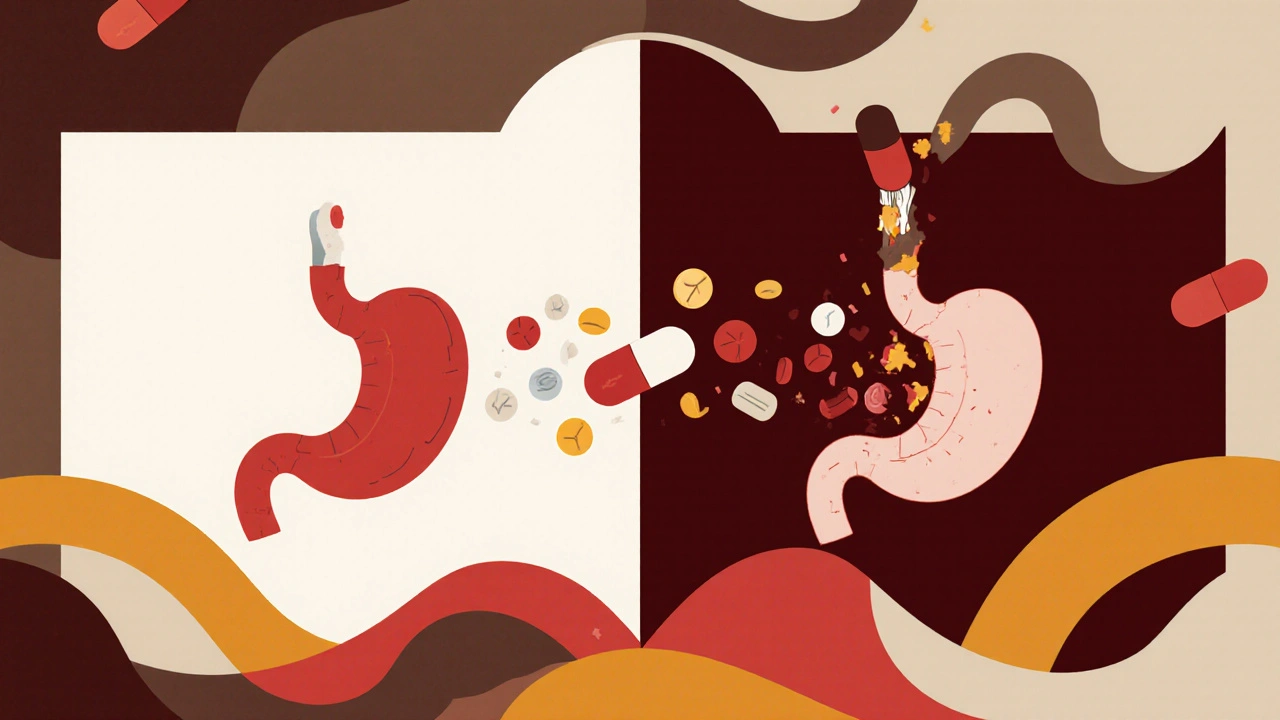
Formulation Differences and Side Effects: Tablets, Capsules, and Extended-Release Medications
Learn how tablet, capsule, and extended-release formulations affect drug absorption and side effects. Discover why ER pills reduce nausea and dizziness - and when they might do more harm than good.
Read more