
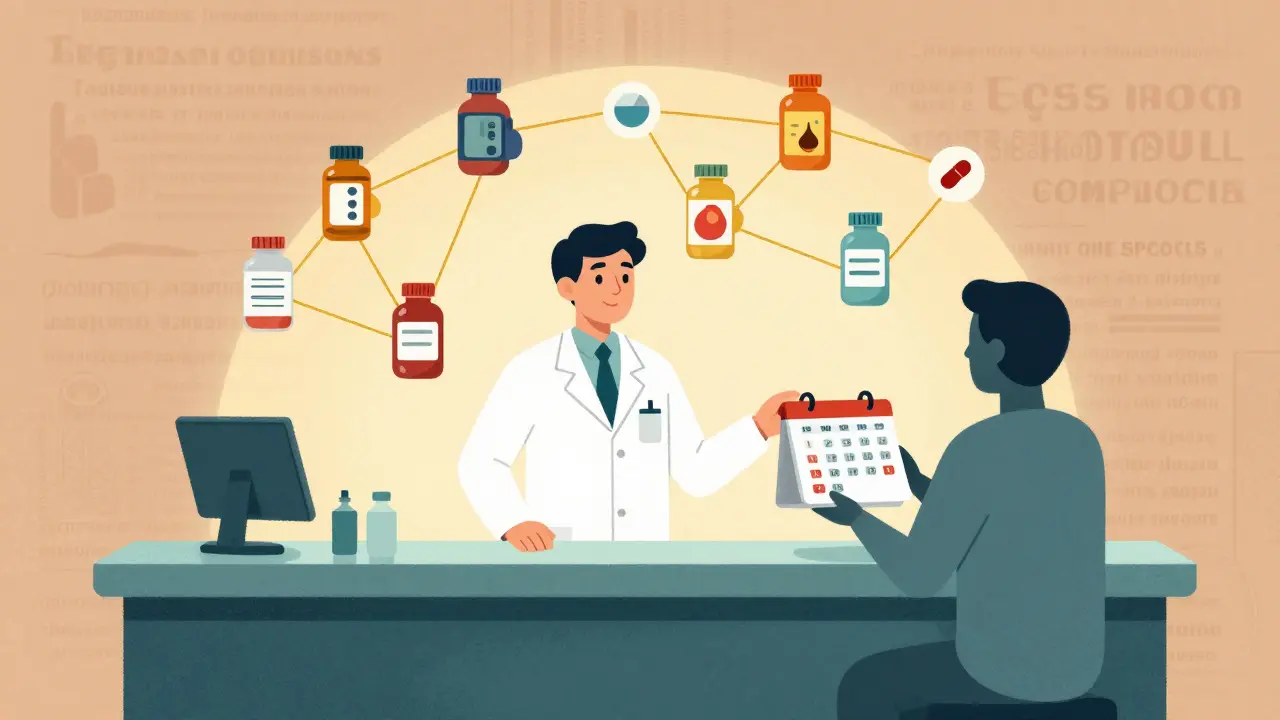
Medication Safety Cost Calculator
Understand Your Medication Safety Costs
Using multiple pharmacies increases your risk of dangerous drug interactions by 34%. This calculator helps you compare the financial impact of medication safety versus potential savings from using multiple pharmacies.
Your Safety Analysis
ResultsBased on your inputs and data from the Agency for Healthcare Research and Quality:
With Multiple Pharmacies
Total annual medication cost: $900
Estimated potential savings: $200
Risk of dangerous interactions: 34% higher
Potential hospitalization risk cost: $3,000
With One Pharmacy
Total annual medication cost: $900
Estimated potential savings: $0
Risk of dangerous interactions: 34% lower
Potential hospitalization risk cost: $0
Your Potential Savings
Switching to one pharmacy saves you an estimated $3,000 annually.
This includes both the cost of potential hospitalizations and the value of your health.
When you’re taking multiple medications, every pharmacy you visit is a potential blind spot. If you fill your blood pressure pills at one store, your diabetes meds at another, and your pain relievers at a third, no single pharmacist has the full picture. That’s not just inconvenient-it’s dangerous. Using one pharmacy for all your prescriptions isn’t just a smart habit; it’s a proven way to stop harmful drug interactions before they happen.
Why One Pharmacy Makes a Real Difference
Pharmacists don’t just count pills. They’re trained to spot dangerous combinations. When you use the same pharmacy for everything, that pharmacist sees your complete list: prescriptions, over-the-counter meds, vitamins, even herbal supplements. That full view lets them catch interactions that could make you sick-or worse. Studies show patients using multiple pharmacies have a 34% higher chance of experiencing a dangerous drug interaction. One of the most common and deadly combinations? Warfarin (a blood thinner) and NSAIDs like ibuprofen. Together, they can cause serious internal bleeding. When both are filled at the same pharmacy, the system flags it. When they’re filled separately, the alert never shows up. The numbers don’t lie. In patients using just one pharmacy, therapy duplication-like accidentally taking two different pills with the same active ingredient-drops from 7% to just 0.3%. That’s not a small improvement. That’s the difference between a minor mistake and a hospital visit.How Medication Synchronization (Med Sync) Works
Most major pharmacies now offer a free service called medication synchronization, or “med sync.” It’s not just about getting all your refills on the same day. It’s about building a safety net. Here’s how it works:- You meet with your pharmacist for a full review of every medication you take.
- They adjust your refill dates so everything lines up on one monthly pickup day.
- For prescriptions that don’t align, they give you a short-term supply to bridge the gap.
- From then on, you pick up all your meds on the same day each month.
What You’re Protecting Against
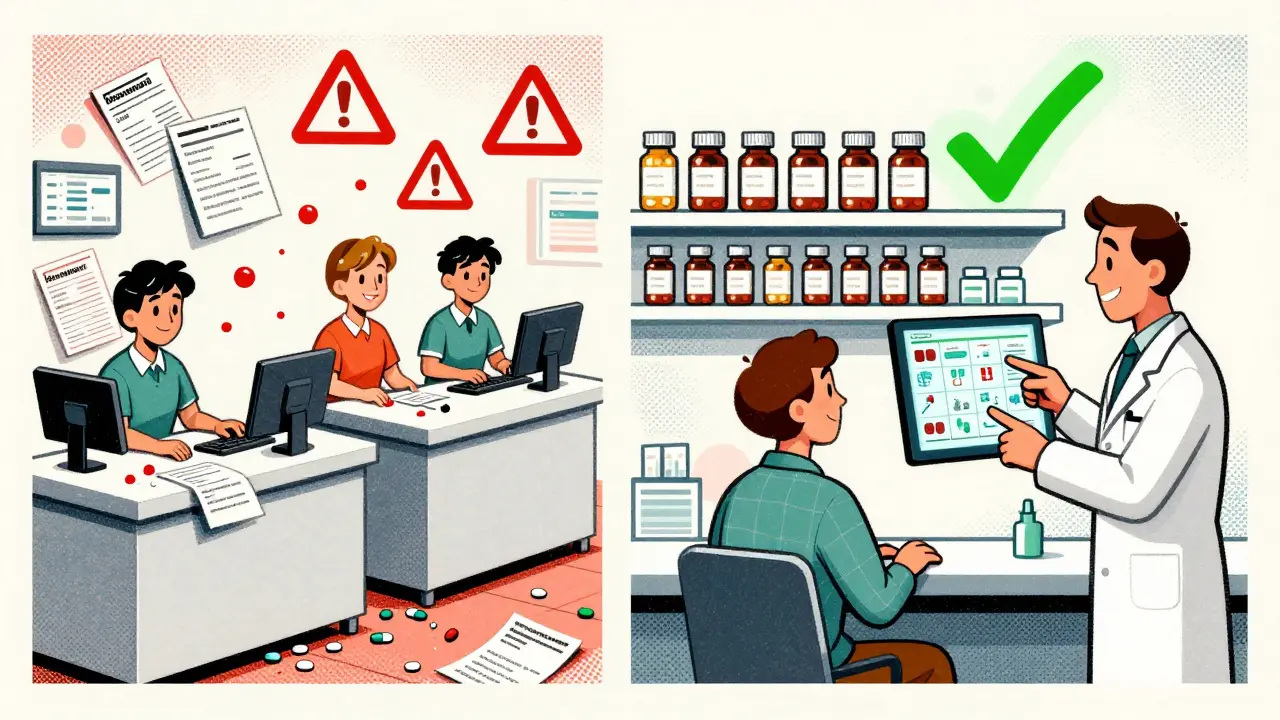
Polypharmacy-taking five or more medications-is common. About 15% of U.S. adults are in this group. For them, the risks are even higher. A single missed dose or a new over-the-counter cold medicine can throw off an entire regimen. Here’s what happens when you use multiple pharmacies:- Drug interactions go undetected because no one sees the full list.
- You might get duplicate prescriptions-two different pills with the same active ingredient.
- Refill schedules get messy, leading to missed doses or double-dosing.
- Pharmacists can’t give you accurate advice if they don’t know what else you’re taking.
Cost Concerns? Here’s the Real Math
Many people use multiple pharmacies to save money. It’s understandable. A pill might cost $15 at one store and $5 at another. But here’s what’s not always counted: the cost of an adverse drug event. The Agency for Healthcare Research and Quality estimates each preventable hospitalization from a medication error costs $8,750 on average. That’s far more than the $150-$300 you might save annually by hopping between pharmacies. Plus, many pharmacies now offer price matching. If you tell your main pharmacy you found a lower price elsewhere, they’ll often match it. You don’t have to sacrifice savings for safety.How to Make the Switch
Switching to one pharmacy doesn’t require a big overhaul. Here’s how to do it in 2-4 weeks:- Choose your pharmacy. Pick one that’s convenient and offers med sync.
- Bring a complete list of everything you take: prescriptions, OTCs, supplements, even vitamins. Don’t skip anything.
- Ask them to transfer all your prescriptions. This usually takes 2-5 business days per script.
- Schedule a med sync consultation. This is free and takes about 45 minutes.
- Once your schedule is aligned, stick with it. Don’t go elsewhere unless it’s an emergency.
What Experts Say
Pharmacists across the country agree: single-pharmacy use is one of the simplest, most effective safety steps you can take. Dr. Amit Kakar, a pharmacist in California, says: “All prescriptions are monitored. That prevents duplicate medication and ensures patients take their prescriptions on time.” The 2014 study in the Journal of Managed Care & Specialty Pharmacy found that pharmacists using complete patient histories had far fewer false alerts and higher confidence in their advice. When patients used multiple pharmacies, pharmacists overrode 80% of interaction warnings-not because they were wrong, but because they didn’t have the full picture.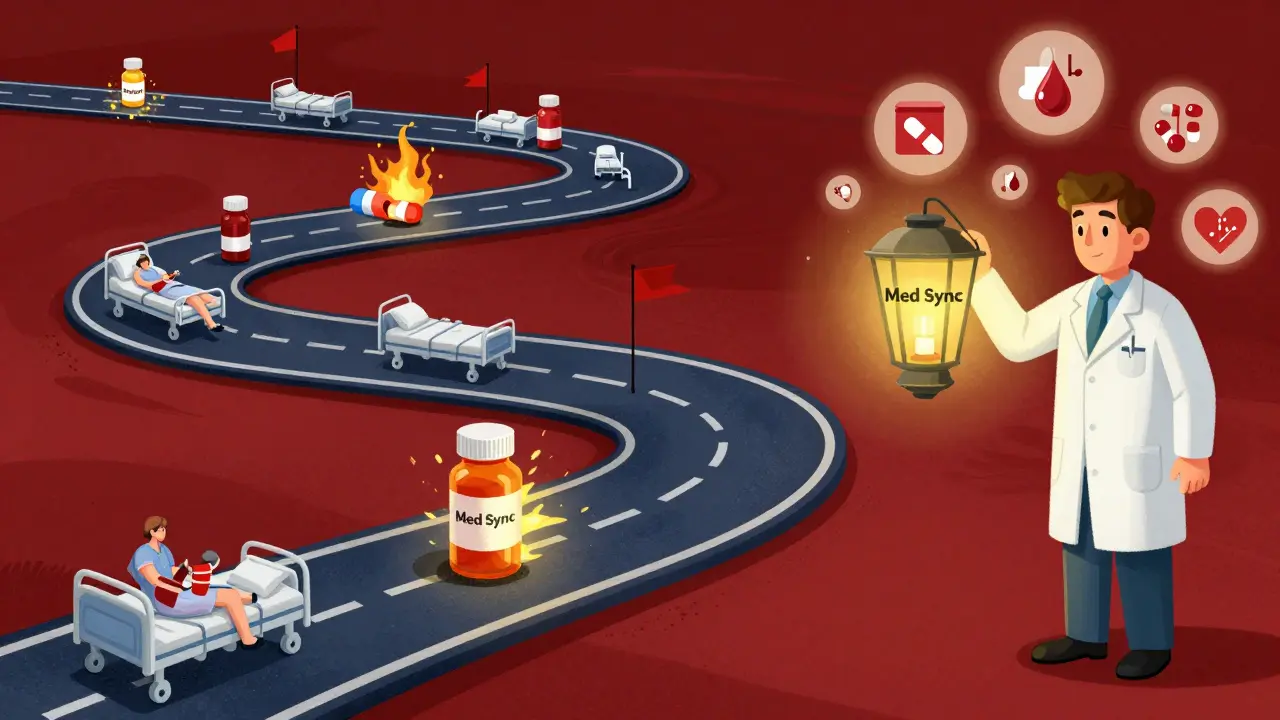
What’s Changing Now
Healthcare systems are catching on. In 2023, the Pharmacy Quality Alliance made “comprehensive medication review completion” a key performance metric. Medicare Part D is now offering financial incentives to pharmacies that hit 90%+ med sync rates. Electronic health records are improving too. Systems like Epic and Cerner now share medication histories between providers and pharmacies. But they’re not perfect. If you’re filling a script at a pharmacy that doesn’t have access to your full record, you’re still at risk. The future? AI tools are coming. The University of Southern California is developing a decision-support system set to launch in mid-2025 that analyzes your full medication list for both risks and benefits. But even that won’t replace a pharmacist who knows your name, your routine, and your history.Real People, Real Results
Patients who made the switch report the same thing: peace of mind. A 2023 survey by SingleCare found 78% of patients who consolidated their prescriptions felt they understood their meds better. Only 14% reported missing doses monthly, compared to 41% who used multiple pharmacies. One Reddit user on r/Pharmacy wrote: “I was on five meds. I switched to one pharmacy. My pharmacist noticed I was getting two different versions of the same blood pressure pill. She called my doctor. Saved me from a fall and a trip to the ER.”Final Thought: Safety Isn’t a Trade-Off
You don’t have to choose between saving money and staying safe. Using one pharmacy doesn’t mean you’re locked in. You can still shop around for prices-but do it within the same pharmacy. Ask for price matching. Ask about generic alternatives. Ask about discount programs. The real cost isn’t the price of the pill. It’s the cost of a mistake. And with one pharmacy, you’re not just getting your meds. You’re getting a safety partner who knows your whole story.Can I still use different pharmacies if I’m careful?
It’s possible, but risky. Even the most careful patients miss interactions because no single pharmacist has your full history. The data shows a 34% higher chance of dangerous drug interactions when using multiple pharmacies. The risk isn’t worth the savings.
What if my pharmacy doesn’t offer med sync?
Most major chains do. If yours doesn’t, ask if they can start. If they say no, consider switching to one that does. Med sync is free, widely available, and backed by years of safety data. You deserve a pharmacy that prioritizes your health over convenience.
Do I need to tell my doctor I’m switching pharmacies?
Not required, but helpful. Letting your doctor know helps them coordinate care. They can also send electronic prescriptions directly to your new pharmacy, speeding up the transfer process.
What if I travel a lot or live in two places?
You can still use one pharmacy. Many offer mail-order services or have national networks. Ask your pharmacy if they can ship your meds or transfer prescriptions to a nearby location when you’re away. This is a common need-and pharmacies are used to handling it.
Can I use one pharmacy for prescriptions but buy OTC meds elsewhere?
It’s better to tell your pharmacist about everything you take-even OTCs and supplements. If you buy them elsewhere, keep a written list and bring it to your next appointment. Your pharmacist needs the full picture to keep you safe.
April Williams
January 28, 2026 AT 01:22OMG I CANNOT BELIEVE PEOPLE STILL DO THIS. I had a cousin who used three different pharmacies and ended up in the ER with internal bleeding because her blood thinner and ibuprofen weren't flagged. Her pharmacist at CVS said she could've died. This isn't just advice-it's a lifesaver. Stop being lazy and consolidate. Your life isn't a coupon app.
Kirstin Santiago
January 28, 2026 AT 23:25I’ve been using one pharmacy for five years now, and honestly? It’s been the quietest win of my health journey. My pharmacist remembers my dog’s name, knows when I’m stressed because I skip my blood pressure med, and once caught a duplicate SSRI I didn’t even realize I was taking. She called my doctor, we adjusted it, and I’ve slept better since. It’s not about convenience-it’s about being seen.
Kegan Powell
January 30, 2026 AT 08:09think about it like this… your meds are like a symphony. every pill is an instrument. if you let different orchestras play them separately… chaos. but one pharmacist? they’re the conductor. they hear the whole piece. not just the loud parts. the quiet ones too. the herbal teas. the gummy vitamins. the ibuprofen you grab at the gas station. they know the harmony. and when something’s off? they stop the music before the note shatters your liver. 🎻💊
Andrew Clausen
January 30, 2026 AT 20:03The claim that using multiple pharmacies increases dangerous interactions by 34% is statistically misleading. The cited study from the Journal of Managed Care & Specialty Pharmacy (2014) did not control for patient age, polypharmacy burden, or compliance rates. Correlation does not equal causation. Additionally, the 7% to 0.3% duplication drop assumes perfect data transfer between systems-which is unrealistic given fragmented EHR interoperability. This article is alarmist pseudoscience dressed as public health advice.
Anjula Jyala
January 31, 2026 AT 00:23Med sync is basic pharmacovigilance 101. If you're polypharmacy patient with >5 meds, fragmented pharmacy use is a violation of WHO medication safety guidelines. Your OTC NSAIDs are not exempt from CYP450 interactions. You're not a consumer. You're a clinical case. Stop treating your meds like Amazon Prime orders.
Murphy Game
January 31, 2026 AT 14:17Ever wonder why Big Pharma loves single-pharmacy models? Easier to push brand-name drugs. Easier to track your habits. Easier to sell you that $300 monthly injection instead of the $5 generic. They don’t care if you live. They care if you stay dependent. That ‘free med sync’? It’s a trap. Your data’s being sold. Your refill schedule? Monitored. Your pharmacist? A corporate agent. Don’t be fooled.
John O'Brien
February 2, 2026 AT 06:31bro i switched to one pharmacy last year and my pharmacist literally saved my life. i was on 7 meds and she caught that my gabapentin and my new sleep aid were both CNS depressants. i was about to OD on sleep. she called my doc, we cut one, now i sleep better and don’t feel like a zombie. no cap. do this.
Harry Henderson
February 3, 2026 AT 16:54STOP WAITING. Your health isn’t a to-do list. It’s your most important asset. One pharmacy. One pharmacist. One chance to not die from a stupid mistake. You think saving $20 on ibuprofen is worth a hospital bill? You think your pride is worth your liver? Go. Do it. Now. Your future self will thank you.
suhail ahmed
February 4, 2026 AT 08:24in india we call this ‘dawa ka ek ghar’-medicine’s one home. my auntie used to jump between five shops, always arguing over price. then she got sick from mixing her blood pressure pill with a turmeric supplement. now she goes to one pharmacy. the pharmacist calls her ‘bhabhi’ and asks about her grandkids. she says the real medicine isn’t in the bottle-it’s in the person who remembers her name. 🌿❤️
Candice Hartley
February 5, 2026 AT 05:25I did this last month and it’s been so calming. My pharmacist even texted me when my blood pressure med was back in stock. 😊
astrid cook
February 6, 2026 AT 04:32Why do we always blame the patient? Why not blame the system that makes us juggle 3 pharmacies just to afford our meds? This isn’t safety-it’s guilt-tripping people who can’t afford to buy everything at one place. And don’t even get me started on how pharmacies charge $15 extra for med sync ‘consultations’ that are just a 10-minute chat.
Kathy McDaniel
February 7, 2026 AT 04:18i switched and honestly i forgot how much easier it was. my pharmacist knows i hate pills so she gives me the liquid version now. also she gave me free samples when i was between jobs. i didn’t even ask. she just… knew. 🥺
Paul Taylor
February 7, 2026 AT 18:01Let’s be real here. The whole single-pharmacy thing sounds great until you live in a rural area where there’s only one pharmacy and it’s 45 minutes away. Or you’re elderly and can’t drive. Or you’re homeless and your meds get stolen from your bag every time you switch shelters. The article ignores the structural barriers. It’s not about laziness. It’s about access. And if you’re preaching this to someone who can’t afford gas to get to CVS, you’re not helping. You’re just making them feel bad.
Desaundrea Morton-Pusey
February 7, 2026 AT 19:34Of course they want you to use one pharmacy. That’s how they control you. Big Pharma + Big Pharmacy = one big profit machine. They don’t want you to know about generics. They don’t want you to compare prices. They want you docile, dependent, and scanning your QR code every month. Wake up. This isn’t healthcare. It’s surveillance with a stethoscope.