
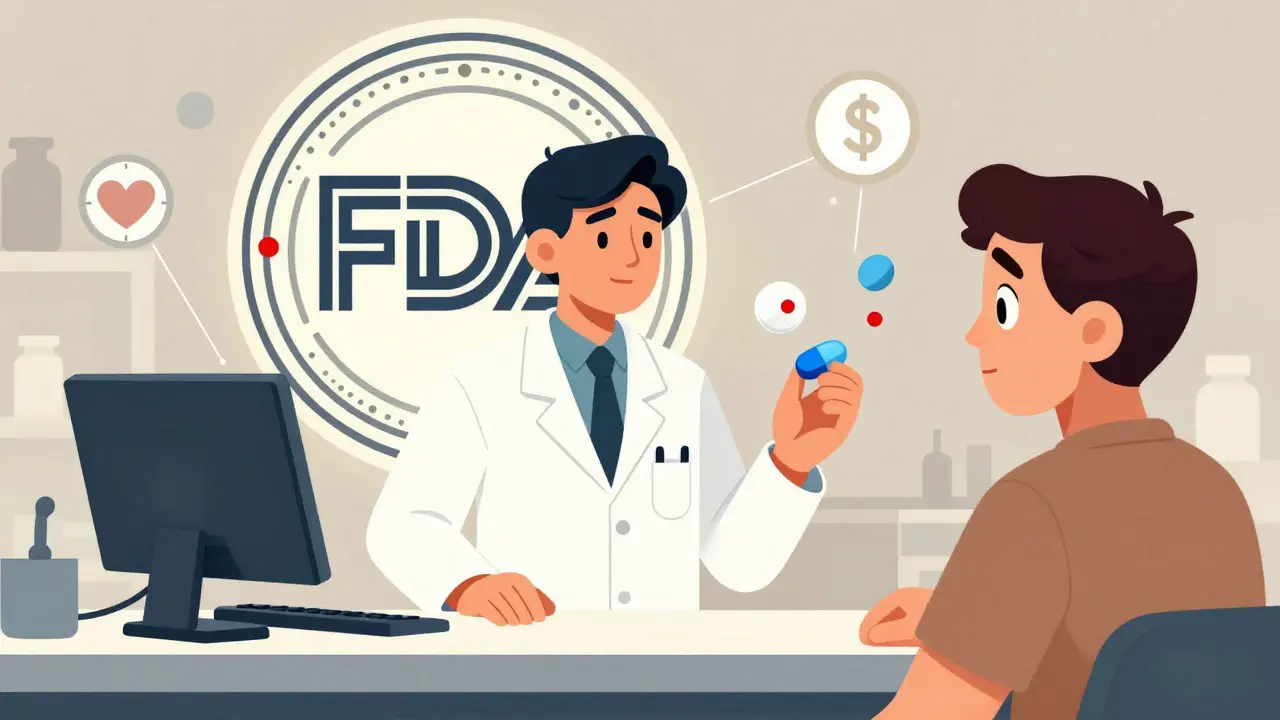
When a patient picks up a prescription and sees a pill that looks completely different from what they’re used to, panic can set in. Generic medication counseling isn’t just a box to check-it’s a lifeline. In community pharmacies across the U.S., pharmacists are legally required to explain why a patient’s brand-name drug was swapped for a generic. But too often, this conversation is rushed, vague, or skipped entirely. The result? Patients stop taking their meds because they think the new pill is weaker, less safe, or even a mistake.
Why Generic Counseling Isn’t Optional
Under the Omnibus Budget Reconciliation Act of 1990 (OBRA '90), pharmacists have a federal mandate to counsel patients on all new prescriptions. This includes every time a generic is substituted. The Centers for Medicare & Medicaid Services (CMS) makes it clear: a patient’s ability to use a medication correctly is tied directly to their understanding of it. And when it comes to generics, misunderstandings are common. A 2023 Consumer Reports survey found that 43% of patients believe generic drugs are less effective. Nearly a third think they take longer to work. Over a third worry they cause more side effects. These aren’t myths from fringe websites-they’re real fears held by everyday people. And without clear, calm, confident counseling, those fears become non-adherence. The stakes are high. A study published in PMC10748552 showed that patients who received detailed generic counseling were 68% more likely to trust their medication than those who didn’t. Meanwhile, the National Community Pharmacists Association found that the most common error in pharmacy isn’t a dosing mistake-it’s a communication failure. Patients stop taking blood pressure pills because the color changed. They toss out antidepressants because the shape is different. These aren’t rare cases. They’re predictable outcomes of poor counseling.What You Must Say: The Core Elements
There’s no room for guesswork. Federal guidelines and state laws spell out exactly what needs to be covered. Here’s what every pharmacist must address during generic counseling:- The name: Say both the brand and generic names out loud. Don’t assume the patient knows that “lisinopril” is the same as “Zestril.”
- The purpose: Explain why they’re taking it. Is it for blood pressure? Cholesterol? Depression? Don’t just say “it’s for your heart.” Be specific.
- The dose and how to take it: Time of day? With food? Can they crush it? Are there interactions with alcohol or other meds?
- The appearance change: This is critical. Show them the difference. Say: “Your old pill was white and round. This one is blue and oval. It’s the same medicine, just made by a different company.”
- Bioequivalence: Use plain language. “This generic has the same active ingredient, in the same amount, and works the same way in your body. The FDA requires it to be just as effective as the brand.”
- Cost savings: Mention it. “This version saves you about $40 a month. The medicine works the same, but you pay less.”
Don’t Just Talk-Check for Understanding
Asking “Do you have any questions?” is not counseling. It’s an invitation to silence. Most patients won’t speak up-not because they understand, but because they’re afraid to look foolish or don’t know what to ask. Use the teach-back method. After explaining, say: “To make sure I explained this right, can you tell me in your own words how you’ll take this pill?” Or: “If you saw this pill in your bottle next month and it looked different again, what would you do?” A patient who says, “I’ll take it once a day, and if it looks weird, I’ll call the pharmacy,” has understood. A patient who says, “I guess it’s fine,” hasn’t. The difference is the difference between adherence and abandonment.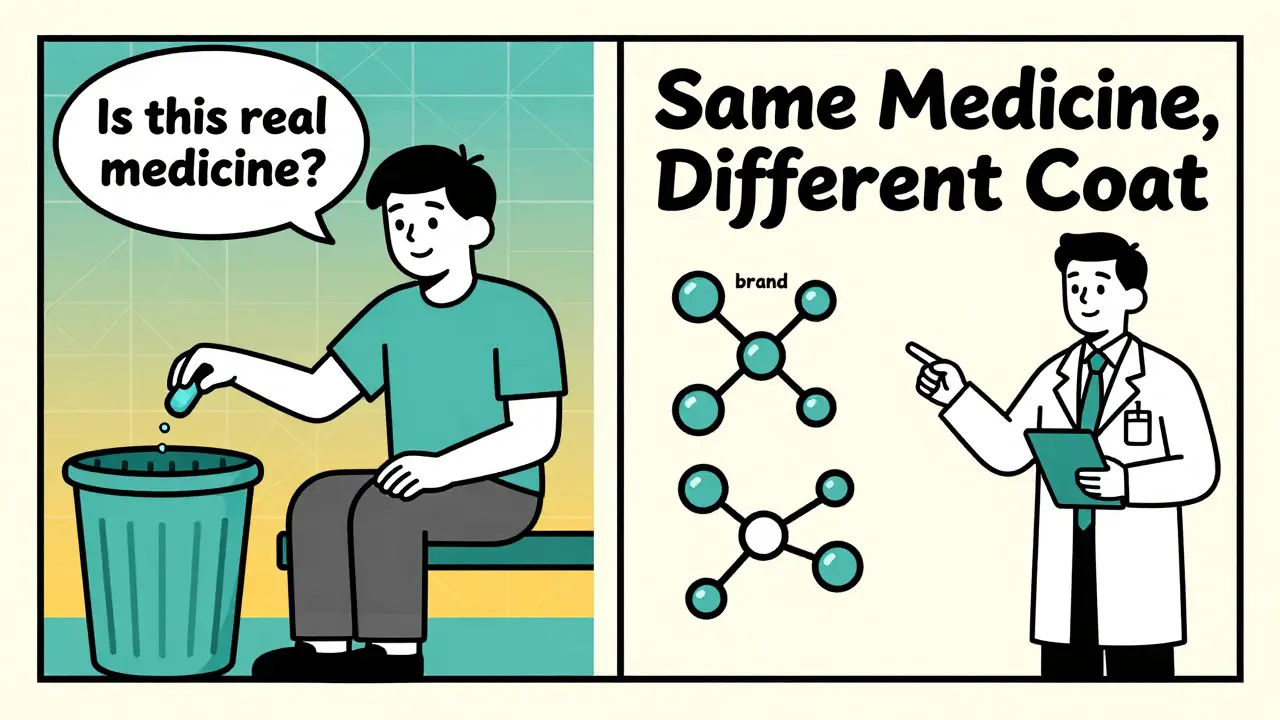
State Laws Vary-Know Your Rules
Counseling requirements aren’t the same everywhere. In 32 states, pharmacists must explicitly notify patients when substituting a generic. In 17, substitution is allowed without mention unless the patient asks. California requires a specific checkbox on the record showing the counseling happened. Texas just needs a note saying counseling was offered. Pharmacists can’t afford to assume. Check your state board’s latest guidelines. Know whether your pharmacy’s system prompts you to document the conversation-and what exactly it asks for. CMS updated its guidance in February 2024: you now have to document the specific elements discussed, not just that counseling occurred.Time Is Short-But This Conversation Can’t Be
The average pharmacist handles 14.7 prescriptions per hour. That’s about four minutes per script, including scanning, labeling, and checking for interactions. Counseling often gets squeezed out. But here’s the truth: skipping counseling costs more in the long run. A patient who stops taking their statin because they thought the generic didn’t work may end up in the ER with a heart attack. That’s not just a health crisis-it’s a financial one for the system. Some pharmacies are using tech to help. CVS and Walgreens now require annual training on generic counseling. Sixty-eight percent of major chains use electronic prompts that pop up when a generic is dispensed. These tools remind pharmacists to cover the basics, even during busy shifts.
What Patients Really Say
Reddit threads and pharmacy review sites tell the real story. One patient wrote: “I stopped my blood pressure meds for two weeks because the pills looked different. I thought it was a mistake.” Another said: “My pharmacist showed me pictures of the brand vs. generic. That one minute saved me from throwing away my medication.” The most common complaint on Trustpilot? “I felt rushed.” The most common positive comment? “They actually explained why the pill looked different.” It’s not about spending ten minutes per patient. It’s about spending the right three minutes. A clear explanation about appearance and bioequivalence, followed by a quick teach-back, can turn fear into confidence.The Bigger Picture: Why This Matters
Generics make up 90.7% of all prescriptions dispensed in the U.S.-but only 23.7% of total drug spending. They’re the backbone of affordable care. But if patients don’t trust them, they don’t take them. And if they don’t take them, the whole system fails. The 2024 Medicare Part D proposed rule now includes “evidence of appropriate generic counseling” as a quality metric for pharmacy bonus payments. Value-based care is coming-and counseling is becoming part of the performance score. Pharmacists aren’t just dispensers. They’re the last line of defense against misunderstanding. And in the case of generics, that defense starts with a simple conversation.What to Do Tomorrow
You don’t need a new system. You don’t need more staff. You need to change one habit:- Before handing over the bottle, say: “I see your medication was switched to a generic. I want to make sure you’re comfortable with this.”
- Point out the physical differences: “This one is blue, not white. It’s the same medicine, just a different manufacturer.”
- Explain bioequivalence in one sentence: “The FDA says it works exactly the same as the brand.”
- Ask them to repeat back: “Can you tell me how you’ll take this?”
- Document it-not just “counseling provided,” but “explained appearance change and bioequivalence; patient confirmed understanding.”
Is it legal for a pharmacist to switch a brand-name drug to a generic without telling the patient?
In 17 U.S. states, pharmacists can substitute a generic without informing the patient unless the patient asks. But in 32 states, the law requires explicit notification. Even in states where it’s not required, federal guidelines under OBRA '90 still mandate counseling on all new prescriptions, including generics. Best practice is to always inform patients-regardless of state law-because misunderstandings lead to non-adherence.
Do generic drugs work as well as brand-name drugs?
Yes. The FDA requires generics to have the same active ingredient, strength, dosage form, and route of administration as the brand. They must also meet strict bioequivalence standards-meaning they deliver the same amount of medicine into the bloodstream at the same rate. Studies show no meaningful difference in effectiveness or safety between brand and generic versions for nearly all medications. The only differences are in inactive ingredients, like color or shape, which don’t affect how the drug works.
Why do generic pills look different from brand-name ones?
Generic manufacturers can’t copy the exact appearance of brand-name pills because of trademark laws. So they change the color, shape, or markings. These differences are only in the inactive ingredients-like dyes or fillers-which have no effect on how the drug works. It’s like two different brands of aspirin: one is red and round, another is white and oval. They both contain acetylsalicylic acid and work the same way.
What should I do if a patient refuses to take a generic?
First, listen. Ask why they’re hesitant. Many times, it’s fear of the unknown. Show them the FDA’s official statement on generic equivalence. Offer to call the prescriber if they still want the brand. But don’t assume they’re wrong-help them understand. If they insist on the brand, you can dispense it if the prescription says “Dispense as Written” or “Do Not Substitute.” Otherwise, you’re legally allowed to substitute unless the patient objects.
How can I fit generic counseling into a busy day?
You don’t need more time-you need better structure. Use a simple script: “This is now a generic version. It looks different but works the same. Take it the same way as before. If you’re unsure, call us.” Pair that with the teach-back method: “Can you tell me how you’ll take this?” That takes 60 to 90 seconds. Many pharmacies now use electronic prompts to remind pharmacists to cover the key points. Training staff to flag patients with prior adherence issues can also help you prioritize who needs the most attention.
Jake Moore
January 16, 2026 AT 21:54Just saw this and had to chime in-this is the exact reason I started using the teach-back method in my pharmacy. I used to rush through it, but now I say: 'Show me how you'll take this pill.' Half the time, they say they'll crush it or take it with grapefruit juice. I fix it right then. No more ER visits over confusion. Simple. Effective. Game-changer.
Naomi Keyes
January 17, 2026 AT 06:26It's not merely a matter of counseling-it's a statutory obligation under OBRA '90, codified at 42 U.S.C. § 1396r-8, and further enforced by CMS guidelines issued in February 2024, which now require documentation of specific counseling elements-not merely a checkbox. Failure to comply exposes pharmacies to regulatory penalties, including potential loss of Medicare participation. Moreover, the FDA's bioequivalence standards (21 CFR § 320.24) mandate that generics must demonstrate no more than a 10% variance in AUC and Cmax, which is clinically insignificant. Yet, pharmacists continue to under-communicate. This is negligence, not oversight.
Jodi Harding
January 17, 2026 AT 06:48People don’t stop taking meds because they’re dumb. They stop because they feel lied to. A blue pill isn’t just a blue pill-it’s a betrayal. And no, ‘it’s the same’ doesn’t fix that.
Stacey Marsengill
January 18, 2026 AT 22:19I used to work retail. Saw so many elderly patients cry because their ‘heart pill’ changed color. One woman threw hers in the trash and said, ‘They’re trying to poison me with cheaper stuff.’ I didn’t have time to explain bioequivalence. But I held her hand. And I said, ‘I’ll call your doctor. We’ll get you back the old one.’ Sometimes, the medicine isn’t in the pill-it’s in the silence between the words.
Andrew Short
January 20, 2026 AT 05:15Let’s be real: generics are a corporate scam. The FDA’s ‘bioequivalence’ standards are a joke. I’ve seen people crash on generics. The inactive ingredients? They’re full of fillers from China that cause inflammation. You think the government cares? No. They care about saving $40 a month. Meanwhile, your kidneys are slowly dying. Wake up.
Joni O
January 21, 2026 AT 13:32i just started using the script you mentioned: ‘this is now a generic. looks diff, works same. take it like before. if unsure, call us.’ then i ask them to repeat it back. it takes 90 seconds. i’ve had zero returns since. also, i started putting a sticky note on the bottle with the brand name written on it. patients love it. small thing. huge impact. 🙏
Chuck Dickson
January 21, 2026 AT 18:18Hey-pharmacists, you’re the unsung heroes of healthcare. Seriously. You’re the last person a patient talks to before they take a pill that might save their life. Don’t underestimate the power of three minutes. You’re not just filling a script-you’re building trust. And trust? That’s the only thing that keeps people alive when they’re scared. Keep doing this work. We see you.
Dayanara Villafuerte
January 22, 2026 AT 19:12My grandma took her blood pressure med for 12 years. One day, the pill turned from white to blue. She thought it was a typo. Didn’t take it for 3 weeks. Got hospitalized. We got the original brand back. Now? Every time she gets a refill, I check the pill. I even screenshot the brand vs generic from the FDA site and print it out. 📸💊 #PharmacistLife
christian Espinola
January 24, 2026 AT 00:13OBRA '90? That’s 34 years old. The FDA’s bioequivalence standards were written before smartphones. You think a pill’s ‘same’ if it’s absorbed 9% slower? That’s not equivalence-that’s approximation. And let’s not pretend generics don’t have different dissolution rates. The data is suppressed. You’re being manipulated by Big Pharma and the FDA. Wake up.
Robert Cassidy
January 25, 2026 AT 17:30This country is collapsing because we let corporations replace quality with cost. Generic drugs are the symbol of it. You don’t fix healthcare by making pills cheaper-you fix it by making people healthier. But no. We’d rather save $40 and let someone die quietly. That’s not efficiency. That’s moral decay.
Danny Gray
January 26, 2026 AT 16:47Why do we even have brand-name drugs if generics are ‘the same’? If they’re truly identical, why do companies trademark the shape and color? Because they know people are stupid. And they’re banking on it. This whole system is a psychological trick. The pill’s appearance is the placebo. The brand is the magic. And pharmacists? They’re the priests of the ritual.
Andrew Qu
January 28, 2026 AT 09:31I’ve been a pharmacist for 18 years. I used to skip counseling. Then my mom had a stroke. She didn’t take her generic because she thought it was fake. I wish I’d explained it to her. Now I never skip it. Even if I’m behind. Even if the line is long. I say: ‘This is your life. Let me make sure you’re okay with it.’ It’s not about the law. It’s about being human.
kenneth pillet
January 29, 2026 AT 20:19just do the three minute thing. say the name, show the difference, ask them to repeat. done. no fluff. no drama. just care.
Zoe Brooks
January 31, 2026 AT 10:32My dad’s on a generic for cholesterol. He didn’t know the difference. I printed out the FDA page on bioequivalence and taped it to his pillbox. He says he feels safer now. It’s not about the pill. It’s about feeling safe. That’s the real medicine.
Tyler Myers
February 2, 2026 AT 09:43Generics are made in India and China. The FDA doesn’t inspect those factories. They get 10% of the budget. The pills are full of contaminants. I’ve seen bloodwork. The levels spike and crash. This isn’t science. It’s a lottery. Don’t be fooled. Your ‘cheap’ pill could be killing you slowly.