
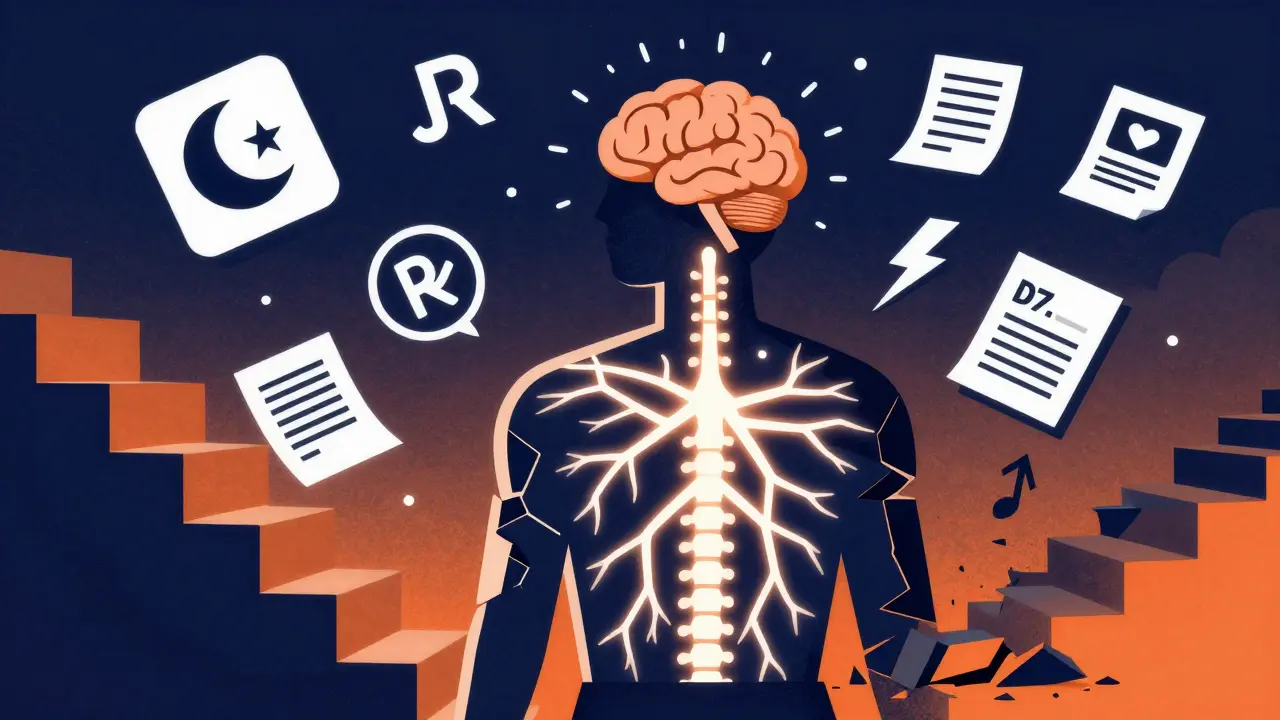
Living with chronic pain isn’t just about hurting all the time. It’s about losing sleep, missing work, avoiding friends, and watching life slip away because every movement feels like a gamble. If you’ve been told your pain will never go away, you’re not alone. Nearly 50 million adults in the U.S. live with chronic pain that lasts longer than three months - past the point where tissue heals. And the worst part? Many still get offered pills as the only solution.
Chronic Pain Isn’t Just a Symptom - It’s a System
Chronic pain doesn’t live in your back, knee, or neck alone. It lives in your brain, your nervous system, your emotions, and even your relationships. Think of it like a faulty alarm system. Your body’s warning system got stuck on “on,” even when there’s no real danger. That’s why pain can persist long after an injury heals - or even without any clear injury at all.
The modern understanding of chronic pain is called the biopsychosocial model. That means it’s not just biology (like nerve damage), but also psychology (anxiety, depression, fear of movement) and social factors (job stress, lack of support, financial strain). Ignoring any one piece makes treatment incomplete.
What Actually Works? The Evidence-Based Tools
Forget the myth that pain meds are the only answer. The latest guidelines from the CDC, WHO, and American College of Physicians all say the same thing: start with non-drug options. Here’s what works - backed by real studies and real people.
Structured Exercise: Movement Is Medicine
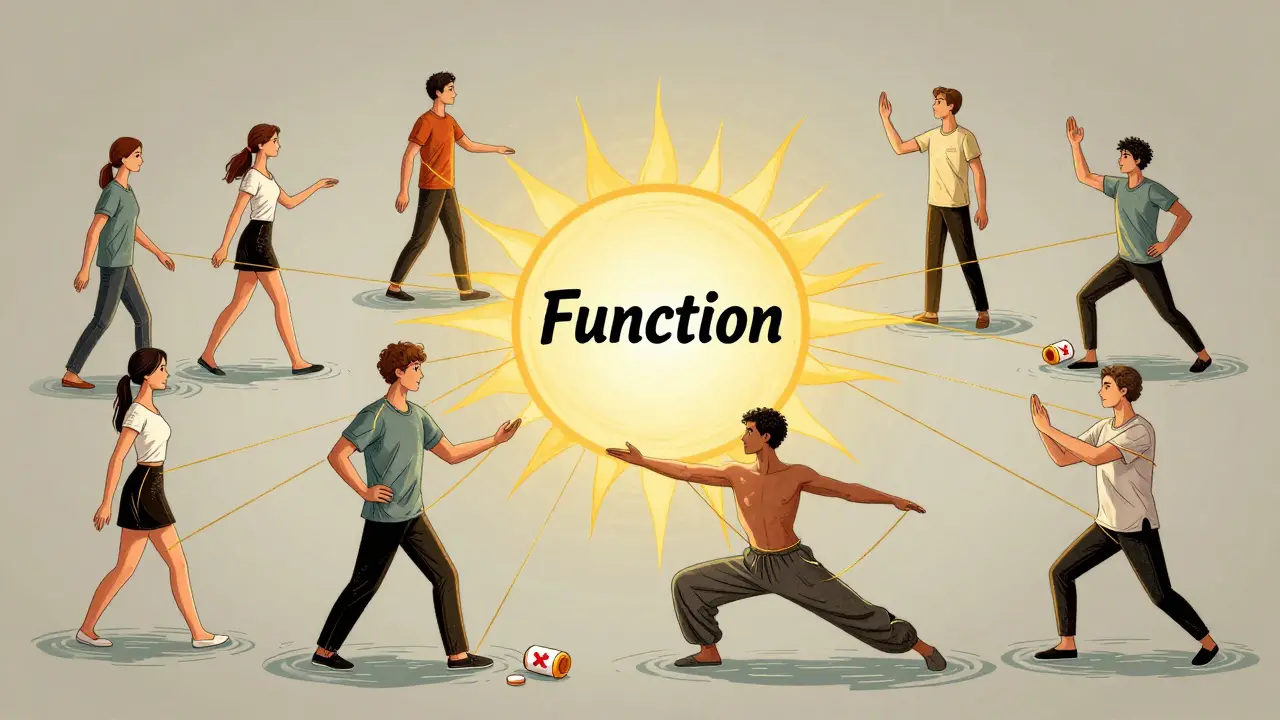
When you’re in pain, the last thing you want to do is move. But staying still makes pain worse. Studies show that consistent, tailored exercise reduces pain by 15-30% and improves daily function by 20-40%.
You don’t need to run marathons. Effective programs include:
- Aerobic walking or cycling (20-30 minutes, 3x a week)
- Strength training with light weights or resistance bands (2x a week)
- Aquatic therapy (water reduces joint stress)
- Tai chi or yoga (improves balance, reduces stress, and retrains movement patterns)
These aren’t quick fixes. You need at least 6-12 weeks of consistent effort. But people who stick with it report being able to play with their kids, walk to the store, or sleep through the night - things they thought were gone for good.
Cognitive Behavioral Therapy (CBT): Rewiring Your Brain’s Pain Response
CBT isn’t “just talking.” It’s a structured, time-limited therapy (usually 8-12 weekly sessions) that teaches you how to change how you think about pain - and how you respond to it.
Research shows CBT can:
- Reduce pain intensity by 25-40%
- Lower disability by 30%
- Cut pain-related catastrophizing (the “this will never end” mindset) by 35-50%
One veteran shared: “After 12 sessions of CBT, I went from needing 120 MME/day to 30 MME/day while actually functioning better.” That’s not luck. That’s rewiring.
Multidisciplinary Pain Rehabilitation: The Gold Standard
For people with complex, long-term pain, nothing beats a full rehab program. Think of it like a team of specialists working together: physical therapists, psychologists, occupational therapists, pharmacists, and pain doctors.
The Mayo Clinic’s three-week intensive program, for example, combines:
- Physical reconditioning
- CBT and mindfulness training
- Biofeedback (learning to control your body’s stress responses)
- Stress and sleep management
- Education on medication risks
Results? 65-75% of participants achieve meaningful improvement in daily function. Half reduce or quit opioids entirely. But here’s the catch: only 15-20% of eligible patients can access these programs. They’re expensive ($15,000-$20,000 per person), hard to find, and often not covered by insurance.
Medications: When and How to Use Them - Safely
Medications have a place - but not as the first or only option.
First-Line Non-Opioid Options
- Acetaminophen: Up to 3,000-4,000 mg/day. Safe for most, but avoid if you have liver issues.
- NSAIDs (ibuprofen, naproxen): Good for inflammation-related pain. Max doses: ibuprofen 3,200 mg/day, naproxen 1,000 mg/day. Risk of stomach or kidney problems with long-term use.
- Duloxetine (60-120 mg/day): An antidepressant proven to help nerve pain and fibromyalgia.
- Pregabalin (150-600 mg/day): Used for neuropathic pain. Can cause dizziness or weight gain.
These aren’t magic bullets, but they’re safer than opioids and often more effective long-term.
Opioids: The High-Risk Option
Opioids might help for a few weeks, but after 3-6 months, their benefits drop off sharply. The CDC found that beyond six months, opioids only add 10-15% more pain relief - while overdose risk jumps 40% if you’re taking more than 50 morphine milligram equivalents (MME) per day.
Guidelines now say: only consider opioids if:
- All other treatments have failed
- You’re on the lowest possible dose
- You’re monitored monthly with urine tests and risk assessments
- You have a signed treatment agreement
And even then - many patients are better off stopping them. One study showed a 15% drop in opioid prescriptions after CDC guidelines were adopted - but only a 5% increase in referrals to non-drug therapies. That gap is costing people their health.
The Real Barriers: Why So Many People Still Suffer
There’s a huge gap between what science says and what people actually get.
- Doctors aren’t trained: Only 35% of primary care providers have received proper training in non-opioid pain management.
- Insurance won’t cover it: 42% of patients report denials for CBT, physical therapy, or rehab programs - even when guidelines say they’re first-line.
- Cost is a wall: 65% of patients say they can’t afford recommended treatments.
- Access is unequal: Black patients are 40% less likely to receive non-drug treatments, even when their pain levels are the same as white patients.
- Geographic desert: 65% of rural U.S. counties have no pain specialist.
It’s not that care doesn’t exist. It’s that the system isn’t built to deliver it.
What You Can Do Right Now
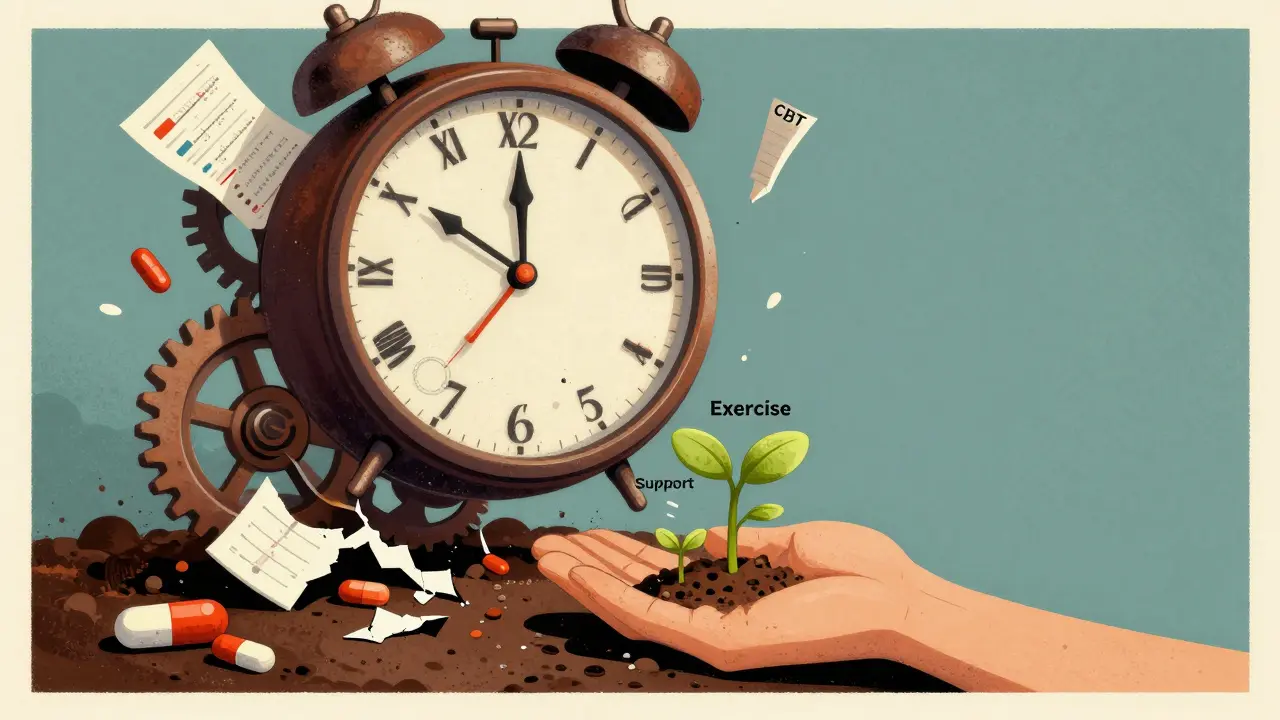
You don’t need to wait for the system to fix itself. Here’s your action plan:
- Ask your doctor for a pain assessment using the Brief Pain Inventory (BPI) or PROMIS scale. These tools track function, not just pain intensity.
- Request a referral to physical therapy - specifically for chronic pain, not just injury rehab.
- Look for CBT therapists who specialize in chronic pain. Search through the American Psychological Association’s directory.
- Start moving - even 10 minutes a day of walking or water aerobics. Consistency beats intensity.
- Join a support group - Reddit’s r/ChronicPain has over 100,000 members sharing real tips. You’re not alone.
- Track your progress - note what helps (even slightly) and what doesn’t. Bring this to appointments.
The Future Is Here - But You Have to Claim It
There’s new hope on the horizon. FDA-approved digital therapies like reSET-O and wearable neuromodulation devices (Nevro’s Senza, Boston Scientific’s Wave) are showing 30-40% pain reduction in trials. The NIH has poured $1.8 billion into non-addictive pain treatments. Medicare now covers more non-drug therapies.
But innovation won’t help if the system still ignores the people who need it most.
Chronic pain isn’t a life sentence. It’s a challenge - one that can be managed, even if it can’t be cured. The goal isn’t to feel zero pain. It’s to live fully despite it. And that’s possible - with the right tools, the right support, and the right mindset.
Start small. Stay consistent. And don’t let anyone tell you it’s all in your head - because it’s not. It’s real. And you deserve better care than pills and silence.
Can chronic pain ever go away completely?
For most people, chronic pain doesn’t disappear entirely - but it can become manageable. The goal isn’t to eliminate pain, but to reduce its impact on your life. Many people regain the ability to work, sleep, socialize, and enjoy daily activities - even with ongoing pain. Studies show that with multidisciplinary care, 60-75% of patients achieve meaningful improvement in function, even if pain levels stay the same.
Is exercise safe if I’m in constant pain?
Yes - if it’s done right. Pain during movement doesn’t always mean damage. Gentle, graded exercise helps retrain your nervous system to tolerate movement without triggering pain signals. Start slow: 5-10 minutes a day of walking, stretching, or water exercises. Work with a physical therapist who understands chronic pain. Avoid pushing through sharp or shooting pain, but mild discomfort during activity is normal and often improves over time.
Why won’t my insurance cover CBT or physical therapy for chronic pain?
Many insurers still treat chronic pain like an acute injury. They see CBT or rehab as “optional,” not essential. But CDC and WHO guidelines clearly list these as first-line treatments. You can appeal denials by citing these guidelines. Ask your provider for a letter of medical necessity. Some states now require coverage for non-opioid treatments - check your state’s health department website. If you’re on Medicare, many non-drug therapies are now covered under Part B.
Are opioids ever the right choice for chronic pain?
Only in rare cases, and only after all other options have been tried. Opioids work best for short-term pain - like after surgery. For long-term pain, they lose effectiveness within months and carry serious risks: addiction, overdose, hormonal changes, and worsening pain sensitivity (called opioid-induced hyperalgesia). The CDC recommends opioids only if non-opioid treatments fail, the dose is kept under 50 MME/day, and you’re monitored monthly. Many patients who taper off opioids report better function, even if pain doesn’t drop much.
How do I find a pain specialist who understands non-drug approaches?
Start by searching for multidisciplinary pain clinics affiliated with major hospitals or universities. The American Chronic Pain Association (ACPA) has a directory of certified providers. Look for clinics that offer physical therapy, psychology, and medication management together - not just a doctor handing out prescriptions. Avoid providers who only offer injections or opioids. Ask upfront: “Do you follow the CDC or WHO guidelines for chronic pain?” If they don’t know what you mean, keep looking.
Can I manage chronic pain without seeing a doctor?
You can make progress on your own - but you shouldn’t do it alone. Self-management tools like paced activity, mindfulness apps (e.g., Pain Coach, Mindfulness Coach), and online CBT programs (like thisone.org) can help. But chronic pain often has underlying medical causes that need diagnosis. A doctor can rule out conditions like spinal stenosis, autoimmune disorders, or nerve compression. The best approach combines self-care with professional support.
Glenda Marínez Granados
January 22, 2026 AT 07:44Yuri Hyuga
January 23, 2026 AT 04:53Philip Williams
January 24, 2026 AT 01:44Stephen Rock
January 25, 2026 AT 21:18Amber Lane
January 27, 2026 AT 01:15Ashok Sakra
January 27, 2026 AT 04:15Andrew Rinaldi
January 28, 2026 AT 23:04Gerard Jordan
January 30, 2026 AT 18:21michelle Brownsea
February 1, 2026 AT 09:27Roisin Kelly
February 2, 2026 AT 22:52Malvina Tomja
February 2, 2026 AT 23:39Samuel Mendoza
February 2, 2026 AT 23:55