
CMC Changes: What You Need to Know About Drug Formulation and Manufacturing Updates
When you take a pill, you assume it’s the same as the last time—same strength, same effect, same safety. But behind the scenes, CMC changes, Chemistry, Manufacturing, and Controls modifications that pharmaceutical companies make to drugs after approval. Also known as post-approval changes, these updates can alter how a medication behaves in your body—even if the name on the bottle hasn’t changed. These aren’t random tweaks. They’re carefully reviewed by regulators, but they’re also where many hidden risks and benefits hide.
CMC changes touch everything: the drug formulation, the physical and chemical structure of a medication, including whether it’s a tablet, capsule, or extended-release version, the pharmaceutical manufacturing, the process used to produce the drug, including where it’s made and what equipment is used, even the medication stability, how long a drug remains safe and effective under normal storage conditions. A change in the coating of a pill might reduce stomach upset. A switch in the solvent used during production could affect how fast the drug enters your bloodstream. These aren’t just lab notes—they’re real-world shifts that impact your health.
Some CMC changes are minor and invisible. Others, like swapping out a key excipient or moving production to a new factory, can trigger side effects you didn’t have before. That’s why people report new nausea after switching generics, or why a once-reliable medication suddenly stops working. It’s not your body changing—it’s the drug. The FDA and global regulators require companies to prove these changes don’t harm safety or effectiveness, but the data isn’t always public. You won’t see a recall or a warning label. You just notice something’s off.
What you’ll find in this collection are real stories and science-backed breakdowns of how CMC changes affect everyday medications. From why extended-release pills sometimes cause more dizziness than expected, to how switching manufacturers led to liver issues in some patients, to why expired inhalers and eye drops can become dangerous not because of age—but because of formulation drift. These aren’t theoretical concerns. They’re lived experiences, backed by clinical data and patient reports.
If you’ve ever wondered why a medication that used to work perfectly now feels different, or why your doctor suddenly switched your prescription to a generic without warning, this is where the answer lives. CMC changes are the quiet force behind most medication surprises—and knowing how they work gives you real power over your health.
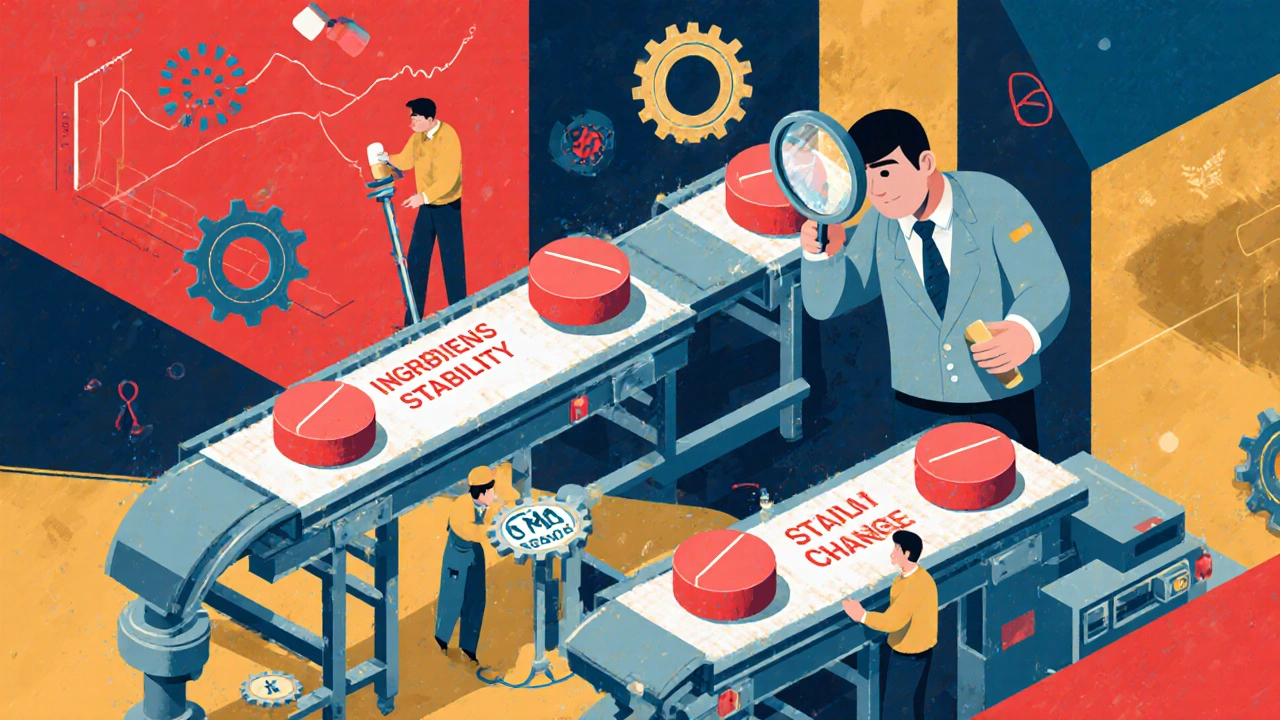
Manufacturing Changes and Generic Approval: What Triggers FDA Re-Evaluation
Learn what manufacturing changes trigger FDA re-evaluation for generic drugs, how the approval process works, and why delays happen - plus what’s changing in 2025 to speed things up.
Read more