
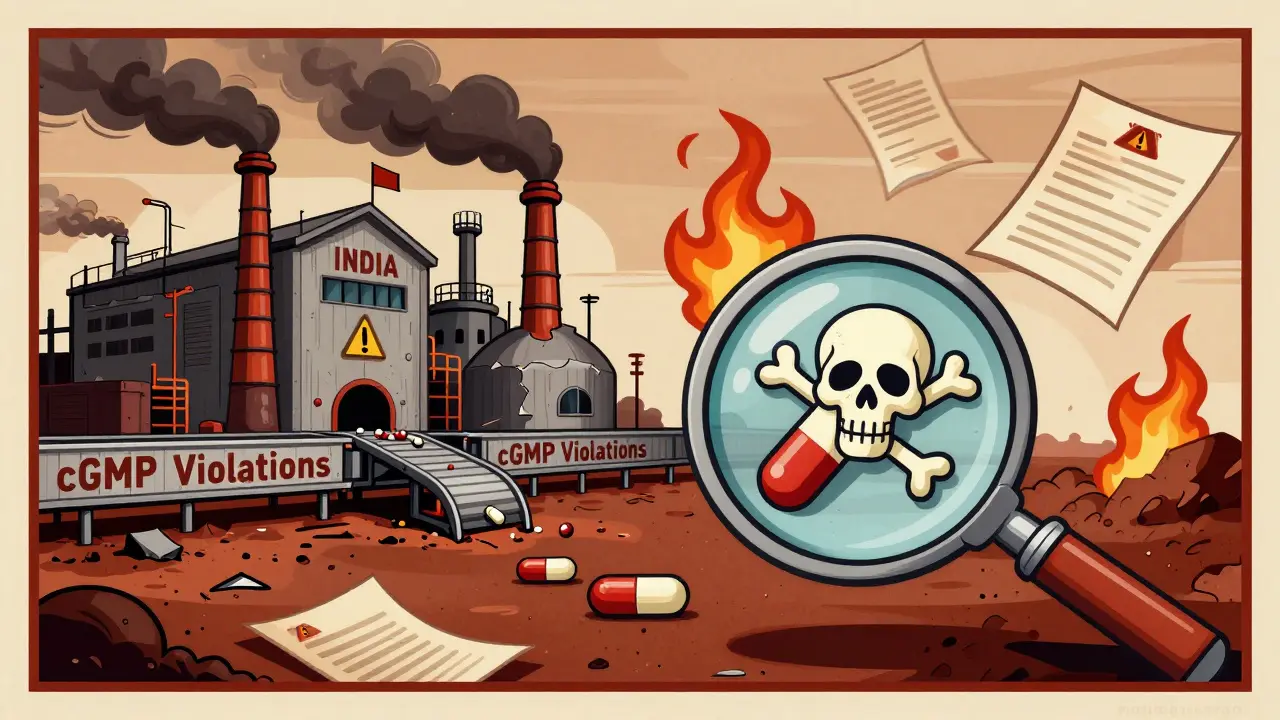
When you pick up a generic pill at the pharmacy, you expect it to work just like the brand-name version. But what if it doesn’t? Behind many of the most serious drug safety failures are generic drug quality issues rooted in flawed manufacturing plants - often overseas. These aren’t rare mistakes. They’re systemic problems that affect millions of patients every year.
What Goes Wrong in Generic Drug Factories?
The core problem is simple: many manufacturing facilities don’t follow Current Good Manufacturing Practices (cGMP). These are the rules that ensure drugs are made consistently, safely, and with the right ingredients in the right amounts. When these rules are ignored, the results can be dangerous.One common failure is contamination. In 2018, the FDA found cancer-causing impurities called nitrosamines in generic blood pressure meds like valsartan. These weren’t supposed to be there. They formed because of uncontrolled chemical reactions during production - something a proper quality system would have caught. The recall affected over 2 million people across 22 countries.
Other issues include:
- Incorrect active ingredients - too little or too much
- Poor packaging that lets moisture in, making pills degrade
- Outdated or inaccurate testing methods that miss impurities
- Missing stability data - no proof the drug lasts beyond the expiration date
- Using unapproved or substandard raw materials
These aren’t hypothetical risks. In 2022, the FDA issued 147 warning letters for cGMP violations - nearly two-thirds of them aimed at foreign plants. One facility in India was caught with an employee literally dumping quality control documents into a trash can full of acid. That’s not negligence. That’s sabotage.
Why Are Foreign Plants More Problematic?
About 80% of the active ingredients in U.S. drugs come from overseas - mostly China and India. And those facilities are far more likely to fail inspections than U.S.-based ones.In 2022, FDA inspections found 28.6% more violations at Chinese plants and 19.3% more at Indian plants compared to U.S. facilities. Why? Because inspections are not equal.
In the U.S., inspections are unannounced. Plant managers can’t clean up, hide records, or retrain staff just before inspectors arrive. But overseas, the FDA has to give advance notice. That gives manufacturers weeks to stage the place - fix the obvious problems, delete digital records, and pretend everything’s fine. A 2023 study from Ohio State University found that generic drugs made in India caused 23.7% more severe side effects than those made in the U.S.
The FDA inspects only about 13% of foreign facilities each year. With over 3,000 plants exporting to the U.S., that means nearly 1,000 have never been inspected at all. Meanwhile, the agency receives over 1,800 reports of adverse events linked to generic drugs annually. The disconnect is glaring.
Who Pays the Price?
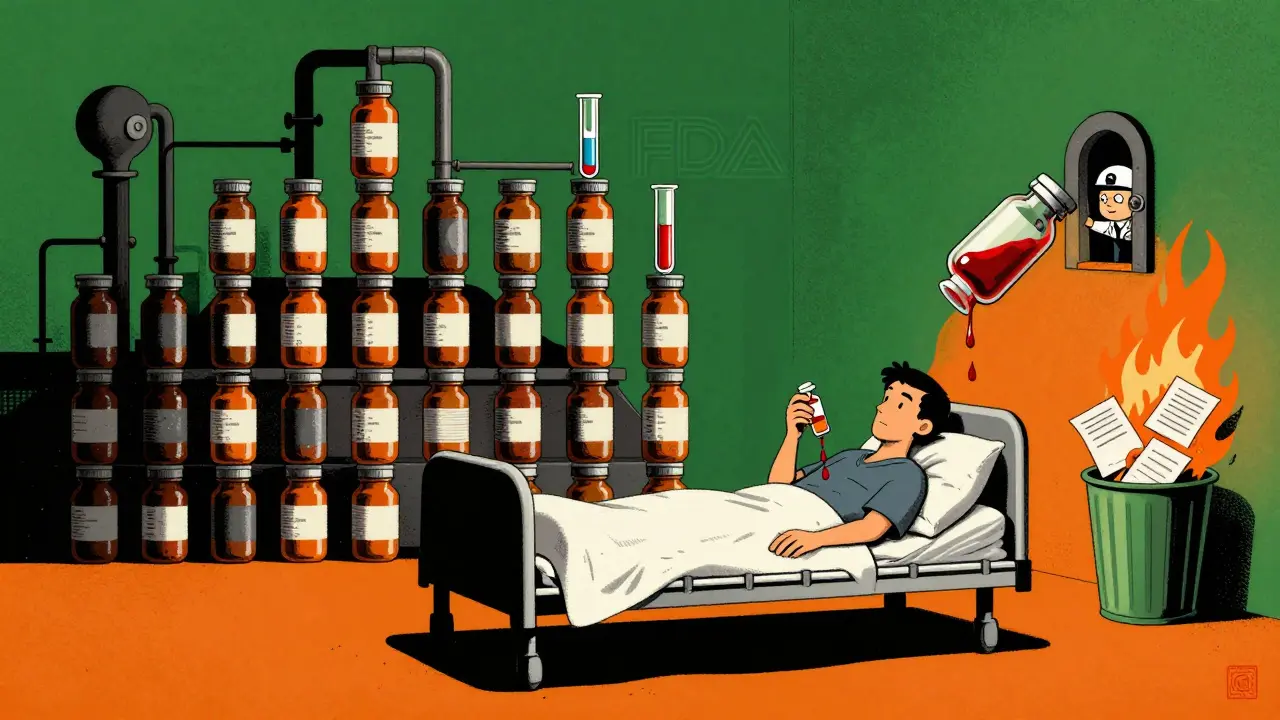
Patients don’t just get sick from bad drugs - they get worse because they think the medicine is working.Take narrow therapeutic index (NTI) drugs - medications where even a small change in dose can be dangerous. Think blood thinners like warfarin, seizure meds like phenytoin, or immunosuppressants like tacrolimus. In 2022, 37% of FDA rejections for generic approvals were due to bioequivalence issues with NTI drugs.
Harvard researchers found that one generic version of tacrolimus had 28.4% more variation in blood levels than the brand-name version. That’s not a minor fluctuation. For transplant patients, that could mean rejection or toxicity.
Hospital pharmacists report the same. A 2022 survey by the American Society of Health-System Pharmacists showed 67.3% had seen at least one therapeutic failure with a generic drug in the past year. Nearly half of those failures involved products made in India. Patients on Drugs.com gave generic valsartan from one Indian manufacturer a 3.2-star rating - lower than the U.S.-made version - with nearly 30% of reviews saying the drug “didn’t work.”
The FDA’s own adverse event database shows 1,842 reports tied to quality issues between 2019 and 2022. One specific batch of nitroglycerin tablets from Impax Laboratories caused 14.3% of those reports because they failed to dissolve properly - meaning the drug never entered the bloodstream.
Why Is This Still Happening?
The root cause isn’t just bad actors. It’s a broken system.Generic drug makers operate on razor-thin margins. Between 2018 and 2022, average generic drug prices dropped by 18.3% per year. To survive, companies cut corners - slashing quality control budgets by 22.7% on average. Training? Reduced. Testing? Cut back. Documentation? Skipped.
Only 23.8% of generic manufacturers have adopted Quality by Design (QbD), a science-based approach that builds quality into the product from day one. The rest rely on old-school end-product testing - which is like checking the final cake after it’s burned, instead of fixing the oven temperature earlier.
Even when problems are found, the FDA rarely pulls products off the market. In 2022, over 3,900 drug products were recalled - but most were voluntary, not forced. The agency can’t test every shipment. It only lab-tests 0.02% of imported drugs. That’s like checking one grain of rice in a 50-pound bag and assuming the rest are fine.
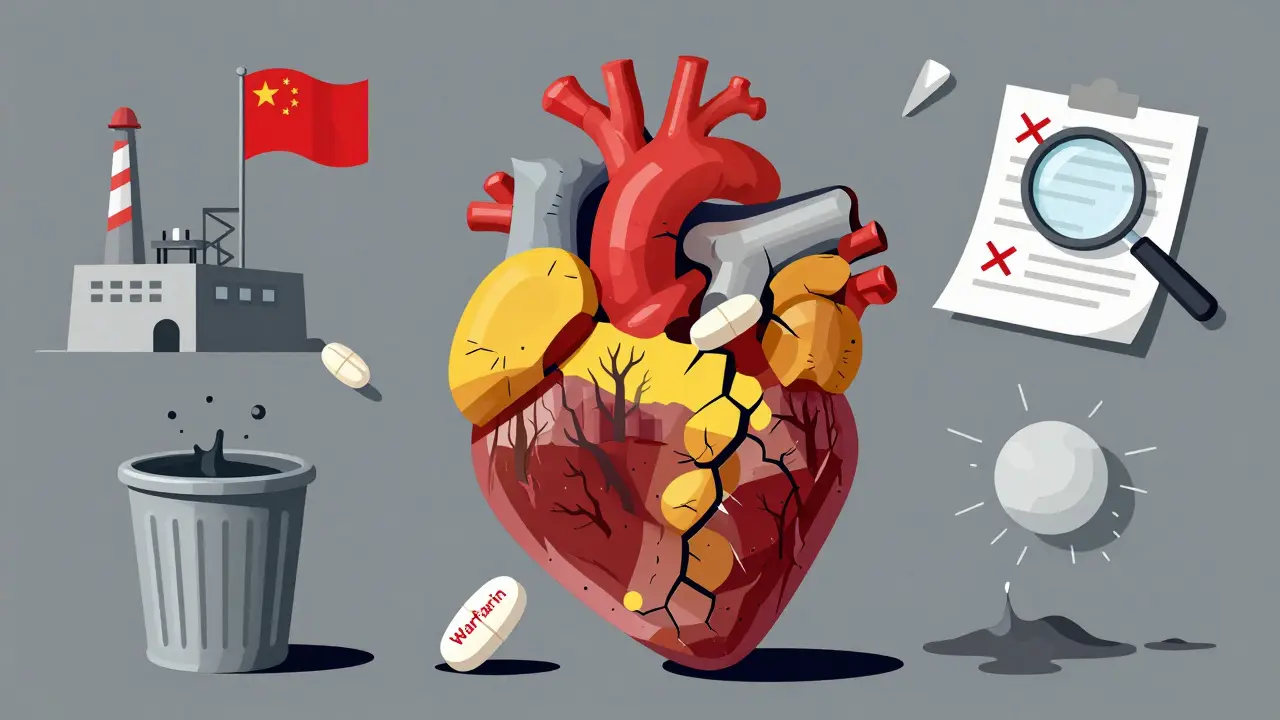
What’s Being Done - And Is It Enough?
There are signs of change. The FDA’s 2023-2027 plan promises risk-based inspections - meaning plants making high-risk drugs like NTI medications or injectables will get more attention. The agency also got $56.7 million in 2022 to ramp up foreign inspections, aiming for 1,800 per year by 2027 - up from 1,200.The European Medicines Agency (EMA) went further. Since January 2023, it has conducted unannounced inspections on all foreign facilities supplying the EU. Result? A 41.2% spike in critical findings - proof that surprise visits work.
But the biggest barrier isn’t funding. It’s politics. The U.S. government relies on cheap drugs from Asia. Cutting off imports could cause massive shortages. In 2022, 58.7% of all drug shortages were tied to quality issues at foreign plants. Heparin, insulin, nitroglycerin - all were affected.
And the pressure is only growing. The FDA now requires 100% more stability data and 75% more bioequivalence testing for complex generics. That’s good - but it’s also expensive. Many small manufacturers can’t afford it. They’ll either go out of business… or keep cutting corners.
What You Can Do
You can’t inspect a factory. But you can stay informed.- Check the FDA’s Drug Shortage List - if your medication is on it, ask your pharmacist why.
- Look up your generic drug’s manufacturer. If it’s made by a company with past warning letters (like Zhejiang Huahai or Intas), ask if there’s an alternative.
- Report side effects. If your generic isn’t working, tell your doctor and file a report with the FDA’s MedWatch program.
- Don’t assume “generic” means “same.” For NTI drugs, ask if a brand-name version is medically necessary.
The system is flawed. But awareness and advocacy can push change. The same companies that made unsafe valsartan are still making other generics. The same plants that dumped documents in acid are still shipping pills to U.S. pharmacies. Until inspections are truly random, testing is widespread, and accountability is real - patients will keep paying the price.
Are generic drugs always safe?
Not always. While most generic drugs are safe and effective, quality issues at certain manufacturing plants - especially overseas - can lead to inconsistent dosing, contamination, or ineffective ingredients. The FDA approves generics based on bioequivalence, but it doesn’t test every batch. Some products, particularly for critical conditions like heart disease or transplant rejection, have shown dangerous variability.
Which countries have the most drug quality problems?
China and India account for the majority of FDA warning letters for cGMP violations. In 2022, Chinese facilities had 28.6% more inspection findings than U.S. plants, and Indian facilities had 19.3% more. These countries produce 80% of the world’s active pharmaceutical ingredients. However, not all facilities in these countries are problematic - the issue is systemic oversight, not nationality.
How can I tell if my generic drug is from a bad manufacturer?
Check the label for the manufacturer’s name, then search the FDA’s website for warning letters or inspection reports. Companies like Zhejiang Huahai, Intas, and Impax have been cited multiple times. If your drug is a narrow therapeutic index medication (like warfarin or levothyroxine), ask your pharmacist if a brand-name version is recommended. You can also report unexpected side effects to the FDA’s MedWatch program.
Why doesn’t the FDA test every imported drug?
The FDA lacks the resources. It receives over 100,000 drug shipments annually but only lab-tests 0.02% of them. Instead, it relies on facility inspections and manufacturer self-reporting. This approach has failed repeatedly - as seen in the valsartan and nitroglycerin recalls. Experts say routine product-level testing is essential, but funding and political will are lacking.
What’s the difference between a generic and a brand-name drug?
Legally, a generic must contain the same active ingredient, strength, dosage form, and route of administration as the brand. It must also be bioequivalent - meaning it works the same way in the body. But generics can differ in inactive ingredients, packaging, and manufacturing quality. For most drugs, that’s fine. For critical medications, even small differences can matter - and that’s where quality control failures become dangerous.
Michael Burgess
January 3, 2026 AT 04:14I’ve been on generic warfarin for years, and honestly? I noticed my INR went wild after they switched me to a new batch from India. My doctor didn’t believe me until I showed him the lot number. Now I request the US-made version every time. It’s not about price-it’s about not dying because someone cut corners.
Also, side note: the FDA’s 0.02% testing rate is a joke. That’s like checking one tire on a 50-car train and saying ‘all clear.’ 😅
Tru Vista
January 3, 2026 AT 19:41NTI drugs = nightmare fuel. Bioequivalence my ass. If your blood levels fluctuate 28% you’re not equivalent-you’re a lab rat. Also, why are we still letting India ship us meds? They can’t even get their sewage right. 🤦♀️
innocent massawe
January 5, 2026 AT 16:30As someone from Nigeria, I see this same problem with medicines here-but worse. We have no FDA. People die because they get fake or weak drugs. I’m glad someone’s talking about this. Maybe if we push for global standards, it’ll help everyone. Not just the US. 🤝
JUNE OHM
January 6, 2026 AT 08:43China and India are literally poisoning us and the government lets it happen because they’re too scared of ‘drug shortages.’ LOL. We’re being held hostage by foreign factories. Time to stop buying from dictators and start making meds at home. Build the factories. Pay the workers. Protect Americans. 🇺🇸🔥
Vincent Sunio
January 6, 2026 AT 12:59It is not merely a question of manufacturing standards; it is a systemic failure of regulatory oversight predicated upon economic expediency over public health. The FDA's reliance upon voluntary compliance and infrequent inspections constitutes a dereliction of duty, particularly when the pharmacokinetic variability of certain generics approaches clinically significant thresholds. One must ask: at what point does cost-efficiency become criminal negligence?
Shanahan Crowell
January 6, 2026 AT 16:24Hey, I get it-cheap meds save lives. But when they don’t work? That’s when people die. Let’s not throw the baby out with the bathwater. Instead of blaming entire countries, let’s push for random, unannounced inspections everywhere. And fund the FDA properly. We can do better. 💪
Kerry Howarth
January 7, 2026 AT 00:08Check your pill’s manufacturer. If it’s Zhejiang Huahai or Intas, ask for a different batch. For NTI drugs, brand-name is worth the extra $5. Your life isn’t a budget spreadsheet.
Sarah Little
January 8, 2026 AT 01:49Per FDA guidance 21 CFR 211.111, batch release testing must include identity, strength, quality, and purity. Yet, 87% of foreign facilities fail to maintain validated analytical methods. This isn’t anecdotal-it’s documented non-compliance. Why isn’t this in every pharmacist’s training?
Angela Goree
January 8, 2026 AT 15:34They’re lying. The FDA knows. They’ve known for years. They’re covering it up because Big Pharma owns Congress. Generic manufacturers are just the puppets. And you? You’re the puppet’s patient. Wake up. 🔴
Joy F
January 9, 2026 AT 15:01It’s not about India or China-it’s about capitalism. The entire pharma supply chain is designed to extract profit, not preserve life. We’ve turned medicine into a commodity. A pill is no longer a cure-it’s a product with a shelf life, a margin, and a CEO who doesn’t care if you live or die. We’re not just buying bad drugs-we’re buying a broken system.
Tiffany Channell
January 11, 2026 AT 03:58And yet, you’re still taking them. You’re not outraged-you’re just mad you got a bad batch. That’s the problem. You’re not demanding change-you’re just complaining about your INR. You’re part of the problem.
Philip Leth
January 12, 2026 AT 04:48My cousin’s in India, works at a pharma plant. He says they’re forced to skip tests because the boss says ‘if the FDA doesn’t catch it, it’s fine.’ He’s terrified. He’s seen documents burn. He says the real scandal isn’t the bad pills-it’s that no one in the US wants to pay $10 more for a safe one. We made this mess. We’re just mad it bit us.