
Your Body's Clock and Weight: The Surprising Connection
Circadian rhythm is your body's 24-hour internal clock. It's controlled by a tiny region in your brain called the suprachiasmatic nucleus (SCN). This clock syncs with light and dark cycles, telling your body when to sleep, eat, and wake up. Without it, your metabolism would be out of whack.
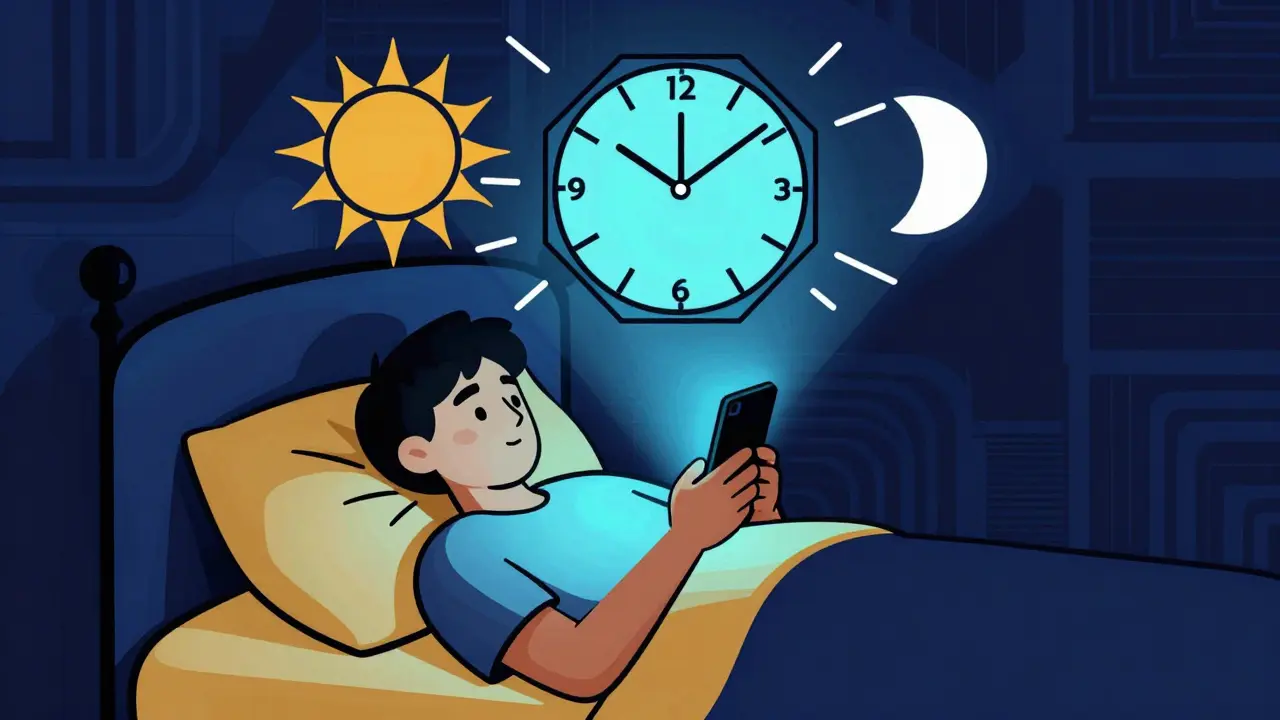
Think about it: when you stay up late scrolling through your phone, your body is still waiting for the sun to set. This disconnect between your behavior and your internal clock can lead to weight gain. It's not just about how much you eat-it's about when you eat. Let's explore how this works.
How Circadian Rhythm Controls Your Metabolism
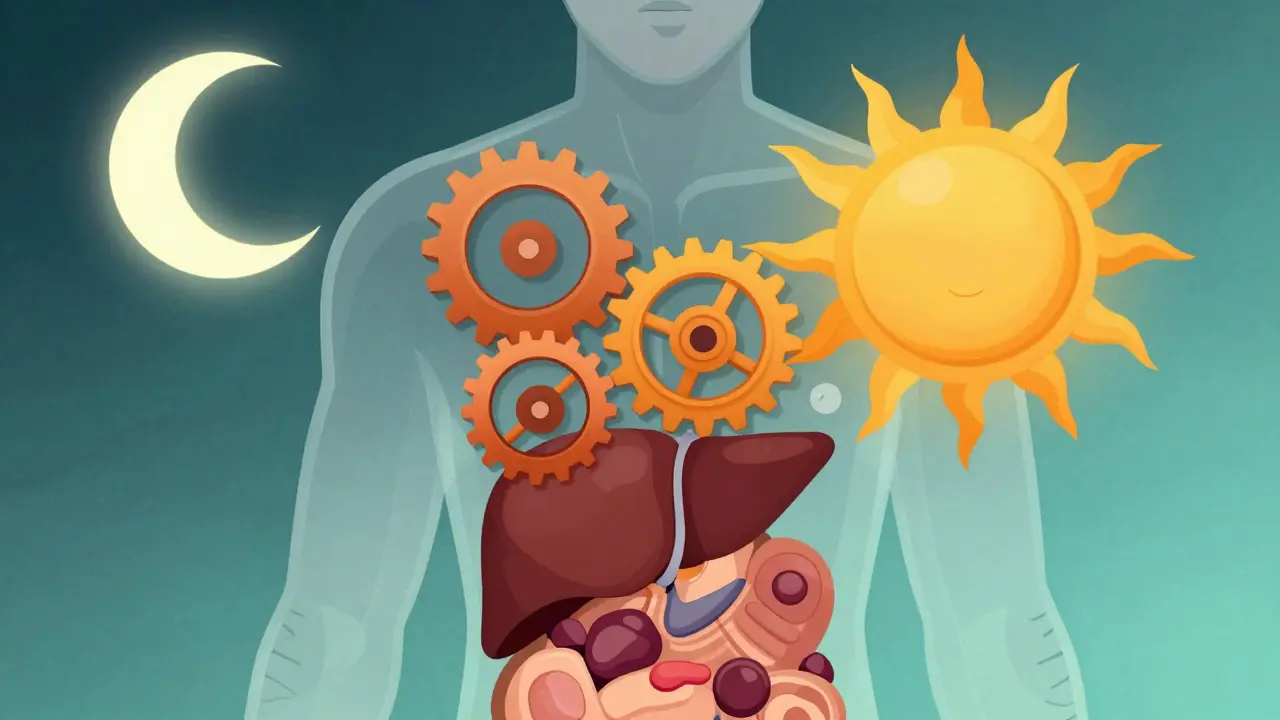
Your body has a network of clocks in every organ. The liver, gut, and fat cells all have their own clocks that sync with the brain's master clock. These clocks regulate when your body burns fat, processes sugar, and stores energy. Research shows core clock genes like CLOCK and BMAL1 directly control enzymes involved in glucose and fat metabolism. For example, a CLOCK mutant mouse study found these mice gained 15-20% more body weight and were more prone to obesity than normal mice.
Here's the kicker: your body burns calories differently at different times. A 2014 PNAS study showed that eating late at night reduces the thermic effect of feeding by 17%. That means your body processes food less efficiently when you eat during your biological night. So, even if you eat the same amount, timing matters.
Sleep Loss and Weight Gain: The Science Behind the Numbers
When you don't get enough sleep, your body goes into survival mode. A Nature Reviews Endocrinology study (2022) found that sleep deprivation increases daily energy intake by over 250 calories while only boosting energy expenditure by 100 calories. That's a net gain of 150+ calories per day-enough to pack on 7.7 kg (17 lbs) of weight in a year.
Shift workers face an even tougher challenge. A PNAS study tracked 14 people working night shifts. On their second night, their total daily energy expenditure dropped by 3% (55 calories). Meanwhile, they ate more during the night, creating a perfect storm for weight gain. In fact, the International Labour Organization reports that 20% of the global workforce is in shift work, making this a widespread issue.
How Sleep Disruption Affects Energy Balance
| Condition | Energy Expenditure Change | Energy Intake Change | Net Caloric Change |
|---|---|---|---|
| Circadian misalignment (e.g., night shift) | -55 kcal/day | +100 kcal/day (estimated) | +45 kcal/day |
| Sleep deprivation (4 hours/night) | +100 kcal/day | +250+ kcal/day | +150+ kcal/day |
Practical Strategies to Align Sleep with Metabolism
Time-restricted eating (TRE) is a powerful tool. By limiting food intake to a 10-hour window during daylight hours, you give your body time to reset its clock. The Salk Institute found that TRE leads to 3-5% body weight loss over 12 weeks in overweight adults. Start small: if you currently eat from 8 AM to 10 PM, try cutting it to 9 AM to 7 PM for a week. Gradually narrow the window by 30 minutes each week.
Chronotype matters too. The Horne-Östberg Morningness-Eveningness Questionnaire helps identify your natural sleep-wake preference. Morning types (early risers) lose weight more effectively with early eating windows (8 AM-6 PM), while evening types do better with later windows (10 AM-8 PM), according to a 2020 Obesity journal study.
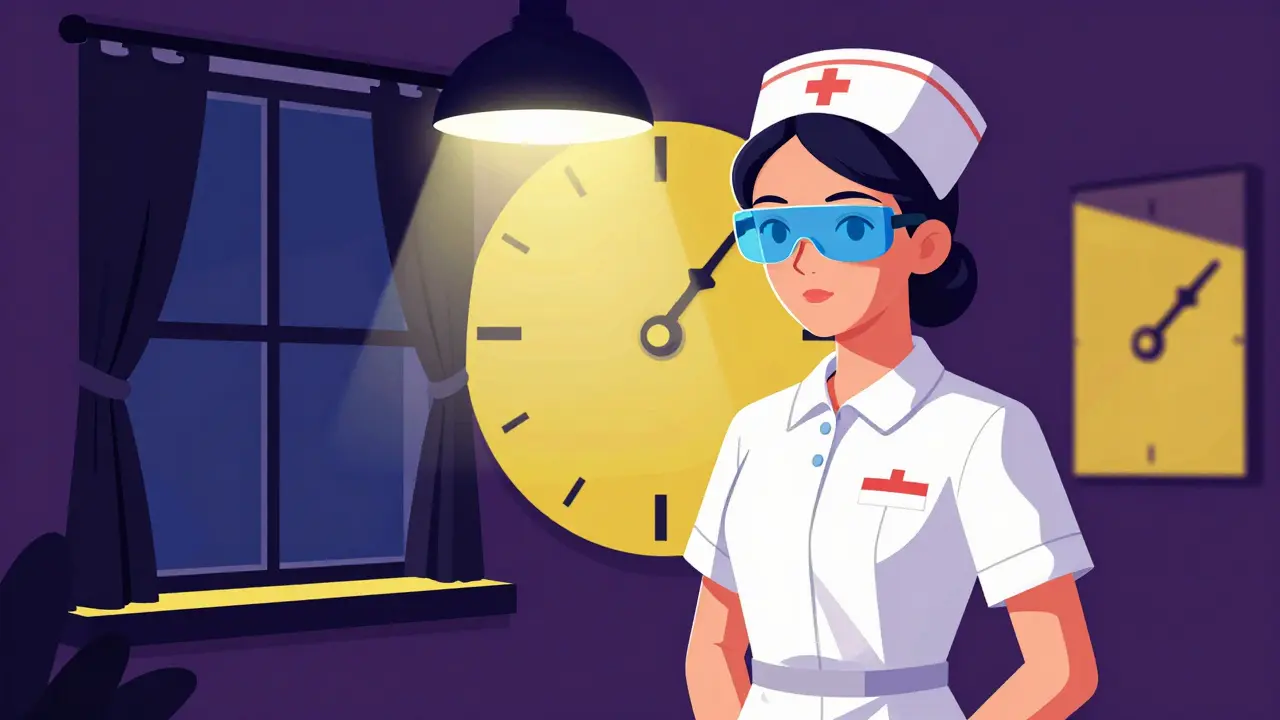
For shift workers, strategic light exposure helps. Bright light during night shifts and darkness during daytime sleep can reset your clock. Kaiser Permanente's 2021 pilot program for night shift workers reduced weight gain by 42% using this approach. Even small changes like using blue-light filters on devices after sunset can make a difference.
A nurse named Sarah, who works night shifts, started time-restricted eating by having all her meals between 6 PM and 4 AM. She also used blue-light blocking glasses during her commute home. Within three months, she lost 12 pounds and reported better energy levels. Her story is common among shift workers who implement circadian-aligned routines.
Overcoming Real-World Challenges
Implementing these strategies isn't always easy. Social events often clash with eating windows. A 2021 Nutrients journal study found 68% of TRE users struggle with dinner plans. The solution? Plan ahead. If you have a dinner event, adjust your eating window for that day. Have a small, protein-rich snack earlier to avoid overeating.
Initial hunger is normal but temporary. Most people adapt within 7-10 days. If you're feeling hungry during the fasting window, try drinking water or herbal tea. The Zero app survey of 450 users showed 74% reported reduced nighttime hunger after consistent TRE use.
For those with irregular schedules, consistency is key. Aim for a 30-minute window in sleep times. Even if you can't sleep at the same time every day, keeping wake-up times consistent helps stabilize your circadian rhythm. Apps like Sleep Cycle track your sleep patterns and suggest optimal wake-up times based on sleep cycles.
The Future of Circadian-Based Weight Management
Technology is catching up. Fitbit's 2024 Sleep Score Update now includes circadian alignment metrics that predict 18% of weight change variability. Wearables can now measure your body's internal clock by tracking melatonin levels and sleep patterns. The National Institutes of Health has allocated $185 million for circadian-metabolism research through 2027, focusing on personalized biomarkers.
A 2023 Nature Metabolism trial showed that aligning meals with individual circadian phase (measured via dim-light melatonin onset) produced 24% greater weight loss than standard calorie restriction over six months. Regulatory bodies are taking notice too. The FDA's 2023 draft guidance requires assessing treatment timing effects in obesity drug trials. This means future medications might be dosed at specific times of day for maximum effectiveness. The World Health Organization's 2023 Expert Committee on Obesity concluded that circadian-based interventions could reduce global obesity rates by 5-8% if implemented widely-though challenges remain for 24/7 work cultures.
How does lack of sleep affect hunger hormones?
Sleep deprivation increases ghrelin (the hunger hormone) by 20% and decreases leptin (the fullness hormone) by 15%. A University of Chicago study found that just four nights of 4-hour sleep increased appetite by 22% and made people crave high-carb foods 33% more. This happens because your brain's reward centers light up more when you're sleep-deprived, making junk food feel irresistible.
What is time-restricted eating and how does it help with weight loss?
Time-restricted eating (TRE) limits food intake to a specific window each day, usually 8-10 hours. By aligning eating with your body's natural clock, TRE improves insulin sensitivity and fat burning. Studies show it leads to 3-5% body weight loss in 12 weeks without calorie counting. It works best when the eating window matches daylight hours-eating during the day and fasting at night.
Can shift workers effectively manage their weight?
Yes, but it requires strategic adjustments. Shift workers should prioritize consistent sleep schedules during off-hours, use bright light therapy during night shifts, and time meals to match their work schedule. Kaiser Permanente's program for night shift workers reduced weight gain by 42% through these methods. Even small changes like avoiding late-night snacks and using blackout curtains during daytime sleep can make a big difference.
How long does it take to adjust to a new sleep schedule?
Adjusting your circadian rhythm takes about 1-2 weeks for every hour of schedule change. For example, if you're switching to a night shift, it may take 10 days to fully adapt. Consistency is key: try to sleep and wake up at the same time every day, even on weekends. Using light exposure and meal timing can speed up this process.
What's the role of melatonin in weight management?
Melatonin is your body's sleep hormone, but it also regulates metabolism. It helps control when your body burns fat versus stores it. Disrupted melatonin production from poor sleep or light exposure at night can lead to insulin resistance and weight gain. Taking melatonin supplements isn't recommended for weight loss-instead, maintain a dark sleeping environment and avoid screens before bed to support natural melatonin production.
Kieran Griffiths
February 5, 2026 AT 07:47Time-restricted eating (TRE) aligns with our body's natural clock. By limiting food intake to daylight hours, you allow your metabolism to function optimally. Studies from the Salk Institute show a 3-5% weight loss in 12 weeks. I've noticed better digestion and less bloating. It's not about counting calories but when you eat. Give it a shot if you can.
Tehya Wilson
February 5, 2026 AT 09:49Shift work messes with metabolism. Period.
Carl Crista
February 6, 2026 AT 20:51Let me tell you the truth about circadian rhythm. It's all a scam by Big Pharma to sell sleep aids and weight loss supplements.
They control the research and manipulate data.
The real cause is the chemicals in our food supply.
They're deliberately poisoning us.
Wake up! Look at the funding sources for these studies.
It's all corrupt.
The truth is hidden in plain sight.
The moon's gravitational pull affects our metabolism more than circadian rhythm.
It's all a lie.
You need to do your own research.
Nancy Maneely
February 7, 2026 AT 09:00Carl is such a conspiracy theorist. The science is solid. Look at the studies. Time-restricted eating works. Ugh, stop spreading nonsense. It's not rocket science. Eat during the day, fast at night. Simple. The studies from Salk Institute show clear results. Stop being delusional.
Phoebe Norman
February 7, 2026 AT 15:42The thermic effect of feeding is significantly reduced during nocturnal feeding due to circadian misalignment.
Individual variability in clock gene expression must be considered.
This oversimplification ignores epigenetic factors.
The data is inconclusive for diverse populations.
Metabolic pathways are complex.
Hormonal regulation plays a key role.
Insulin sensitivity varies by time of day.
Adipose tissue has its own circadian rhythm.
Studies show inconsistent results across different demographics.
More research is needed.
Current evidence is limited.
This is not a one-size-fits-all solution.
The article overlooks these nuances.
It's problematic.
For example, shift workers have different metabolic responses.
Albert Lua
February 7, 2026 AT 17:22In Japan, dinner is usually before 7 PM. This aligns with the article's findings. They have lower obesity rates. It's not just about calories but timing. Many cultures practice early eating. We should learn from them. It's part of their lifestyle. Simple changes can make a big difference.
Georgeana Chantie
February 7, 2026 AT 21:42America is better because we have freedom to eat when we want. Japan's low obesity is due to genetics not eating times. 🤷♀️
Lisa Scott
February 9, 2026 AT 02:08The studies are funded by Big Pharma. They manipulate data. Look at the funding sources. It's all corrupt. No trust. The real cause is government-controlled food additives. They don't want you to know the truth. Wake up people! This is a scam. The evidence is all fake.
Joyce cuypers
February 9, 2026 AT 12:48I tried TRE for a week. Had some typos in my journal but lost 3 lbs. It's doable. Start small. Maybe 12 hour window first. Keep going!
Carol Woulfe
February 11, 2026 AT 03:16Your anecdote lacks scientific rigor. Proper methodology requires controlled trials and peer review. Without these, your claims are invalid. You're spreading misinformation. The data you cite is not peer-reviewed. It's anecdotal. This is why science matters.
Bella Cullen
February 11, 2026 AT 15:38Obesity is multifactorial. It's not just eating times. Junk food availability, stress, lack of exercise. Oversimplifying the issue does more harm than good. Real solutions require addressing all factors.
Kate Gile
February 11, 2026 AT 21:56I've seen many people succeed with TRE. It's about consistency. Start with a 12-hour window and gradually adjust. Small changes lead to big results. You've got this! Keep it up.