
Cardiovascular Risk: What You Need to Know About Heart Disease and Medication Interactions
When we talk about cardiovascular risk, the chance of developing heart disease, stroke, or other blood vessel problems. It’s not just about cholesterol or blood pressure—it’s the quiet buildup of damage from medications, lifestyle, and hidden interactions that most people never see coming. Many think if their numbers look fine, they’re safe. But statin interactions, how certain drugs mix with cholesterol meds and trigger muscle damage can silently raise your risk. Same with blood thinners, medications that stop clots but turn simple painkillers into danger zones. A daily ibuprofen might seem harmless, but combined with warfarin or apixaban, it can turn a minor bump into a life-threatening bleed.
Cardiovascular risk doesn’t wait for a heart attack to show up. It’s in the way your kidneys handle blood pressure, how drugs like losartan or amiloride help or hurt your vessels over time. It’s in the liver struggling with statins and NSAIDs at the same time. It’s in the forgotten expired inhaler you keep in your bag, or the OTC cough syrup you’ve been taking for weeks because your cold won’t quit. These aren’t just side effects—they’re hidden triggers. And they’re everywhere. One in four adults takes at least five medications. That’s five chances for something to go wrong, even if each one is perfectly prescribed.
What you’ll find here isn’t a list of scary facts. It’s a clear look at what actually matters: how your pills interact, why some meds help your heart while others quietly hurt it, and what steps you can take right now to lower your risk without waiting for a doctor’s appointment. From how cardiovascular risk connects to kidney function and liver health, to why mixing blood thinners with NSAIDs is like playing Russian roulette with your arteries—this collection gives you the real talk you won’t get from a pamphlet. No fluff. No jargon. Just what you need to know before your next pill.
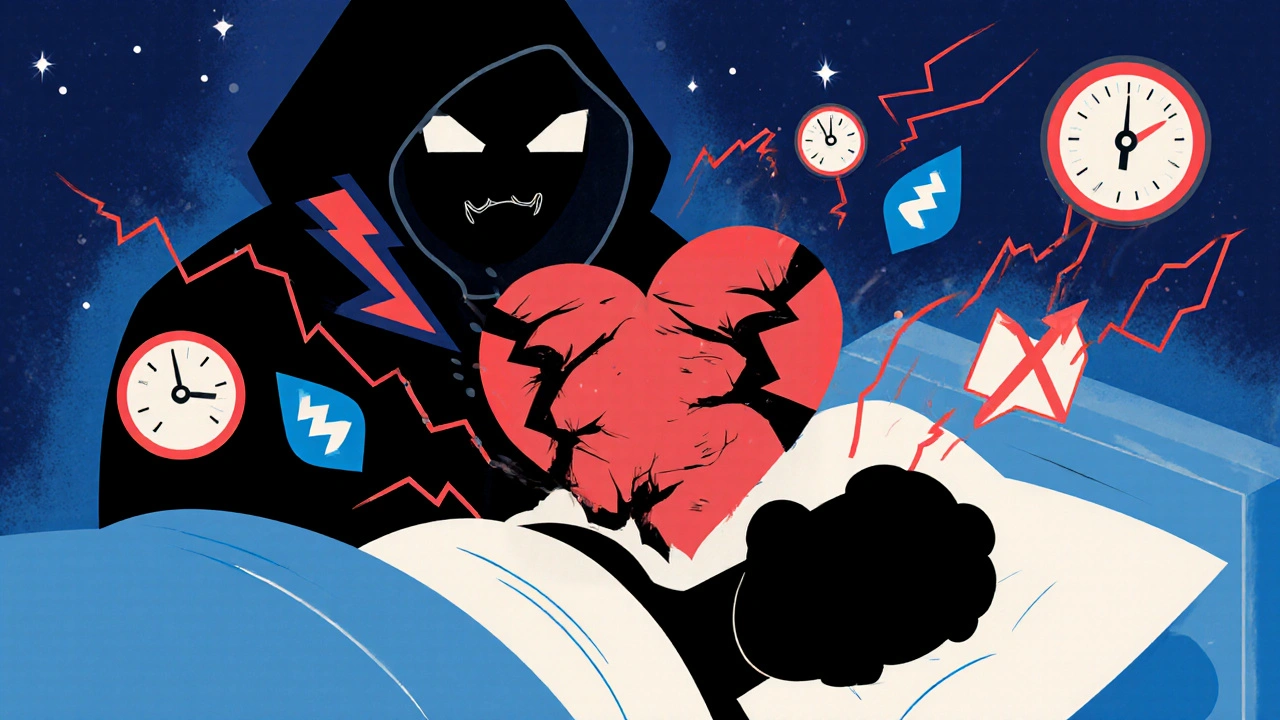
Sleep Apnea and Cardiovascular Risk: How Breathing Problems Raise Blood Pressure and Heart Disease Risk
Sleep apnea isn't just about snoring - it's a major driver of high blood pressure, heart attacks, and stroke. Learn how breathing pauses during sleep silently damage your cardiovascular system and what to do about it.
Read more