
Anticoagulants: What They Are, How They Work, and Which Ones You Might Be Taking
When your blood starts clotting where it shouldn’t—like in your legs, lungs, or brain—that’s when anticoagulants, medications that slow down the blood’s ability to form clots. Also known as blood thinners, they don’t actually thin your blood—they just make it harder for dangerous clots to form. If you’ve ever been told you have atrial fibrillation, a deep vein thrombosis, or a mechanical heart valve, chances are you’re on one of these drugs. They’re not optional for some people; they’re life-saving.
Not all anticoagulants work the same way. warfarin, an older anticoagulant that blocks vitamin K to reduce clotting factors needs regular blood tests and strict diet rules. heparin, a fast-acting injectable often used in hospitals kicks in quickly but isn’t meant for long-term use. Then there are the newer options—direct oral anticoagulants, a group of pills like apixaban and rivaroxaban that target specific clotting proteins—that don’t need constant monitoring and have fewer food interactions. Each has trade-offs: cost, convenience, bleeding risk, and how fast they reverse if something goes wrong.
People on anticoagulants often end up asking the same questions: Can I still take ibuprofen? What if I fall? Do I need to avoid leafy greens? The answers aren’t one-size-fits-all. That’s why you’ll find real-world guides here on how these drugs interact with other medications—like statins or antidepressants—that can make side effects worse. You’ll also see how expired prescriptions, travel safety, and even kidney health tie into managing these drugs long-term. This isn’t theory. It’s what people actually deal with when they’re on these meds day after day.
Some of the posts here dive into how anticoagulants overlap with other treatments—like how losartan affects blood pressure while you’re on a blood thinner, or how statins and anticoagulants can both increase muscle pain risk. Others cover practical stuff: how to carry backup prescriptions safely, what to do if you miss a dose, or how to dispose of old bottles without risking someone else’s safety. There’s no fluff. Just clear, grounded advice from people who’ve been there.
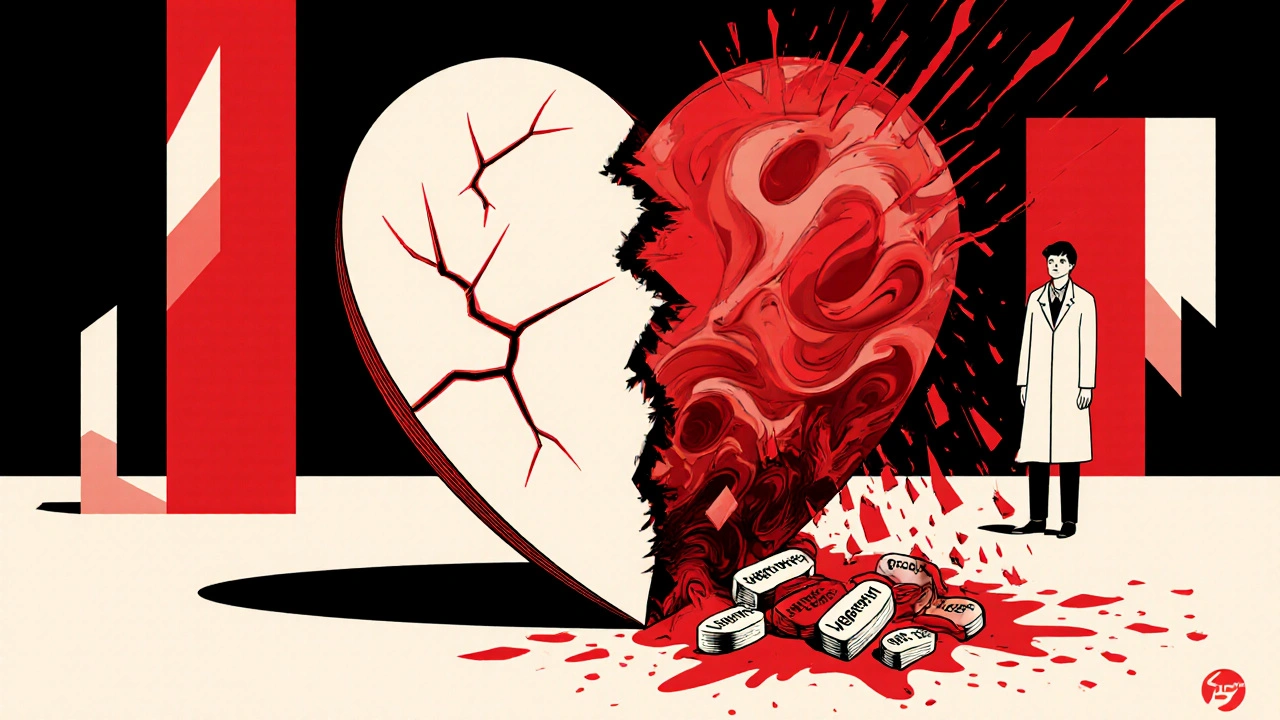
Blood Thinners and NSAIDs: Why This Drug Combination Can Be Life-Threatening
Combining blood thinners with NSAIDs like ibuprofen or naproxen can double or triple your risk of life-threatening bleeding. Learn why this dangerous mix affects all anticoagulants and what safer pain relief options exist.
Read more