
Acetaminophen Toxicity: Signs, Risks, and Safe Use Guide
When you take acetaminophen, a common pain reliever and fever reducer found in hundreds of medications. Also known as paracetamol, it's one of the most widely used drugs in the world—but it’s also one of the most dangerous if misused. You don’t need to overdose on purpose to get hurt. Taking just a few extra pills a day, mixing it with alcohol, or combining it with other cold meds can push your liver into failure. Every year, acetaminophen toxicity sends over 56,000 people to the emergency room in the U.S. alone—and it’s the top cause of acute liver failure.
What makes it so sneaky is that the first signs don’t look like an emergency. Nausea, tiredness, loss of appetite—these feel like a bad flu. By the time your skin turns yellow or your belly swells up, it’s often too late. The damage happens silently, because your liver breaks down acetaminophen into a toxic byproduct. Normally, your body neutralizes it. But when you take too much, that system floods. Your liver cells start dying, and there’s no second chance. If caught early, N-acetylcysteine, an antidote that can reverse liver damage if given within 8 hours can save your life. But waiting even a few hours cuts your odds dramatically.
People don’t realize how many products contain acetaminophen. It’s in Tylenol, but also in Excedrin, Vicodin, Percocet, NyQuil, and even some sleep aids. If you’re taking more than one medication at a time, you could be hitting the 4,000 mg daily limit without knowing it. And if you drink alcohol regularly—even just a few drinks a week—your liver’s ability to handle acetaminophen drops fast. Liver damage, a direct result of acetaminophen overdose doesn’t come with warning labels you can see. It comes with silence.
There’s no magic number that’s safe for everyone. Your weight, age, liver health, and other meds you take all change the equation. Kids and older adults are especially vulnerable. Even if you’ve taken acetaminophen for years without trouble, that doesn’t mean it’s safe to keep pushing the limit. The body doesn’t build up a tolerance to the toxicity—it just gets more fragile over time.
What you’ll find in the articles below isn’t just a list of facts. It’s a practical guide to spotting the hidden dangers in your medicine cabinet. You’ll learn how to read labels so you don’t accidentally double-dose, why certain drug combinations turn harmless pills into threats, and what to do if you or someone you know has taken too much. These aren’t theoretical warnings—they’re real stories from people who thought they were being careful, until they weren’t. This isn’t about fear. It’s about knowing what’s really in your hand when you reach for that pill bottle.
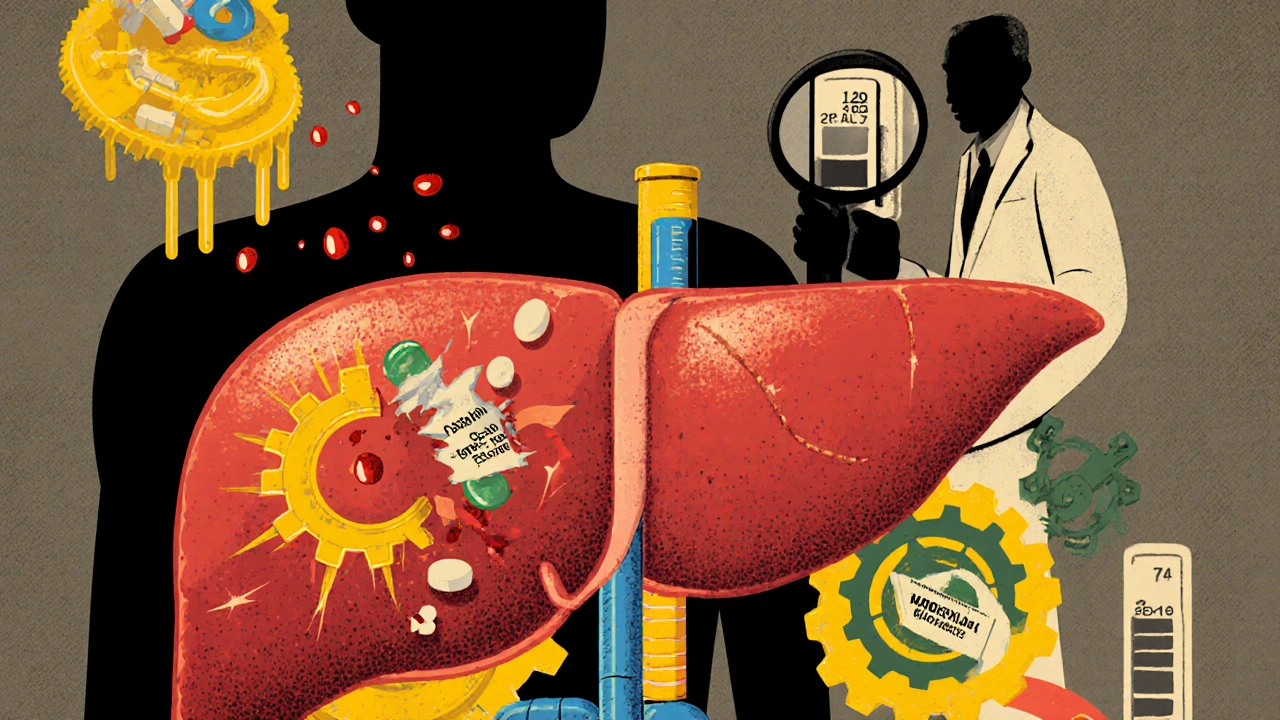
Drug-Induced Liver Injury: High-Risk Medications and How to Monitor Them
Drug-induced liver injury can strike from common medications and even supplements. Learn which drugs pose the highest risk, how to monitor your liver, and what to do if you suspect damage - before it's too late.
Read more