

For years, losing weight often felt like a battle against your own biology. You'd cut calories and hit the gym, only to find your brain screaming for food and your metabolism slowing down. That changed with the arrival of Semaglutide is a glucagon-like peptide-1 (GLP-1) receptor agonist developed by Novo Nordisk that mimics the body's natural hormones to regulate appetite and blood sugar. Also known as a GLP-1 analog, this medication has shifted the conversation from "willpower" to "metabolic management." But if you're looking into this for weight loss, you've likely seen two different names: Ozempic and Wegovy. While they use the same active ingredient, they aren't the same product.
The Real Difference Between Ozempic and Wegovy
It's easy to get confused because both medications are made by the same company and contain semaglutide. The primary difference lies in their FDA approval and dosage. Ozempic is a medication specifically approved for the treatment of type 2 diabetes. While people noticed it helped them shed pounds, its primary goal is glucose control. On the other hand, Wegovy is a higher-dose version of semaglutide specifically FDA-approved for chronic weight management.
If you are struggling with obesity (a BMI of 30 or higher) or are overweight (BMI of 27 or higher) with at least one weight-related health issue-like high blood pressure-Wegovy is the clinical tool for the job. Using Ozempic "off-label" for weight loss is common, but Wegovy is designed with a titration schedule and a maximum dose (2.4 mg) specifically tailored to maximize weight reduction.
| Feature | Ozempic | Wegovy |
|---|---|---|
| Primary Indication | Type 2 Diabetes | Chronic Weight Management |
| Max Weekly Dose | 2.0 mg | 2.4 mg |
| FDA Approval for Obesity | No (Off-label) | Yes |
| Administration | Once-weekly injection | Once-weekly injection |
How Semaglutide Actually Works in Your Body
So, why does this drug work when traditional diets often fail? It doesn't just suppress your appetite; it rewires how your brain and gut communicate. Semaglutide mimics the GLP-1 hormone, which performs three critical jobs. First, it targets the arcuate nucleus in the hypothalamus, specifically stimulating neurons that tell you you're full while silencing the ones that trigger hunger. This is why many users report that food simply "doesn't have the same appeal" anymore.
Second, it slows down gastric emptying. This means food stays in your stomach longer, making you feel physically full for hours after a small meal. Third, it improves insulin sensitivity. By activating the cAMP/PKA pathway in the pancreas, it helps your body move glucose into cells more efficiently via GLUT-4 translocation, which prevents the blood sugar spikes and crashes that lead to cravings.
Beyond the gut and brain, semaglutide may even influence your fat cells. Research indicates it can modulate adipose tissue browning-essentially turning "white fat" (storage) into "brown fat" (energy-burning)-which helps boost your overall metabolic rate. It's not just about eating less; it's about changing how your body processes energy.

Does It Actually Work? The Evidence on Efficacy
The data on semaglutide weight loss is quite striking. In the STEP 1 clinical trial involving nearly 2,000 participants, those taking the 2.4 mg dose of Wegovy saw a mean body weight reduction of 14.9% over 68 weeks. Compare that to the placebo group, which only saw a 2.4% drop. To put that in real-world terms, if someone weighs 220 lbs, a 15% loss is roughly 33 lbs-a significant change that often leads to a drop in clothing size and a major improvement in joint pain.
Even more impressive is the success rate: between 69% and 79% of participants achieved at least a 10% weight loss. For those without diabetes, the success rate was even higher, with about 86% hitting that 10% milestone. When compared to older medications like liraglutide (Saxenda), semaglutide is significantly more potent, often doubling the percentage of weight lost due to its longer half-life of 168 hours, which keeps the drug stable in your system throughout the week.
The "Catch": Side Effects and the Weight Regain Trap
It isn't all magic, though. The most common complaint is gastrointestinal distress. Because the drug slows your digestion, your body can struggle to keep up. In the STEP trials, 77% of people reported nausea, 64% dealt with diarrhea, and 56% experienced vomiting. This is why doctors use a slow "titration" process-starting you at 0.25 mg and slowly bumping the dose every four weeks-to let your stomach adjust.
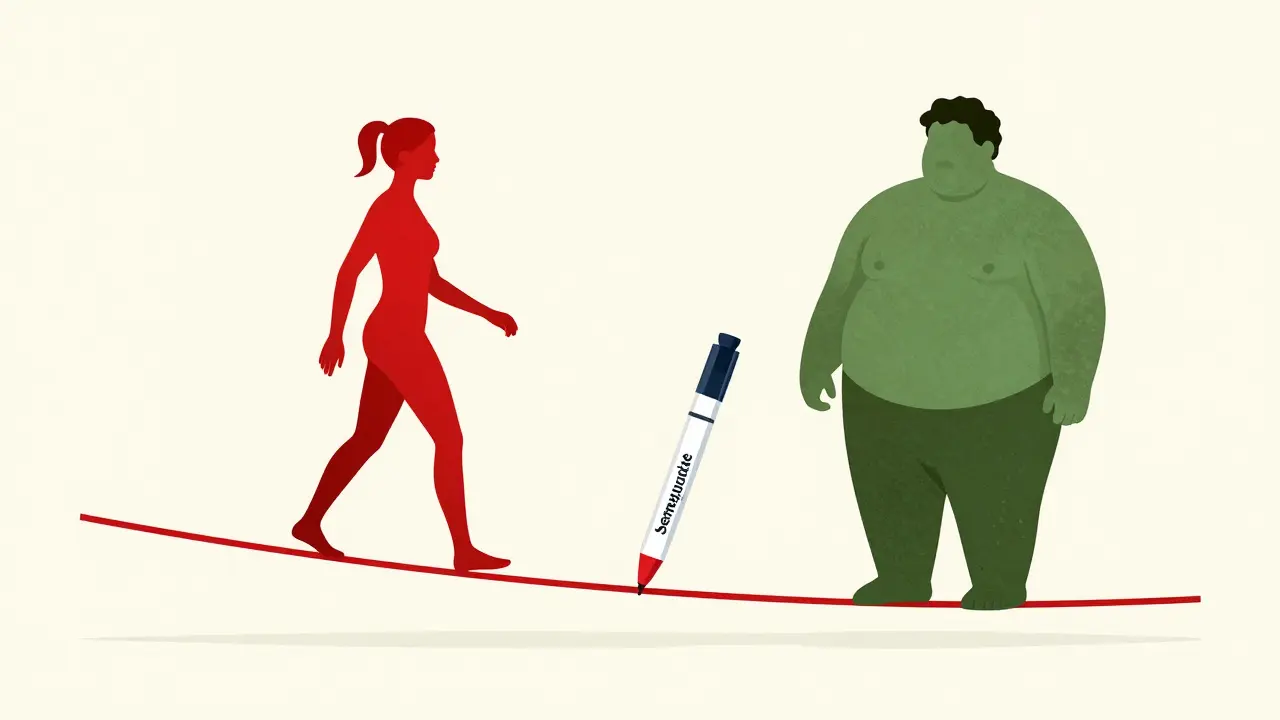
The more concerning issue is what happens when you stop. Semaglutide is generally not a "quick fix" but a long-term management tool. Evidence shows that participants who stopped the medication regained about 67% of their lost weight within a year. Why? Because the biological signals that suppress hunger return to their original state. This is why the American Association of Clinical Endocrinology often suggests continuing the medication indefinitely, combined with lifestyle changes, to maintain the results.
Who Should Avoid Semaglutide?
While it's a powerhouse for weight loss, it's not for everyone. There are strict contraindications you need to know. If you or a close family member have had medullary thyroid carcinoma (a specific type of thyroid cancer) or Multiple Endocrine Neoplasia syndrome type 2, this medication is a hard no. The FDA requires a Risk Evaluation and Mitigation Strategy (REMS) because of thyroid C-cell tumor risks seen in rodent studies.
You should also be cautious if you have a history of pancreatitis, as GLP-1 agonists can potentially increase the risk of inflammation in the pancreas. Always be honest with your doctor about your family history before starting this regimen.
Practical Tips for Starting and Staying on Track
If you've been prescribed Wegovy or Ozempic, the first few months are the hardest. To manage the nausea, focus on small, protein-rich meals and avoid greasy, fried foods, which tend to linger in the stomach longer due to the delayed gastric emptying. Staying hydrated is non-negotiable; the medication can make you forget to drink water, which increases the risk of constipation.
Don't ignore the lifestyle piece. The people in the STEP trials didn't just take a shot; they had weekly counseling on diet and activity. Incorporating strength training is vital because rapid weight loss can lead to muscle loss. If you lose muscle along with fat, your resting metabolic rate drops, making weight maintenance even harder once you eventually taper off the drug.
Can I use Ozempic for weight loss if I don't have diabetes?
While some doctors prescribe Ozempic off-label for weight loss, Wegovy is the version specifically FDA-approved for this purpose. Wegovy typically has a higher maximum dose (2.4 mg) compared to Ozempic (2.0 mg), making it more effective for weight management in non-diabetics.
How long does it take to see results with semaglutide?
Most users begin to feel a decrease in appetite within the first few weeks. However, significant weight loss usually ramps up after the titration period (about 16-20 weeks) when you reach the higher maintenance doses. Clinical data shows that 89% of the total weight reduction is typically achieved by week 44.
Will I gain the weight back if I stop taking Wegovy?
Yes, there is a high likelihood of weight regain. Studies show that users may regain roughly two-thirds of their lost weight within a year of stopping. This happens because the hormone-mimicking effects on your brain's hunger center disappear. Long-term success usually requires a combination of maintenance dosing and permanent lifestyle changes.
What are the most common side effects?
Gastrointestinal issues are the most frequent. Nausea, diarrhea, and vomiting are common, especially during the first few months or when increasing the dose. These are usually managed by starting with a very low dose and increasing it gradually over several months.
Is semaglutide better than bariatric surgery?
While semaglutide is far more effective than previous weight-loss drugs, it is generally less effective than bariatric surgery for extreme weight loss. However, it is a non-surgical alternative that provides significant cardiovascular benefits and is a viable option for those who aren't candidates for or don't want surgery.