
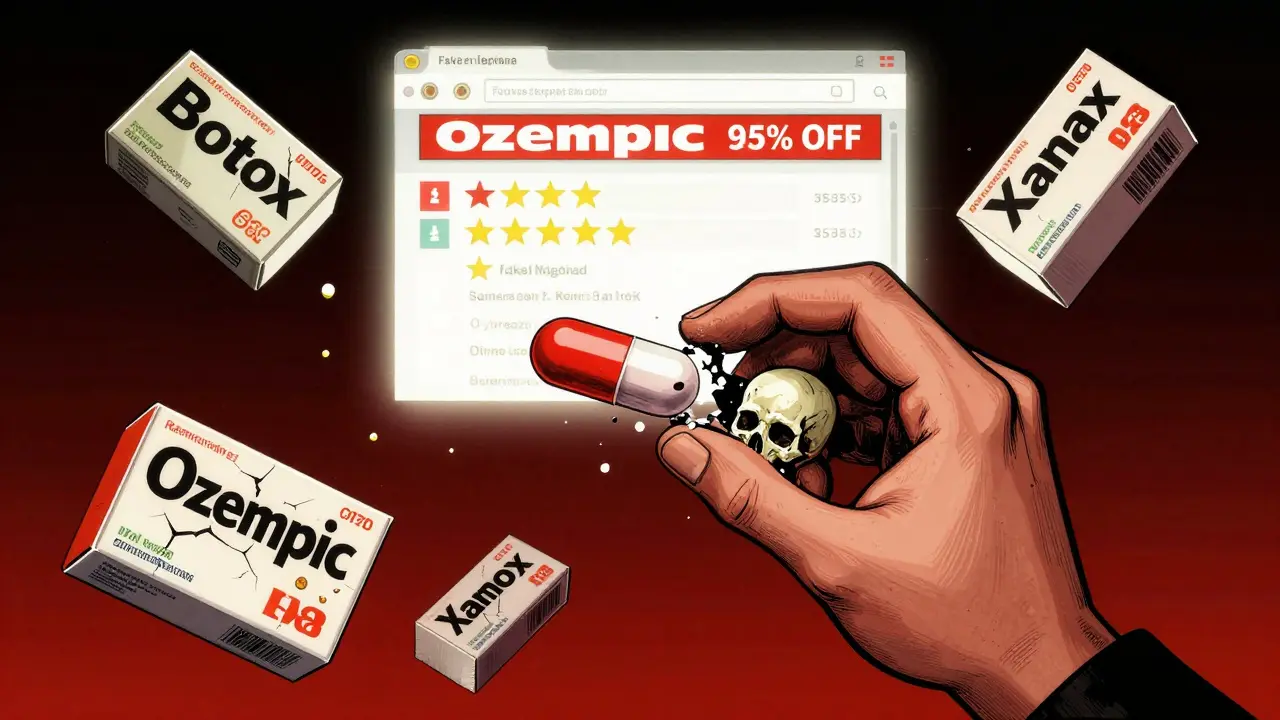
Every year, millions of people around the world buy medicines online because it’s cheap, convenient, or they’re embarrassed to ask their doctor for help. But what they don’t know is that online pharmacy counterfeits are more common than you think-and they’re killing people.
You might think you’re saving money by ordering Ozempic, Botox, or painkillers from a website that offers them at half the price. But those pills? They could be filled with fentanyl, rat poison, or chalk. In 2024, the U.S. Drug Enforcement Administration seized over 60 million fake pills laced with fentanyl-enough to kill every person in Melbourne twice over. And most of them came from websites that look exactly like real pharmacies.
How Fake Medicines Are Made and Sold
Counterfeit drugs aren’t made in back-alley labs like they used to be. Today, criminal networks operate like legitimate businesses. They register fake companies, hire web designers, build shopping carts, and even fake customer reviews. Some sites even have live chat support with people pretending to be pharmacists.
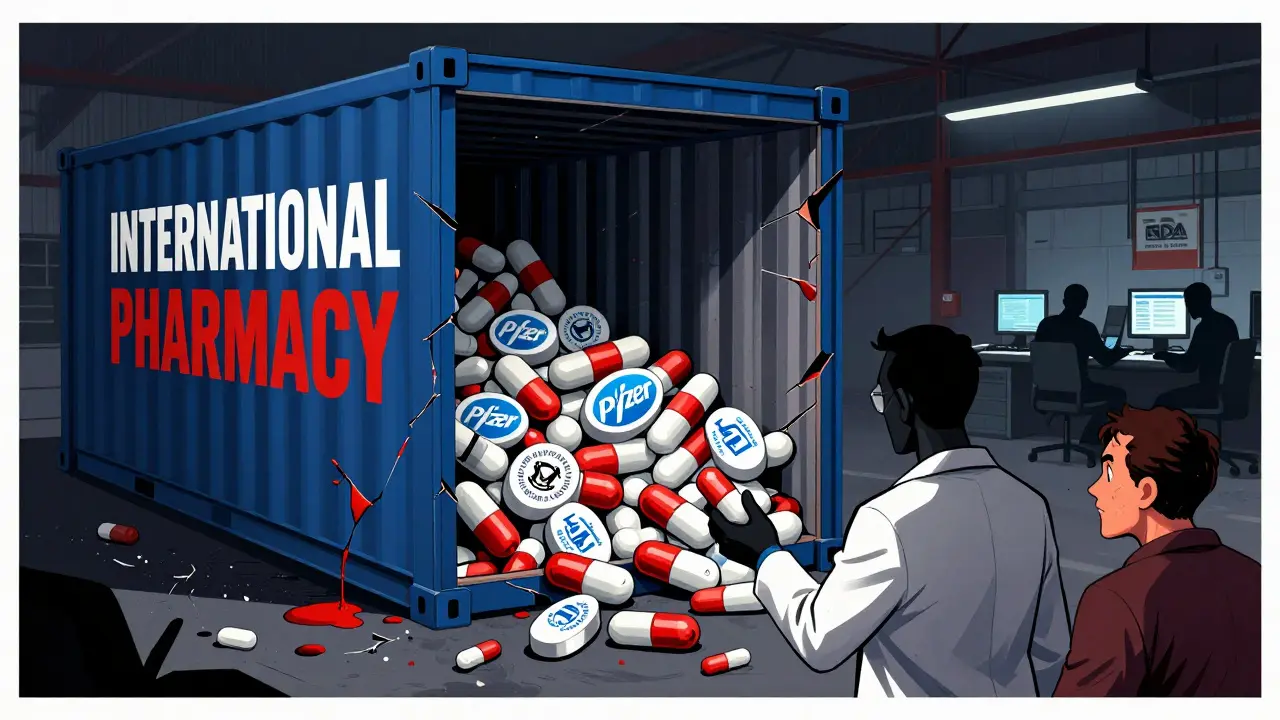
These operations often start in countries with weak drug regulations-China, India, Turkey, and Eastern Europe-and ship directly to consumers worldwide. The packaging looks real. The logos match. The dosage instructions are printed perfectly. But inside? You have no idea what you’re swallowing.
According to the Pharmaceutical Security Institute, over 6,400 incidents of counterfeit pharmaceuticals were recorded in 2024 across 136 countries. More than 2,400 different medicines were fake, including cancer drugs, insulin, antibiotics, and even eye drops. One of the most common targets? Weight-loss drugs like Ozempic. In 2023 and 2024, the FDA found multiple batches of counterfeit Ozempic sold online that contained no semaglutide at all-just sugar and filler. People lost weight? No. They got sick.
The Deadly Ingredients in Fake Pills
The biggest danger isn’t that the medicine doesn’t work. It’s that it kills you.
Fentanyl is the silent killer behind most counterfeit pills. It’s 50 times stronger than heroin. A dose as small as two grains of salt can stop your breathing. Criminals mix it into pills made to look like oxycodone, Xanax, or even Adderall. You think you’re taking a painkiller. Instead, you’re taking a death sentence.
The FDA has documented cases where people took fake Botox injections and suffered facial paralysis, vision loss, and difficulty swallowing. Others bought counterfeit diabetes medication that had no metformin-just lead and industrial dyes. One patient in Texas ended up in the hospital with kidney failure after taking fake Muro 128 eye drops.
And it’s not just opioids. Fake antibiotics can contain the wrong strength or no active ingredient at all. That means your infection doesn’t go away-it gets worse. And now you’ve made the bacteria stronger, harder to treat. This isn’t science fiction. It’s happening right now, every day.
Why Legitimate Pharmacies Are the Only Safe Option
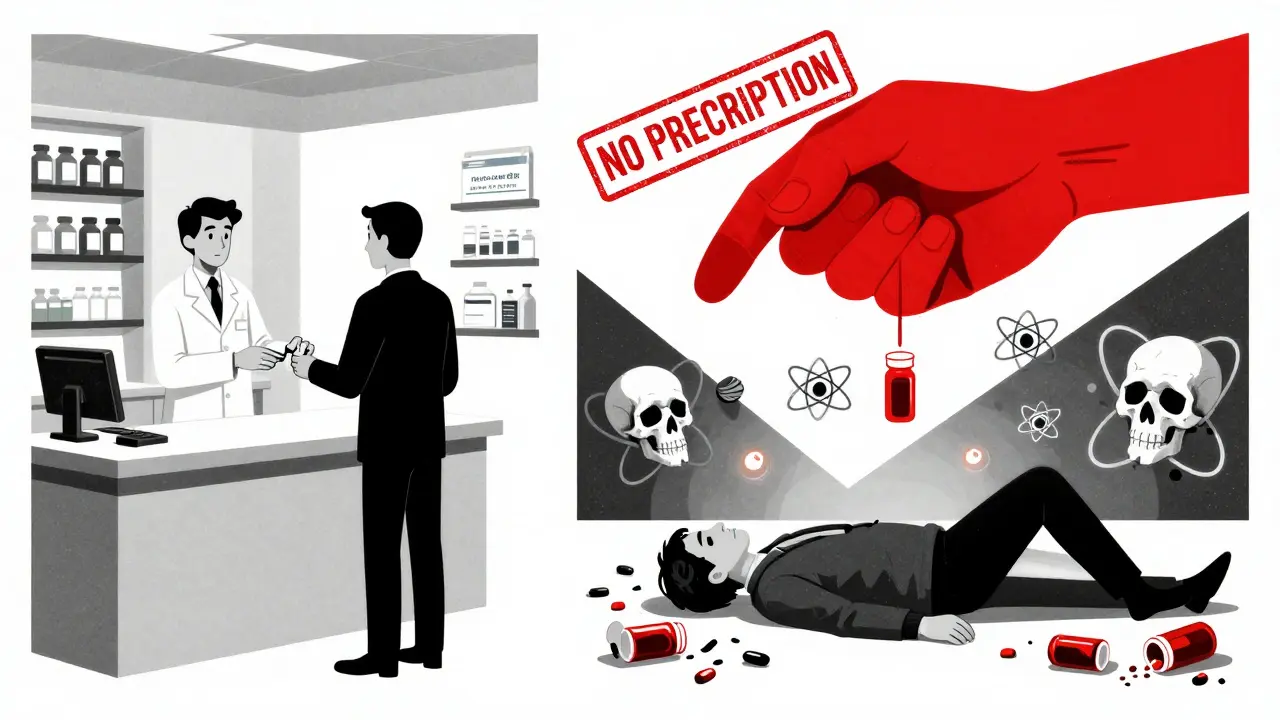
Legitimate online pharmacies follow strict rules. They require a valid prescription from a licensed doctor. They store medicines at the right temperature. They have pharmacists on staff to answer your questions. And they’re licensed by state boards and verified by programs like VIPPS (Verified Internet Pharmacy Practice Sites).
Here’s the hard truth: only about 5% of websites selling prescription drugs online are legal. The other 95%? They’re breaking the law. The National Association of Boards of Pharmacy says this every year. The CDC confirms it. The WHO calls it a global health crisis.
Legitimate pharmacies don’t sell Viagra without a prescription. They don’t ship insulin overnight without temperature control. They don’t offer “discounts” that are too good to be true. If a website promises you 80% off Ozempic and doesn’t ask for your doctor’s name, it’s a trap.
How to Spot a Fake Online Pharmacy
Here’s what to look for-before you click “buy.”
- No prescription required? Red flag. Legit pharmacies never sell controlled substances without one.
- No physical address or phone number? If you can’t find a real street address or a working phone line, walk away.
- Website looks too professional? That’s the trick. Fake sites spend thousands on design to look real. Don’t be fooled by clean layouts.
- “International pharmacy” or “overseas supplier”? That’s code for “we’re not regulated.”
- Payment only via cryptocurrency or wire transfer? Real pharmacies accept credit cards and offer refunds.
- No licensed pharmacist available to talk to? Legit sites have pharmacists you can call or message.
Check the pharmacy’s license. In the U.S., use the National Association of Boards of Pharmacy’s VIPPS program to verify. In Australia, check the Therapeutic Goods Administration’s list of registered pharmacies. If it’s not on the list, don’t buy.
What Happens When You Get Caught
Some people think, “I’m just buying for myself. No one’s getting hurt.” But here’s the reality: buying from these sites doesn’t just put you at risk-it fuels a global criminal industry.
In 2025, Interpol’s Operation Pangea XVI led to 769 arrests across 90 countries. Over 120 criminal gangs were broken up. More than 50 million fake doses were seized. These aren’t small-time sellers. These are organized crime rings tied to drug cartels, human trafficking, and money laundering.
And if you’re caught importing counterfeit drugs? You could face fines, seizure of your assets, or even criminal charges-even if you didn’t know the pills were fake. Customs agencies don’t care if you thought you were saving money. They see a controlled substance arriving without proper documentation. That’s a violation.
What to Do If You’ve Already Bought Fake Medicine
If you’ve taken pills from a suspicious website and feel sick-dizzy, nauseous, short of breath, or confused-get help immediately. Call emergency services. Tell them you suspect you took a counterfeit drug.
Save the packaging. Take photos. Don’t throw anything away. Then report it.
In the U.S., report to the FDA’s MedWatch program at [email protected] or call 1-800-FDA-1088. In Australia, report to the TGA via their online adverse event form.
Reporting isn’t just about justice. It helps health agencies track patterns, shut down websites, and warn others. Your report could save someone’s life.
How to Get Medicines Safely Online
You don’t have to risk your life to save money. Here’s how to get real medicine online, safely:
- Ask your doctor for a prescription-even for over-the-counter drugs like alli (orlistat).
- Use only pharmacies listed on your country’s official regulator website (TGA for Australia, FDA VIPPS for the U.S., MHRA for the UK).
- Call the pharmacy. Ask to speak to a pharmacist. If they can’t answer your questions, find another.
- Compare prices. If it’s way cheaper than your local pharmacy, it’s likely fake.
- Use your insurance. Many insurers cover online pharmacy delivery if it’s a verified provider.
Some legitimate pharmacies even offer free shipping or loyalty discounts. You don’t need to break the law to save money.
The Bigger Picture: Why This Keeps Happening
Counterfeit drugs thrive because there’s demand-and almost no risk for the criminals.
They make huge profits. A single counterfeit Ozempic pen might cost $2 to make. Sold online for $200? That’s a 10,000% markup. Meanwhile, the chance of getting caught? Extremely low. Most of these sites are hosted overseas, use encrypted payment systems, and disappear within weeks.
Regulators are trying. The U.S. Drug Supply Chain Security Act requires electronic tracking of medicines from factory to pharmacy. But online pharmacies bypass this entirely. They ship directly to your door, skipping every checkpoint.
And consumers? Many don’t realize the danger. They see a website with a green checkmark, a “trusted by 10,000 customers” badge, and a discount code. They click. They buy. They never look back.
But every click fuels this deadly industry.
Final Warning: One Pill Can Kill
The DEA’s “One Pill Can Kill” campaign isn’t just a slogan. It’s a fact.
There’s no way to tell if a pill is fake just by looking at it. No test you can do at home. No app that scans the barcode and tells you it’s real. The only way to be safe is to avoid unverified websites entirely.
If you need medication, go to your doctor. Go to your local pharmacy. Use a verified online pharmacy with a license you can check. Don’t gamble with your health. Don’t trust a website that doesn’t ask for your prescription. Don’t believe the price.
Your life isn’t worth a discount.
How can I tell if an online pharmacy is real?
A real online pharmacy will always require a valid prescription from a licensed doctor. It will have a physical address and a working phone number you can call. It will list a licensed pharmacist on staff and be verified by your country’s health regulator-like VIPPS in the U.S. or the TGA in Australia. If the site sells prescription drugs without a prescription, it’s fake.
Are fake medicines only a problem in developing countries?
No. Fake medicines are a global problem. In 2024, the U.S. accounted for nearly 38% of all seized counterfeit drugs worldwide. The WHO estimates 1 in 10 medicines in low- and middle-income countries are fake-but even in wealthy nations like Australia, Canada, and the U.S., consumers are buying counterfeit Ozempic, Botox, and insulin from fake websites. Criminals target high-demand drugs anywhere people are desperate to save money.
What should I do if I think I took a fake medicine?
If you feel unwell after taking medication bought online, seek medical help immediately. Call emergency services if you have trouble breathing, chest pain, confusion, or sudden weakness. Save the packaging and take photos. Report the product to your country’s health regulator-like the FDA in the U.S. or the TGA in Australia. Your report helps authorities track and shut down these dangerous operations.
Can I trust online pharmacies that say they’re based in Canada or the UK?
Not necessarily. Many fake pharmacies claim to be based in Canada, the UK, or Australia to appear trustworthy. But they’re often just using fake addresses. Always verify their license through your country’s official regulator. For example, in Australia, check the TGA’s register of approved pharmacies. If it’s not listed, don’t buy-even if the site says “Canadian Pharmacy.”
Why are counterfeit drugs so common online?
Because it’s profitable and low-risk. Criminals can make thousands of dollars per pill with almost no chance of being caught. Online sales hide their identity, and many consumers don’t report fake drugs because they’re embarrassed. High-demand drugs like weight-loss medications, painkillers, and anti-aging treatments are the most commonly faked because people are willing to pay a lot for them.
Is it illegal to buy medicine from an unlicensed online pharmacy?
In most countries, yes. Importing prescription drugs without a valid license from a regulated pharmacy is against the law-even if you’re buying for personal use. Customs agencies can seize your package, fine you, or even pursue criminal charges. More importantly, you’re putting yourself at serious risk of poisoning or death.
Bradford Beardall
January 10, 2026 AT 15:51I used to buy Ozempic from one of those sites because my insurance wouldn't cover it. Thought I was being smart. Turned out the pills were just lactose and food coloring. I gained weight, got dizzy, and ended up in the ER. Never again. If you're desperate for help, talk to your doctor. They can often hook you up with samples or payment plans. You're not alone.
McCarthy Halverson
January 11, 2026 AT 08:31Don't buy from random sites. Period.
Michael Marchio
January 13, 2026 AT 04:27Let’s be real here - this isn’t about ‘saving money,’ it’s about people being too lazy or too ashamed to deal with the medical system. You want cheap insulin? Go to Canada. Go to Mexico. Go to a clinic that offers sliding scale fees. But don’t click some sketchy link that says ‘Botox 80% OFF’ because you think you’re getting a deal. You’re not. You’re funding organized crime that’s poisoning your neighbors, your kids, your coworkers. And now the DEA has to waste resources chasing down fake pills instead of real traffickers because you thought you were being clever. You think you’re being frugal? You’re being a liability. And if you get sick from it, don’t come crying to the ER expecting sympathy - you chose this. The system’s broken, sure, but that doesn’t make your dumb choice any less dangerous.
Jake Kelly
January 13, 2026 AT 04:42I get it - meds are expensive. I’ve been there. But there are real ways to get help without risking your life. Free clinics, patient assistance programs, even some pharma companies give out free samples. You don’t have to gamble with your health. It’s not worth it.
Ashlee Montgomery
January 13, 2026 AT 10:16The real tragedy isn't just the counterfeit drugs - it's that people have to choose between paying rent and buying insulin. The system failed them long before they clicked 'buy.' We need policy change, not just warnings.
neeraj maor
January 14, 2026 AT 21:11They’re all lying. The FDA? TGA? VIPPS? All controlled by Big Pharma. They want you to buy only from their approved pharmacies so they can keep prices sky-high. The real counterfeiters? They’re the ones making medicine affordable. The government just wants you dependent. I’ve bought from ‘unverified’ sites for years. Never had a problem. The ‘fentanyl’ scare? Propaganda. You’re being manipulated.
Ritwik Bose
January 14, 2026 AT 23:21Thank you for this incredibly important post 🙏
As someone from India, I’ve seen how counterfeit drugs spread in rural areas - and now it’s global. The solution isn’t fear - it’s education and access. Governments and pharma companies must work together to make real medicine affordable and traceable. Let’s not punish the desperate. Let’s fix the system.
Paul Bear
January 15, 2026 AT 17:08Per 21 CFR Part 203 and the Drug Supply Chain Security Act (DSCSA), the unauthorized distribution of prescription pharmaceuticals constitutes a Class I violation under 21 U.S.C. § 331. Furthermore, under 21 U.S.C. § 355(a), the introduction of unapproved new drugs into interstate commerce is strictly prohibited - which includes all counterfeit pharmaceuticals sold via e-commerce platforms without FDA pre-market approval. The fact that consumers conflate ‘convenience’ with ‘legitimacy’ is a failure of public health literacy. Verified Internet Pharmacy Practice Sites (VIPPS) are the only legally compliant channel for online prescription fulfillment in the U.S. Any deviation constitutes both a public health risk and a criminal act - regardless of intent. If you’re purchasing without a valid, verifiable prescription, you’re not a ‘customer’ - you’re an unwitting accomplice in a transnational criminal enterprise.