
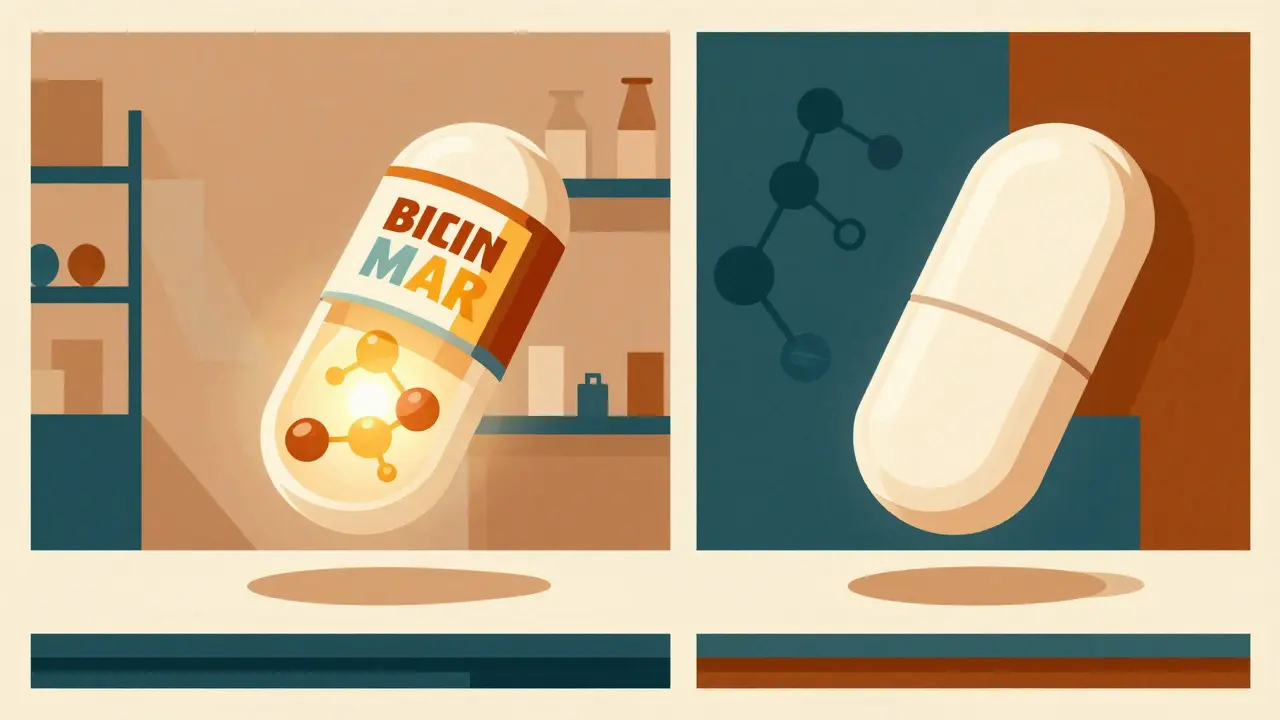
When you pick up a prescription, you might see a different name on the bottle than what your doctor wrote. It’s not a mistake. It’s probably an authorized generic. But here’s the real question: is it truly the same as the brand-name drug you’ve been taking for years? Or is it just another generic with a different label?
The answer isn’t as complicated as it seems. Authorized generics are, in every meaningful way, the exact same medication as the brand-name version. Same active ingredient. Same inactive ingredients. Same manufacturing process. Same quality controls. The only difference? No brand name on the label.
This isn’t marketing spin. It’s a fact backed by the U.S. Food and Drug Administration (FDA). They define authorized generics as "approved brand name drugs that are marketed without the brand name on its label." In other words, it’s the same pill, same capsule, same tablet - just sold under a different name. The company that made the original brand drug is the one making this version. No third-party manufacturer. No cut corners. Just the same factory, same batch, same everything.
How Authorized Generics Are Made
Most generic drugs are made by different companies. These companies go through a process called the Abbreviated New Drug Application (ANDA), where they prove their version works the same way as the brand. They don’t need to redo all the clinical trials - just show bioequivalence. That means the drug gets into your bloodstream at nearly the same rate and amount as the brand. But here’s the catch: they can use different fillers, dyes, or coatings. That’s allowed. And for most people, it doesn’t matter.
Authorized generics skip that whole process. They’re made under the original brand’s New Drug Application (NDA). That means they’re produced on the same生产线, with the same equipment, by the same team. The only thing changed is the label. No new formulation. No new testing. No new approval beyond what the brand already had.
Think of it like buying a car. The brand version is a Honda Accord with the Honda logo on the hood. The authorized generic is the exact same car - same engine, same seats, same paint - but with a plain sticker where the logo used to be. It’s not a knockoff. It’s the same product, just sold differently.
Why Authorized Generics Aren’t Listed in the Orange Book
If you’ve ever looked up generic drugs, you’ve probably seen the FDA’s Orange Book. It’s the official list of all approved generic drugs and their therapeutic equivalence ratings. But here’s something most people don’t know: authorized generics aren’t in there.
That’s not because they’re not approved. It’s because they’re not classified as generics under FDA rules. Since they’re marketed under the brand’s original NDA, they’re treated like the brand itself - just unlabeled. The Orange Book only includes drugs approved through the ANDA pathway. So if you’re checking the Orange Book to see if a generic is equivalent to your brand, you won’t find the authorized version listed. That doesn’t mean it’s less effective. It just means it’s not in the same category.
This can cause confusion for pharmacists and patients. You might get a pill that looks identical to your brand, but your insurance system shows it as a different drug. The National Drug Code (NDC) will be different. The name on the bottle will be different. But the medicine inside? Identical.
Real-World Evidence: Do They Work the Same?
Some people worry that even if the ingredients are the same, maybe the manufacturing isn’t. Or maybe the batch-to-batch consistency isn’t perfect. But the data says otherwise.
A major study published in PMC in 2018 tracked over 5,000 patients who switched from brand-name drugs to generics. Some switched to authorized generics. Others switched to typical generics. The results? No meaningful difference in hospital visits, emergency room trips, or medication discontinuation rates. Patients on authorized generics were just as likely to stick with their treatment as those on the brand. In fact, discontinuation rates were almost identical: 18.7% for authorized generics versus 19.3% for typical generics over a 12-month period.
Even the FDA’s own investigations show minimal differences. One large study found that the average difference in how much of the drug entered the bloodstream between brand and generic was just 3.5%. That’s well within the acceptable bioequivalence range - and authorized generics are even closer because they’re the same product.
For drugs with a narrow therapeutic index - where tiny changes can matter, like warfarin or levothyroxine - some doctors and patients still hesitate. But the FDA requires all manufacturers, including authorized generic producers, to meet the same strict quality standards. Every batch is tested. Every lot is monitored. If there’s a problem, the FDA steps in - whether it’s the brand or the authorized version.
Cost Differences: Why Authorized Generics Aren’t Always the Cheapest
One of the biggest reasons people choose generics is cost. Typical generics can save you 80-85% off the brand price. Authorized generics? They’re usually cheaper than the brand, but sometimes more expensive than the typical generic.
Why? Because the brand company is still making them. They’re not competing with themselves on price - they’re protecting their market share. So they might price the authorized generic just below the brand, to keep patients from switching to a cheaper third-party generic.
That doesn’t mean authorized generics are overpriced. They’re still a good deal. But if your goal is the lowest possible price, you might find a typical generic that’s even cheaper. The trade-off? You might get a different-looking pill or a slightly different filler. For most people, that’s fine. For others - especially those who’ve had reactions to certain dyes or fillers in the past - the identical formulation of an authorized generic is worth the extra few dollars.
When to Choose an Authorized Generic
You don’t need to choose an authorized generic unless you have a reason to. But here are situations where it makes sense:
- You’ve had a bad reaction to a typical generic - maybe a rash, nausea, or upset stomach - and you suspect it’s from an inactive ingredient.
- You’re on a medication with a narrow therapeutic index and want the absolute closest match to your brand.
- Your insurance covers the authorized generic at the same cost as the brand, and you want to avoid any uncertainty.
- You’re switching from brand to generic and want to minimize the psychological discomfort of change.
For chronic conditions like epilepsy, thyroid disorders, or birth control, where consistency matters, many patients and doctors prefer authorized generics. They’re not magic. But they remove one variable from the equation: formulation change.
What Pharmacists Need to Know
Pharmacists play a key role. If you get an authorized generic, it’s not the same as a typical generic. You can’t just swap them in your system. The NDC is different. The label is different. Insurance might reimburse differently.
That’s why it’s important for pharmacists to know how to identify them. Authorized generics often have the same shape, color, and imprint as the brand. If you’re used to seeing a blue oval pill for your brand, and you get a blue oval pill with no logo - it’s probably an authorized generic. Check the NDC or ask the distributor.
Patients often don’t realize they’ve been switched. A pharmacist should explain: "This is the same medicine as your brand, just without the brand name on it. It’s made by the same company. It’s not a different drug."
The Bigger Picture: Why Authorized Generics Exist
Authorized generics weren’t created to help patients. They were created to help drug companies.
When a brand drug’s patent expires, other companies can make generics. But the original company can also launch their own generic version - an authorized generic - to keep customers. It’s a smart business move. They keep market share. They keep revenue. And yes, patients still get lower prices.
But it’s not always fair. Some companies delay generic competition by filing lawsuits or using patent tricks - then launch their own authorized generic right away. The Government Accountability Office found cases where this happened. It’s a loophole in the system.
Still, for the patient, it doesn’t change the facts: if you’re getting an authorized generic, you’re getting the same drug. The same safety. The same effectiveness. The same quality.
Final Verdict: Are They Equivalent?
Yes. Absolutely.
Authorized generics are therapeutically equivalent to brand-name drugs. They’re not just "close." They’re identical. The FDA says so. The research says so. The manufacturers say so. And for millions of patients, the results say so too.
That doesn’t mean all generics are the same. Typical generics are safe and effective too. But if you want the closest possible match to your brand - with no changes to ingredients, shape, or manufacturing - an authorized generic is your best bet.
Ask your pharmacist. Check your prescription. Ask if there’s an authorized generic option. If there is, and you’re concerned about switching, it’s worth considering. You’re not settling for less. You’re getting the same thing - just at a better price.
rasna saha
January 27, 2026 AT 15:23Just wanted to say this post made me feel so much better about switching to my authorized generic last month. I was scared I’d have side effects, but zero issues. Same pill, just cheaper. Thanks for explaining it so clearly.
Ashley Porter
January 28, 2026 AT 07:56Authorized generics are NDA-sourced, bioequivalent by definition, and fall under the same cGMP compliance as the originator. The Orange Book exclusion is purely a regulatory classification artifact-not a therapeutic one. Pharma’s got a weird taxonomy thing going on where ‘generic’ = ANDA, and ‘authorized generic’ = NDA with label removal. Semantics, but clinically irrelevant.
shivam utkresth
January 29, 2026 AT 20:38Bro, this is wild. In India we call this ‘same medicine, different wrapper’-like getting a Coca-Cola in a plain bottle because the store’s running a promo. You still get the same fizz, same sugar, same hangover. The brand just wants you to think you’re getting ‘less’ when really you’re getting the same damn thing. Also, the FDA doesn’t play games-same factory, same machine, same guy who calibrated the tablet press in 2019. If your pill looks identical but has no logo? It’s the same beast.
And yeah, if you’re on warfarin or levothyroxine and your body’s a tiny nervous system drama queen, go for the authorized version. No cap. I switched my mom to it after she had a panic attack over a different-shaped pill. She’s been chill ever since.
Kipper Pickens
January 31, 2026 AT 19:07Let’s be real-the Orange Book doesn’t list authorized generics because they’re not ANDA products. That’s not a flaw, it’s a feature. They’re branded drugs with the brand name scrubbed off. The NDC change? Totally normal. Insurance systems are still stuck in 2005 and treat them as ‘different’ because they’re coded differently. Doesn’t mean the medicine changed. You’re not getting a knockoff. You’re getting the original, just without the marketing budget attached.
And honestly? If you’re on a narrow therapeutic index drug and you’re worried about batch variation, the authorized version is the only generic that’s literally the same batch. That’s not marketing-that’s physics.
Aurelie L.
February 1, 2026 AT 06:47I got switched to one and cried. Not because it didn’t work. Because I felt betrayed. Like my doctor lied to me.
Joanna Domżalska
February 1, 2026 AT 23:52So you’re telling me a company makes a drug, then makes the exact same drug and sells it cheaper to compete with itself? That’s not healthcare. That’s capitalism. The real problem isn’t the pill. It’s that we let corporations control our medicine. The FDA doesn’t care about you. They care about patents. You’re just a consumer in their game.
Josh josh
February 2, 2026 AT 15:01lol so the brand just made a generic of their own drug to stop other generics from taking over? classic. but hey if i get the same pill for less im not complaining. just tell me what it looks like so i dont freak out when my blue pill has no logo
bella nash
February 3, 2026 AT 16:02It is incumbent upon the patient to discern the regulatory distinction between an Abbreviated New Drug Application (ANDA)-approved product and a New Drug Application (NDA)-marketed authorized generic. The therapeutic equivalence is not merely presumed-it is empirically validated through manufacturing continuity, batch consistency, and FDA oversight. To conflate the two is to misunderstand the architecture of pharmaceutical regulation.