
Manufacturing Changes in Medications: What You Need to Know About Formulation Shifts and Safety
When a medication’s manufacturing changes, adjustments in how a drug is made, including ingredients, dosage form, or production process. Also known as formulation changes, it can alter how your body absorbs the medicine — even if the active ingredient stays the same. These aren’t just behind-the-scenes updates. They can mean the difference between a pill that works smoothly and one that causes unexpected nausea, dizziness, or worse.
Take extended-release tablets, a type of drug formulation designed to release medication slowly over time. A manufacturer might switch from a capsule to a tablet, or change the coating material. That sounds minor — until you start feeling side effects you didn’t have before. One study found that over 15% of patients reported new symptoms after a formulation switch, even when told the drug was "the same." Why? Because how the drug dissolves in your gut changes. The same goes for generic drug availability, when a brand-name drug loses patent protection and cheaper versions enter the market. Not all generics are made the same. Some use different fillers, binders, or coatings that affect absorption. That’s why some people do better on one generic than another — even if both are labeled as the same drug.
Manufacturing changes also happen with medication formulations, the physical design of a drug, like liquid, tablet, or patch. A switch from a regular tablet to an extended-release version might reduce daily doses, but it can also delay how quickly the drug kicks in. That’s risky if you’re on a medication that needs steady levels, like seizure drugs or heart medications. And when a company changes the size or shape of a pill, it’s not just about convenience — it can lead to dosing errors, especially in older adults or people taking multiple meds.
These aren’t theoretical concerns. They show up in real life: someone on a steady dose of a statin suddenly gets muscle pain after a generic switch. A patient with migraines finds triptans don’t work as fast after the manufacturer changed the tablet coating. A diabetic notices blood sugar swings after their metformin switched from immediate-release to extended-release. These aren’t coincidences. They’re direct results of manufacturing changes that weren’t clearly communicated.
What’s frustrating is that these changes often happen without warning. Pharmacies may refill your prescription with a different-looking pill, and your doctor might not know unless you tell them. You’re left wondering: Is this normal? Did I do something wrong? The truth is, you didn’t. The system did.
Below, you’ll find real stories and clear breakdowns of how these changes affect people — from how extended-release tablets reduce nausea to why a simple switch in a blood thinner’s filler can trigger dangerous bleeding. You’ll learn how to spot when your medication has changed, what questions to ask your pharmacist, and how to protect yourself when the system doesn’t.
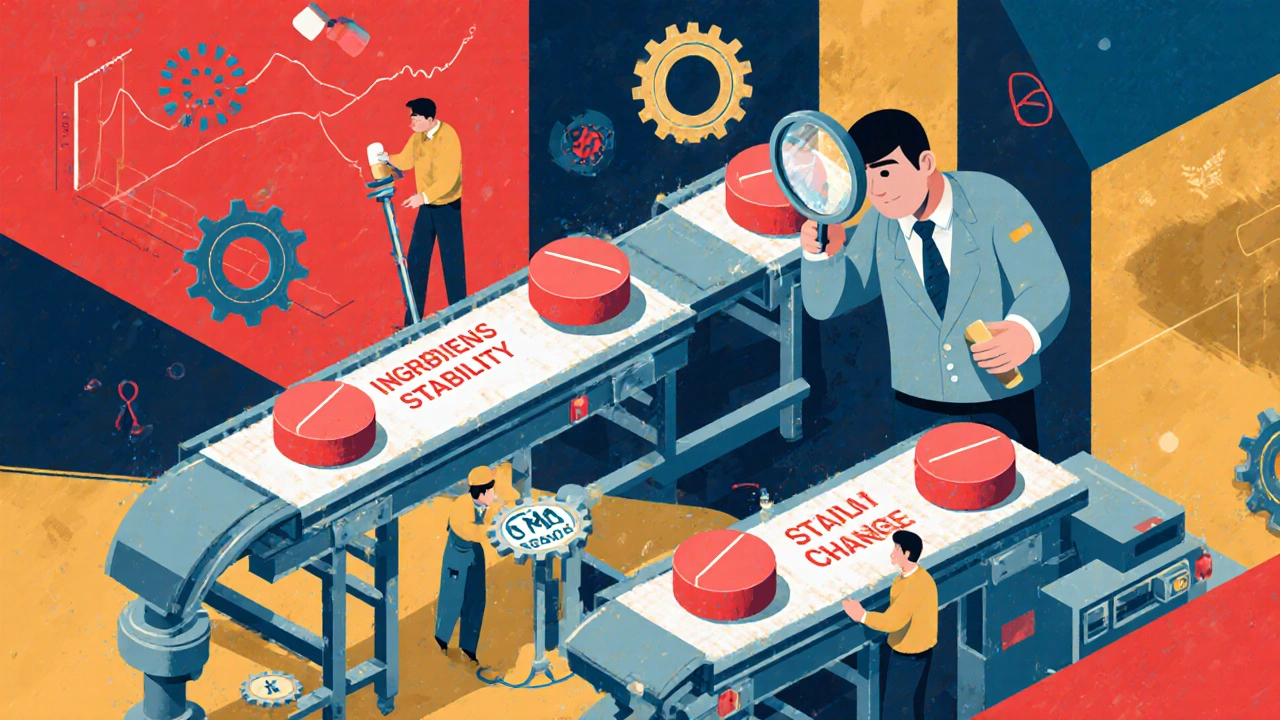
Manufacturing Changes and Generic Approval: What Triggers FDA Re-Evaluation
Learn what manufacturing changes trigger FDA re-evaluation for generic drugs, how the approval process works, and why delays happen - plus what’s changing in 2025 to speed things up.
Read more