
HRT Side Effects: What You Need to Know About Hormone Therapy Risks and Relief
When you start Hormone Replacement Therapy, a medical treatment used to manage symptoms of menopause by replacing declining hormones like estrogen and progesterone. Also known as hormone therapy, it helps with hot flashes, night sweats, and vaginal dryness — but it’s not without risks. Not everyone experiences side effects, but if you’re considering HRT, you need to know what’s possible — and what’s serious.
Estrogen therapy, often prescribed alone for women who’ve had a hysterectomy can cause bloating, breast tenderness, and headaches. When combined with progesterone, required for women with a uterus to prevent uterine cancer, side effects can include mood swings, spotting, and weight gain. These aren’t just minor annoyances — they’re signals your body is adjusting. Some people adapt quickly; others need to switch types, doses, or delivery methods like patches or gels instead of pills.
The bigger concerns? Blood clots, stroke, and breast cancer risk. Studies show these risks rise slightly with long-term use, especially in women over 60 or those with other health issues like obesity or high blood pressure. But for many, especially those under 60 and starting HRT near menopause, the benefits outweigh the risks — if it’s monitored. Regular check-ups, including blood pressure and breast exams, aren’t optional. They’re part of safe use.
Not all HRT is the same. Bioidentical hormones? They’re marketed as natural, but the FDA doesn’t regulate them like prescription HRT. Compounded versions may have inconsistent dosing, which can make side effects harder to predict. Stick to FDA-approved products unless your doctor has a clear reason not to.
Some side effects are easy to miss. Mood changes might be blamed on stress, but they could be hormonal. Sleep problems? Could be night sweats. Fatigue? Might not be aging — it could be low thyroid function triggered by HRT. That’s why tracking symptoms matters. Write them down. Note when they started, how bad they are, and what makes them better or worse.
And if you’re on HRT and suddenly get severe chest pain, trouble breathing, sudden vision loss, or weakness on one side of your body — stop and get help. These aren’t typical side effects. They’re red flags.
Below, you’ll find real, detailed guides on how HRT interacts with other conditions and medications — from migraines and blood clots to liver health and drug interactions. No fluff. Just what you need to make smarter choices about your body, your health, and your next steps.
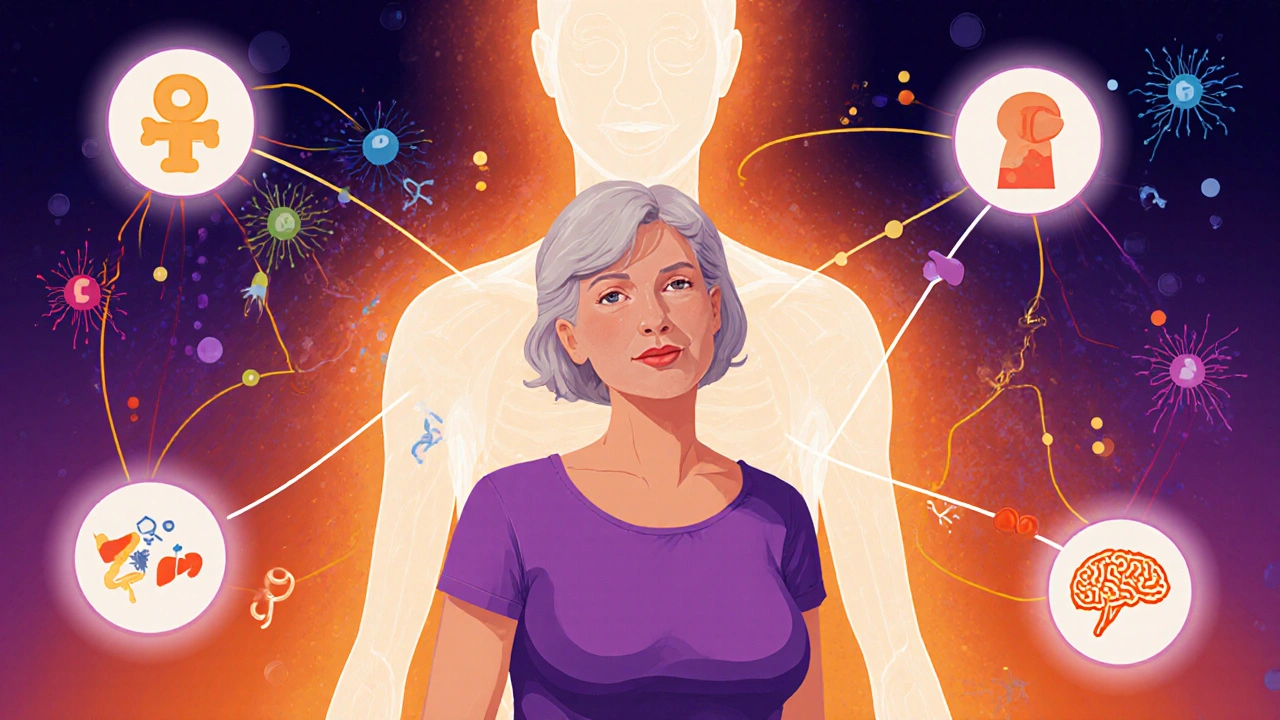
Medications During Menopause: Understanding Hormone-Related Side Effect Changes
Understanding how hormone therapy changes side effect profiles during menopause, including risks, alternatives, and how to adjust treatment for better tolerance and safety.
Read more