
Generic Drug Classifications: What They Are and Why They Matter
When you hear generic drug classifications, categories that group medications by how they work in the body, their active ingredients, and therapeutic use. Also known as therapeutic classes, these groupings help doctors and pharmacists match the right drug to your condition without needing the brand name. Think of it like sorting tools: a hammer and a nail gun are both for driving nails, but they’re not the same. Generic drug classifications do the same for medicines — they tell you what a pill does, not who made it.
These classifications aren’t just for labeling. They’re tied to how the FDA, the U.S. agency that ensures drugs are safe and effective before they reach patients approves them. For a generic to be approved, it must prove bioequivalence, meaning it delivers the same amount of active ingredient into your bloodstream at the same rate as the brand-name version. That’s the legal standard. But here’s the catch: bioequivalence doesn’t guarantee your body will react the same way. Why? Because generics can have different inactive ingredients, fillers, dyes, and binders that don’t treat your condition but can still affect how the drug is absorbed or how your body responds. Someone switching from brand to generic might feel dizzy, nauseous, or notice their medication isn’t working as well — not because the active ingredient changed, but because the formulation did.
Some drug classes are more sensitive than others. Blood thinners like warfarin fall into a high-risk category because tiny changes in how the drug is absorbed can throw off your INR levels and lead to dangerous bleeding or clots. Antidepressants like citalopram and escitalopram have strict dose limits because of heart risks. Even thyroid meds like levothyroxine need consistent dosing — switching generics can mess with your hormone levels if the formulation isn’t identical. That’s why these drugs often need extra monitoring, even when they’re technically "the same."
Not all generic switches are risky, but the system isn’t foolproof. Patents delay access. Manufacturing changes trigger FDA reviews. And sometimes, the same generic from two different companies behaves differently because of how they process the pill. That’s why knowing your drug’s classification helps you ask better questions: Is this a narrow therapeutic index drug? Are the inactive ingredients the same? Has this generic been flagged for issues?
What you’ll find below are real patient stories, expert breakdowns, and hard facts about how generic drug classifications affect your health — from why your migraine meds stop working after a switch, to how your statin might be causing muscle pain because of a hidden interaction. No fluff. Just what you need to know to stay safe, save money, and speak up when something doesn’t feel right.
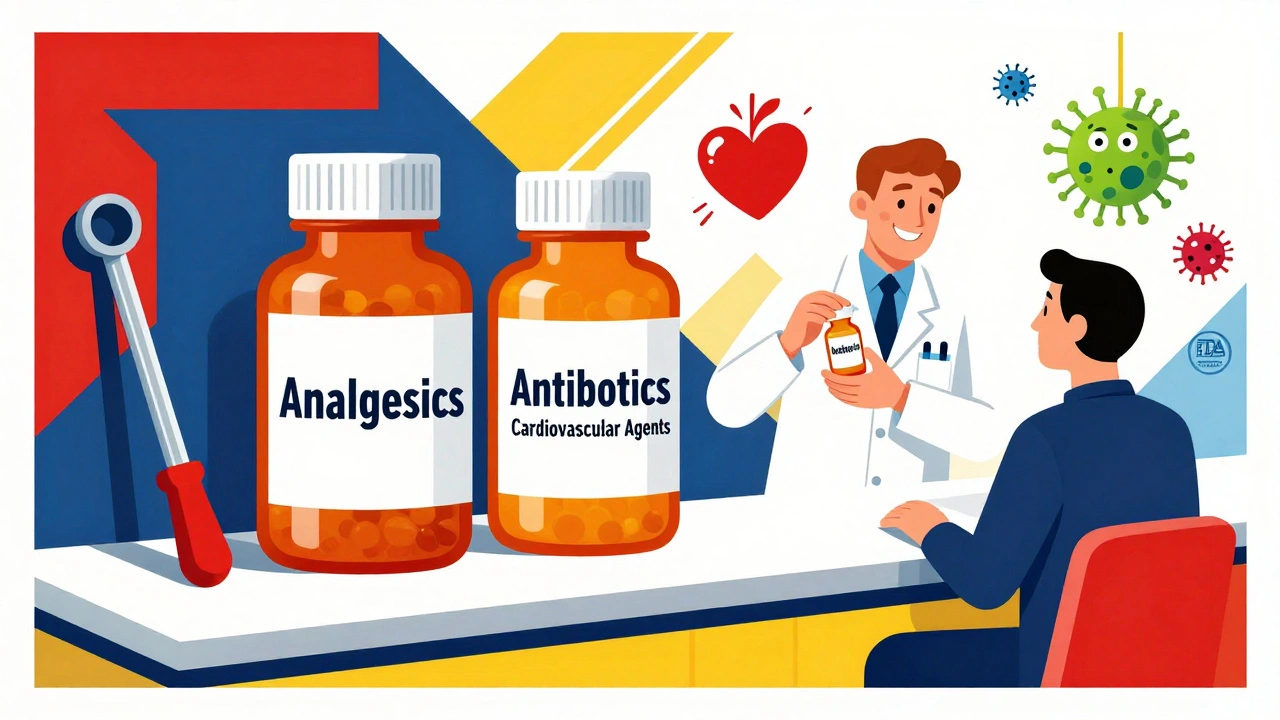
Generic Drug Classifications: Types and Categories Explained
Understand how generic drugs are classified by therapeutic use, mechanism of action, legal schedule, insurance tier, and global ATC codes. Learn why these systems matter for your prescriptions, costs, and safety.
Read more