
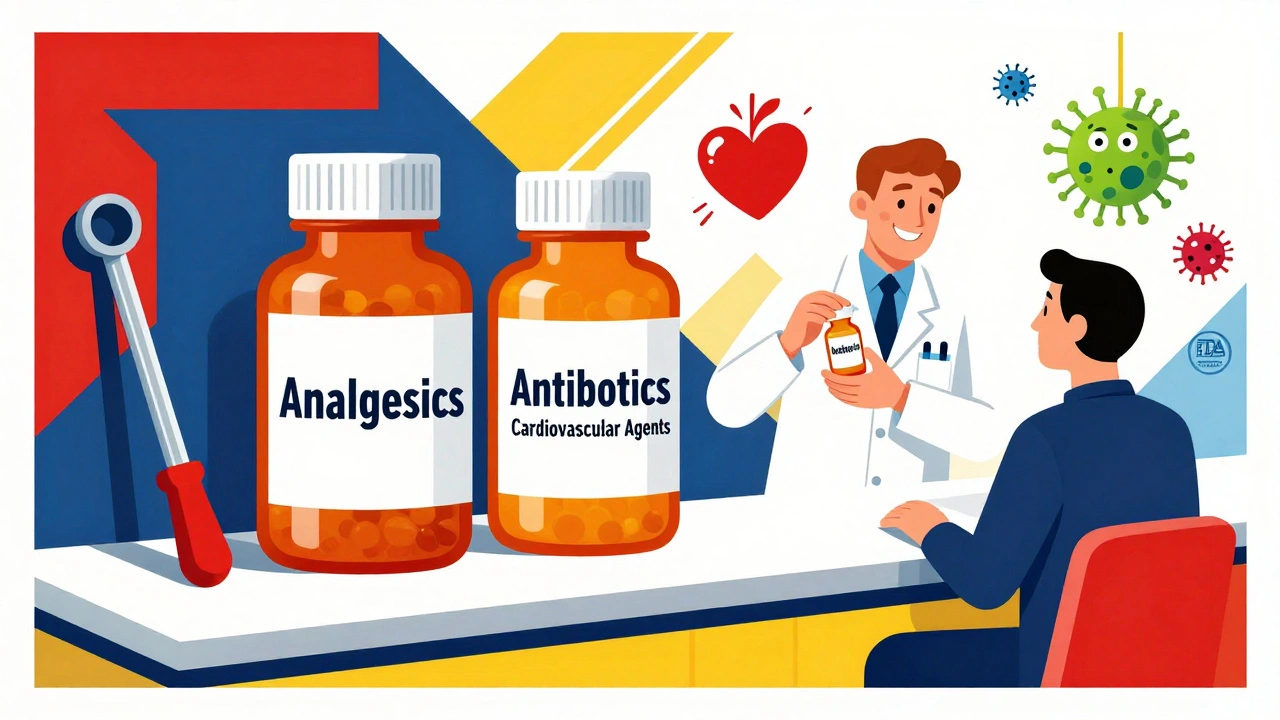
When you pick up a prescription at the pharmacy, you might see a label that says generic instead of the brand name. But what does that really mean? Generic drugs aren’t just cheaper versions-they’re organized into precise categories that tell doctors, pharmacists, and insurers how they work, what they treat, and how they’re regulated. Understanding these classifications isn’t just for experts. It affects your prescriptions, your costs, and even your safety.
Therapeutic Classification: What the Drug Treats
The most common way to classify generic drugs is by what medical condition they treat. This is called therapeutic classification. Think of it like sorting tools by function: you wouldn’t use a hammer to change a lightbulb, and you wouldn’t use a blood pressure drug to treat an infection. The FDA and USP use this system to group drugs into categories like Analgesics, Cardiovascular Agents, Antibiotics, and Endocrine Agents.
Under Analgesics, you’ll find two main subgroups: non-opioid pain relievers like acetaminophen and ibuprofen, and opioid painkillers like morphine and oxycodone. Cardiovascular Agents include drugs for high blood pressure (like lisinopril), heart rhythm issues (like amiodarone), and cholesterol (like atorvastatin). Each category has subgroups-sometimes 3 to 15-so a pharmacist can quickly identify if a drug belongs in a patient’s treatment plan.
This system works well in hospitals and clinics because it’s practical. A doctor doesn’t need to know the chemical structure of metformin to know it’s used for type 2 diabetes. But there’s a flaw: some drugs do more than one thing. Aspirin, for example, reduces pain, prevents blood clots, and lowers inflammation. In therapeutic classification, it’s often listed under Analgesics, even though its anticoagulant effect is just as important for many patients. That’s why this system alone isn’t enough.
Pharmacological Classification: How the Drug Works
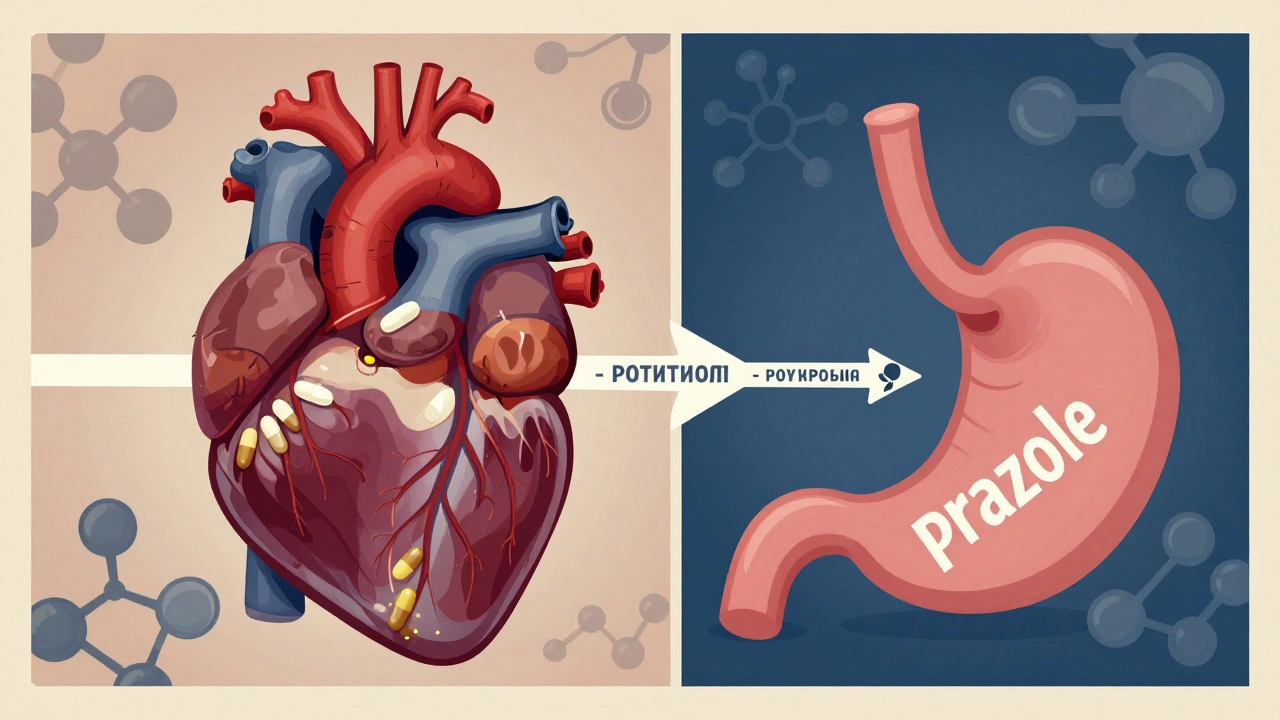
If therapeutic classification asks what the drug does, pharmacological classification asks how it does it. This system looks at the drug’s mechanism of action-its biological target and chemical interaction. It’s more technical, but far more precise.
For example, drugs ending in -lol (like metoprolol, propranolol) are all beta-blockers. They work by blocking adrenaline receptors in the heart and blood vessels, lowering heart rate and blood pressure. Drugs ending in -prazole (like omeprazole, esomeprazole) are proton pump inhibitors-they shut down acid production in the stomach. These naming rules, called stem conventions, were formalized by the USP in 1964 and are still used today. There are 87 recognized stems, and they help reduce medication errors by making drug names predictable.
There are over 1,200 distinct pharmacological classes identified in current medical literature. Some are incredibly specific: Epidermal Growth Factor Receptor Kinase Inhibitors (like erlotinib) target cancer cells with a particular genetic mutation. Others are broader, like Antimetabolites, which include drugs used in chemotherapy and autoimmune diseases. This system is essential for researchers and specialists, but it’s too complex for everyday use. Most patients won’t know what a “tyrosine kinase inhibitor” is-but they’ll know if their pill is for diabetes or high blood pressure.
DEA Scheduling: Legal Control and Abuse Risk
Not all drugs are treated the same under the law. In the U.S., the Drug Enforcement Administration (DEA) classifies controlled substances into five schedules based on their potential for abuse and accepted medical use. This isn’t about effectiveness-it’s about legal control.
Schedule I drugs (like heroin and LSD) have no accepted medical use and a high abuse risk. Schedule II drugs (like oxycodone, fentanyl, and Adderall) have high abuse potential but are used medically. Schedule III (like hydrocodone with acetaminophen and ketamine) has moderate abuse risk. Schedule IV (like benzodiazepines such as alprazolam) has low abuse potential. Schedule V (like cough syrups with small amounts of codeine) has the lowest risk.
Here’s where things get messy. Marijuana is still a Schedule I drug federally, even though it’s legal for medical use in 38 states and FDA-approved cannabinoid drugs like dronabinol are Schedule II. Oxycodone causes more overdose deaths than heroin, yet it’s in a lower schedule. Critics argue this system is outdated and doesn’t reflect real-world harm. But for pharmacists and prescribers, it’s non-negotiable. Prescribing a Schedule II drug requires special documentation, limits refills, and triggers state monitoring systems. Ignoring these rules can mean losing your license-or worse.
Insurance Tiers: What You Pay Out of Pocket
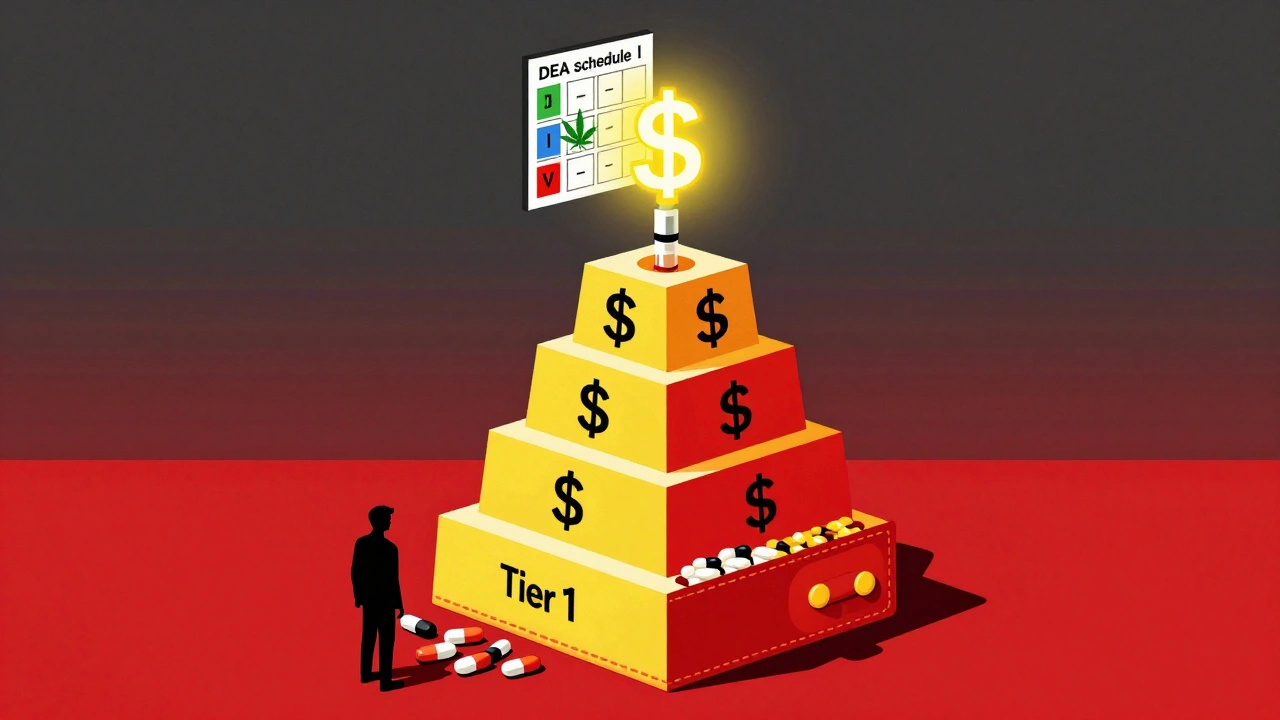
Your insurance company doesn’t care if a drug is a beta-blocker or a Schedule II controlled substance. They care about cost. That’s why they use tiered formularies. Most plans have five tiers:
- Tier 1: Preferred generics-usually the cheapest, often under $5 per prescription.
- Tier 2: Non-preferred generics-slightly more expensive, maybe $10-$15.
- Tier 3: Preferred brand-name drugs-often the same active ingredient as a generic, but priced higher due to marketing.
- Tier 4: Non-preferred brands-costly, and you’ll pay a higher copay.
- Tier 5: Specialty drugs-expensive biologics or injectables for complex conditions like cancer or rheumatoid arthritis.
Here’s the kicker: a generic version of a brand-name drug might be in Tier 2 while the brand is in Tier 3-even if they’re chemically identical. Why? Because the insurance company negotiated a deal with the brand manufacturer. This creates confusion. Patients think the brand is “better,” but it’s just more expensive. Pharmacists report that 43% of prior authorization requests come from patients disputing tier placement. A 2022 KFF analysis found that patients pay 25-35% more for Tier 3 drugs than Tier 2, even when the active ingredient is the same.
The ATC System: Global Standard for Drug Codes
While the U.S. uses multiple systems, the world relies on the WHO’s Anatomical Therapeutic Chemical (ATC) classification. It’s a five-level code that tells you exactly what a drug is, where it acts, and how it works.
For example, the ATC code for metformin is A10BA02:
- A = Alimentary tract and metabolism
- A10 = Drugs used in diabetes
- A10B = Blood glucose lowering drugs, excluding insulins
- A10BA = Biguanides
- A10BA02 = Metformin
This system is used in 143 countries and tracks over 5,000 substances. It’s the backbone of drug utilization studies, public health reporting, and international research. The WHO updates it quarterly, adding new drugs like mRNA-based therapies and cell treatments. In 2022 alone, 217 new ATC codes were added. It’s the closest thing we have to a universal language for drugs.
Why Classification Matters to You
These systems aren’t just bureaucratic. They affect your daily life. If your doctor prescribes a drug that’s in a different therapeutic class than what you’ve taken before, they might need to check for interactions. If your insurance puts your generic in Tier 2 instead of Tier 1, your monthly cost goes up. If you’re prescribed a Schedule II opioid, you’ll need a new prescription every 30 days-no refills.
Confusion between systems is common. A 2023 Sermo survey found that 68% of physicians felt overwhelmed by conflicting classifications. Nurses report that 47% faster medication checks happen when everyone uses the same therapeutic terms. But when a drug is listed under multiple categories-like duloxetine for both depression and nerve pain-it’s easy to miss something.
And then there’s cost. A 2022 study showed that 79% of primary care doctors spend 12-18 minutes per patient just trying to sort out which drug belongs where. That’s time taken from actual care.
The good news? Standardized classification reduces medication errors by 31% in hospitals. The stem naming system alone has cut prescribing mistakes by 18%. When everyone speaks the same language-whether it’s “beta-blocker,” “Schedule III,” or “ATC A10BA02”-patients are safer.
What’s Changing in 2025 and Beyond
Classification systems are evolving. The FDA’s new Therapeutic Categories Model 2.0, launching January 1, 2025, will let drugs have a primary and secondary indication. So aspirin can be listed as both an analgesic and an anticoagulant-not forced into just one box.
The DEA may soon reclassify marijuana from Schedule I to Schedule III if federal law changes. That would ripple through insurance tiers, prescribing rules, and research access.
AI tools are starting to help. IBM Watson’s Drug Insight platform now predicts the best classification for new drugs with 92.7% accuracy. But as drugs become more complex-targeting multiple pathways at once-current systems may struggle. By 2028, two-thirds of new drugs will have dual or triple mechanisms. That’s why experts warn: we’re not just updating a list. We’re rebuilding the foundation of how we understand medicine.
For now, knowing the basics-what category your drug falls into, why it’s priced that way, and what legal rules apply-gives you power. Ask your pharmacist: “Is this a generic? What therapeutic class is it in? And why is it on Tier 2?” You’re not just filling a prescription. You’re participating in a system designed to keep you safe-and it’s only as strong as the people who use it.
Joel Deang
December 2, 2025 AT 07:44so i just found out my blood pressure med is a beta-blocker?? lol i thought -lol was just a slang for crying 😅 also why does my pharmacy charge me $15 for it when my buddy gets the same pill for $3??
Steve World Shopping
December 2, 2025 AT 19:22Therapeutic classification is fundamentally inadequate for polypharmacological agents. The reductionist paradigm of categorizing drugs by indication neglects pleiotropic mechanisms, thereby introducing clinical inefficiencies. The ATC system, while hierarchical, remains epistemologically superior due to its multi-axial ontological structure.
Paul Keller
December 4, 2025 AT 01:04This is one of the most comprehensive overviews I’ve read on drug classification in years. The distinction between therapeutic and pharmacological categorization is critical for patient safety. Many clinicians still confuse the two, leading to dangerous prescribing errors. The ATC system’s global adoption is a quiet triumph of standardization - and frankly, long overdue. Kudos to the WHO for maintaining this vital framework.
Shannara Jenkins
December 4, 2025 AT 21:53Love this breakdown! Seriously, if you’ve ever been confused why your generic is more expensive than the brand - now you know. It’s not about the pill, it’s about the deal the insurer made. And hey, next time you’re at the pharmacy, ask them about the ATC code - they’ll be impressed 😊
Elizabeth Grace
December 5, 2025 AT 02:13I hate how my anxiety meds are Tier 2 even though they’re generic. I literally cried when I saw the bill. Like… I’m not asking for a luxury, I just need to not panic every time I leave the house. Why does this system feel so cruel sometimes?
Steve Enck
December 6, 2025 AT 22:40The entire pharmacological classification system is a construct of capitalist reductionism. The stem conventions were not designed for clarity - they were engineered for patent evasion and corporate obfuscation. The DEA schedules? A moral panic codified into bureaucratic law. We are not treating patients; we are managing risk portfolios under the guise of science.
Jay Everett
December 7, 2025 AT 07:52OMG YES! The -prazole and -lol stems are genius 😍 I used to mix up my meds until I learned that if it ends in -pril, it’s an ACE inhibitor. Now I can tell my doc what I’m on before they even ask. And the ATC code? Mind blown. Metformin is A10BA02 - sounds like a secret agent code. We need to teach this in high school. 🚀
मनोज कुमार
December 8, 2025 AT 00:28ATC system is overrated. US system works fine. Why complicate? Tier 1 generic = cheap. Tier 5 = expensive. Done. Stop overthinking. Pharma just wants to confuse us to sell more.
Roger Leiton
December 9, 2025 AT 06:58Just asked my pharmacist about my diabetes med’s ATC code and she actually pulled up the WHO database on her tablet. We both geeked out for 10 minutes. Who knew drug classification could be this cool? 🤓 I’m now obsessed. Anyone else want to start a Reddit thread called r/ATCcodes?
Laura Baur
December 10, 2025 AT 10:00It’s fascinating how the medical establishment clings to these archaic systems while ignoring the fact that most patients don’t understand them - and worse, are punished financially because of them. The tier system is not just illogical; it’s ethically indefensible. If two drugs are chemically identical, they should cost the same. End of story. The fact that this isn’t common knowledge is a scandal.
Jack Dao
December 11, 2025 AT 02:15Of course aspirin is listed under analgesics. That’s what the FDA wants you to think. But the real reason? Because if they classified it as an anticoagulant, insurance would deny it for headaches. It’s not about science - it’s about reimbursement loopholes. The system is rigged.
dave nevogt
December 12, 2025 AT 00:26I’ve spent years working in hospital pharmacies, and I’ve seen how these classifications save lives - or cost them. When a nurse misreads a drug because the therapeutic class is ambiguous, someone dies. The ATC system isn’t perfect, but it’s the closest thing we have to a universal language. It’s not bureaucracy - it’s a safety net. And we should treat it that way.
Arun kumar
December 12, 2025 AT 07:22in india we use atc too but people dont know it. my uncle take metformin but he think its just sugar pill. why dont pharma make simple labels? like 'for diabetes' + 'generic' + 'cost $2'?
Zed theMartian
December 12, 2025 AT 23:24Let’s be real - the entire classification system is a distraction. We’re not curing diseases; we’re categorizing symptoms to sell pills. The real problem? Medicine has become a taxonomy of profit. The DEA schedules? A joke. Marijuana is more effective than opioids for chronic pain - yet it’s illegal while fentanyl is legally prescribed. This isn’t science. It’s propaganda dressed in lab coats.
Ella van Rij
December 13, 2025 AT 19:23So… I’m supposed to be impressed that someone figured out how to label drugs? Congrats. We’ve had color-coded pill bottles since the 80s. The real innovation? When the government stops letting pharmaceutical companies write the rules. But nope - still letting Big Pharma define what ‘safe’ means. 🙄