
Extended-Release Tablets: How They Work and Why They Matter for Your Medication Plan
When you take an extended-release tablet, a type of medication designed to release its active ingredient slowly over many hours. Also known as sustained-release or controlled-release, it’s built to keep drug levels steady in your bloodstream instead of spiking and crashing. This isn’t just convenience—it’s safety. Many drugs, like blood pressure pills or antidepressants, cause side effects or lose effectiveness if their concentration swings too much. Extended-release tablets fix that by acting like a slow drip instead of a splash.
These tablets rely on special coatings or matrix systems to control how fast the drug leaves the pill. Some use wax or polymer layers that dissolve gradually. Others have tiny chambers that release the medicine as fluid seeps in. This design means you might take just one pill a day instead of three or four. That’s a big deal for people managing chronic conditions like hypertension, diabetes, or depression. Fewer pills mean fewer missed doses, less confusion, and better long-term control. But it’s not magic—it only works if you swallow the whole tablet. Crushing or chewing it can dump the full dose at once, which can be dangerous or even deadly. That’s why you’ll see warnings on bottles: "Do not crush or split."
Extended-release tablets are especially helpful when timing matters. For example, a long-acting stimulant for ADHD might be designed to wear off by bedtime so it doesn’t interfere with sleep. A painkiller that lasts 12 hours can keep someone mobile through the workday without constant refills. But they’re not right for everyone. If your body processes drugs too fast or too slow, or if you have trouble swallowing pills, your doctor might pick something else. And while these tablets reduce peaks and valleys in drug levels, they can’t fix problems caused by wrong dosing or bad interactions—like mixing them with alcohol or other central nervous system depressants, which can lead to respiratory depression, a dangerous slowing of breathing caused by certain medications. That’s why knowing what else you’re taking matters just as much as knowing how your pill works.
What you’ll find below is a collection of real-world guides that connect directly to how extended-release tablets fit into daily health. You’ll read about how drug interactions can turn a slow-release pill into a risk, why some people need backup prescriptions when traveling, how expired medications can lose their controlled-release function, and how generic versions sometimes delay access to these same formulations. These aren’t abstract theories—they’re lived experiences, from people managing statins, blood thinners, diabetes meds, and more. Whether you’re trying to cut down on pill counts, avoid side effects, or just understand why your doctor chose this form over a regular tablet, the answers here are practical, clear, and grounded in what actually happens when you swallow that pill.
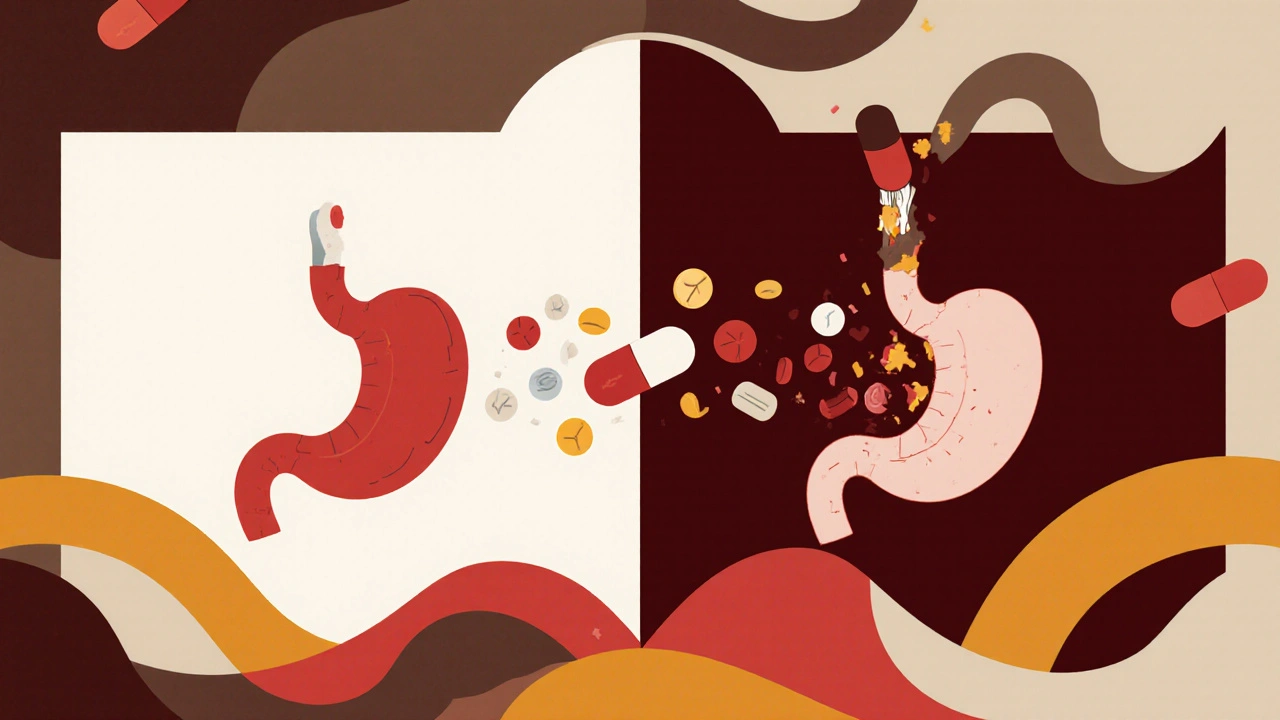
Formulation Differences and Side Effects: Tablets, Capsules, and Extended-Release Medications
Learn how tablet, capsule, and extended-release formulations affect drug absorption and side effects. Discover why ER pills reduce nausea and dizziness - and when they might do more harm than good.
Read more