
When a medical device fails, a drug causes unexpected side effects, or a food product is contaminated, the FDA doesn’t wait for headlines to break. They send out safety alerts-fast. But if you’re not subscribed, you won’t see them until it’s too late. That’s the problem. Thousands of people get hurt every year because they never heard about a recall or warning until it was already affecting them. The FDA has a free, reliable system to notify you directly by email. It’s simple. It’s free. And if you’re using any FDA-regulated product-medicines, devices, food, or cosmetics-you need to be on it.
What FDA Safety Communications Actually Do
The FDA doesn’t just monitor products after they hit the market. They track problems as they happen. When a batch of insulin is found to have inconsistent dosing, or a heart monitor starts giving false readings, the FDA doesn’t sit on the info. They issue a FDA Safety Communication. These aren’t press releases. They’re urgent, actionable notices sent directly to patients, doctors, and manufacturers.
In 2022 alone, the FDA’s Center for Devices and Radiological Health sent out 45 safety notices. That’s not counting drug recalls or food alerts. These aren’t rare events. They happen weekly. Some warn of new dangers. Others update you on recalls that were already in progress. A few even tell you what to do if you’ve already used the product-like stop using it, return it, or call your doctor.
The Three Systems You Need to Know
There’s no single FDA alert system. There are three, and each serves a different need.
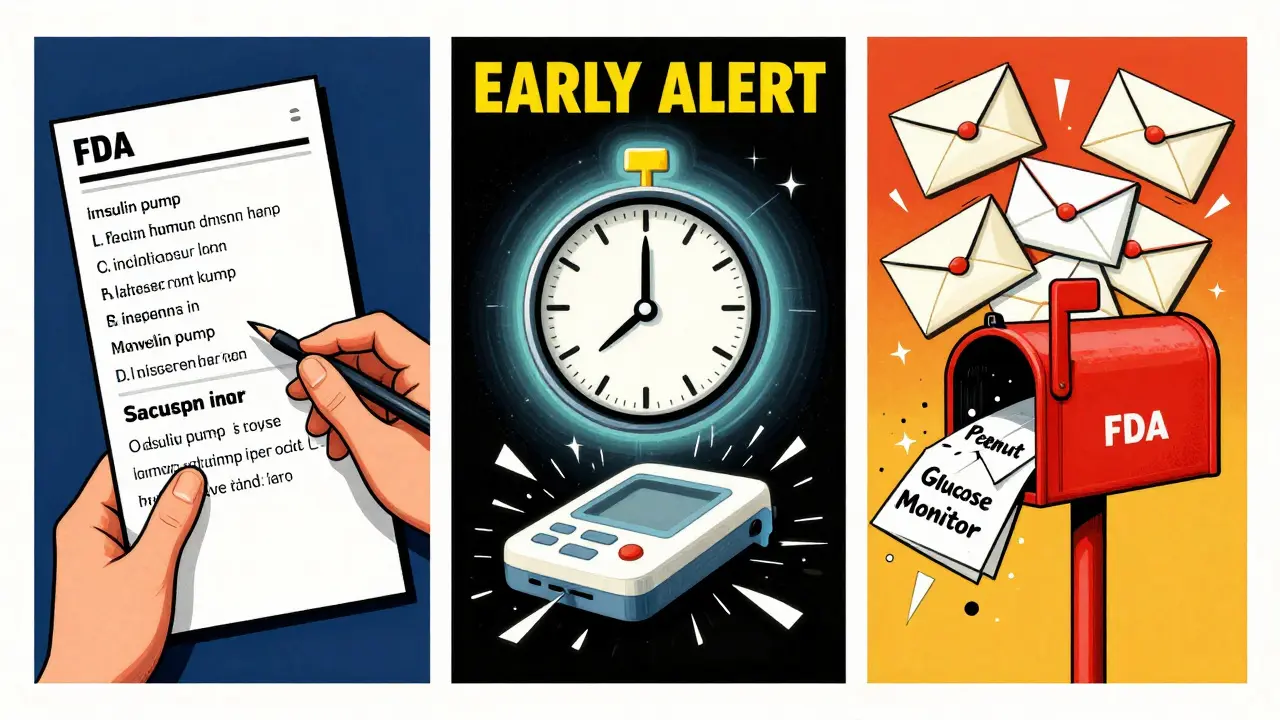
- Enforcement Report Subscription Service: This is your one-stop alert for recalls across all FDA-regulated products. Food, drugs, medical devices, cosmetics-you name it. You can pick up to five keywords like "peanut," "insulin," or "pacemaker." That means if you have a peanut allergy, you’ll only get alerts about peanut contamination. No spam. No noise. Just what matters to you.
- Medical Device Safety Communications: This covers all medical devices, from simple bandages to brain implants. Since September 2025, this system now includes every type of device, not just a few categories like before. If a ventilator starts overheating or a glucose monitor gives wrong readings, you’ll hear about it here.
- Early Alert Communications: This is the newest and most important. Before a device is officially recalled, the FDA can issue an Early Alert. It’s like a heads-up: "We’ve seen reports of problems. This might be dangerous. Here’s what to do." This system used to cover only heart and kidney devices. Now it covers all medical devices. That’s huge. It means you get warned before the problem becomes a full-blown recall.
Why This Matters More Than You Think
Most people think recalls are rare. They’re not. In 2023, over 1,200 FDA-regulated products were recalled. Many of those affected people who never saw the notice because they weren’t subscribed.
Imagine you’re on blood thinners. Your doctor prescribed a specific brand. One day, you hear a news report: "A batch of this medication was found to have incorrect dosing." You panic. You didn’t know. But if you were subscribed, you would’ve gotten an email two days earlier with clear instructions: "Stop taking this batch. Call your pharmacy. Here’s the lot number."
For healthcare workers and manufacturers, this isn’t optional. It’s part of their job. If you run a clinic, you need to know if a certain type of syringe is faulty. If you make medical devices, you need to know if a competitor’s product has a similar flaw. These alerts help you avoid lawsuits, protect your patients, and stay compliant with federal rules.
How to Subscribe (It Takes Less Than 5 Minutes)
Subscribing is free. No sign-up fees. No hidden costs. Just three steps:
- Go to fda.gov and search for "Subscribe to FDA Safety Communications".
- Choose the system that fits you:
- For recalls across all products: Enforcement Report Subscription Service
- For medical devices: Subscribe to Medical Device Safety and Recalls
- For early warnings: You’ll be automatically included if you’re subscribed to the device system.
- Enter your email and pick up to five keywords. Examples:
- Peanut, shellfish, soy (if you have food allergies)
- Insulin, metformin, warfarin (if you take daily medication)
- Pacemaker, insulin pump, ventilator (if you use medical devices)
You’ll start getting emails within days. The frequency depends on your keywords. Someone who picks "peanut" might get 2-3 alerts a year. Someone who picks "insulin pump" might get one every few weeks. It’s not constant noise. It’s targeted.
What You Won’t Get
Some people think this system will flood their inbox with every FDA press release. It won’t. These aren’t general updates. They’re safety notices only. You won’t get newsletters about new drug approvals or health tips. You’ll only get alerts about real, immediate risks.
Also, the system doesn’t send alerts by text or app. Only email. So make sure you check your inbox regularly-and don’t mark these as spam. The sender will be something like "[email protected]".
What Happens If You Don’t Subscribe?
You’re flying blind. The FDA doesn’t call you. News outlets don’t always pick up these alerts. Social media? Forget it. By the time a story goes viral, people are already hurt.
Take the case of a faulty insulin pump in 2024. The FDA issued an Early Alert on September 15. By September 20, 17 people had been hospitalized. Only those who were subscribed got the warning before they used the device. The rest found out when their insulin stopped working.
It’s not just about convenience. It’s about safety. And for parents, elderly relatives, or people managing chronic conditions, it’s life-saving.
Who Should Subscribe?
You don’t have to be a doctor or a manufacturer to benefit. Here’s who needs this most:
- Anyone taking prescription medication daily
- People using medical devices (CPAP machines, glucose monitors, hearing aids, etc.)
- Parents of children with allergies
- Caregivers for elderly relatives on multiple medications
- Healthcare providers, pharmacists, or clinic staff
- Anyone who buys over-the-counter drugs or supplements
If you’ve ever had to ask, "Wait, is this drug still safe?"-you need this.
What’s Next? The FDA Isn’t Done
The system keeps getting better. In 2025, the Early Alert program expanded to cover every medical device. That’s a major shift. The FDA is now using data from over 300 million patient records to spot problems before they spread. They’re also testing ways to make keyword searches smarter-like letting you type "my insulin pump stopped working" instead of just "insulin pump."
Soon, you might get alerts that link directly to your pharmacy records. If you’re on a recalled drug, the system could auto-flag your prescription. That’s not here yet-but it’s coming.
Don’t Wait for a Crisis
There’s no downside to subscribing. No cost. No risk. Just peace of mind. You’re not signing up for spam. You’re signing up for protection.
Go to the FDA website right now. Search for "Subscribe to FDA Safety Communications." Set up your email. Pick your keywords. Do it before the next alert goes out. Because when it does, you won’t want to be the one who missed it.
Is subscribing to FDA Safety Communications really free?
Yes. There are no fees, no subscriptions, and no hidden charges. The FDA offers this service at no cost to consumers, healthcare providers, and businesses. All you need is an email address.
Can I subscribe to alerts for specific brands or products?
Yes. The Enforcement Report Subscription Service lets you enter up to five custom keywords. You can use brand names like "Humalog," "Medtronic," or "Ozempic," or product types like "insulin pump," "hearing aid," or "peanut butter." The system will notify you only when those exact terms appear in safety notices.
Do I need to subscribe separately for drugs, devices, and food?
No. The Enforcement Report Subscription Service covers all FDA-regulated products in one system. If you want alerts for drugs and devices, just add both keywords (e.g., "metformin" and "pacemaker") to your subscription. You don’t need separate sign-ups.
How often do these alerts come?
It depends on your keywords and what’s happening. Some people get alerts once a year. Others get one every few weeks. If you choose common terms like "insulin" or "peanut," you’ll get more frequent updates. Rare terms mean fewer alerts. The system is designed to be relevant, not overwhelming.
What’s the difference between a recall and an Early Alert?
A recall means the FDA has officially determined a product violates regulations and must be removed or fixed. An Early Alert is issued before that step-when the FDA sees troubling reports but hasn’t yet made a formal decision. It’s a warning: "This might be dangerous. Take action now." Early Alerts help prevent recalls by giving people time to respond.
Can I unsubscribe later?
Yes. Every email includes a one-click unsubscribe link at the bottom. You can turn off alerts anytime, change your keywords, or pause the service without losing your account.
Are these alerts only for people in the U.S.?
Yes. The FDA’s subscription service is designed for U.S. residents and businesses. If you live outside the U.S., you may still receive alerts if your email is registered, but the information may not apply to your local market. Always check with your country’s health authority for local safety notices.
For support, contact the FDA’s Division of Industry and Consumer Education (DICE). They help users troubleshoot subscription issues, clarify keywords, and confirm receipt of alerts. Don’t hesitate to reach out if something doesn’t work. Your safety matters.
John McDonald
February 10, 2026 AT 02:13Just subscribed yesterday after reading this. Took me 3 minutes. Keywords: insulin, metformin, pacemaker. Already got an alert about a batch of generic metformin with weird crystallization. Saved me a trip to the pharmacy. Seriously, if you take meds, do this. It’s not hype. It’s survival.
Thanks for the nudge.
Chelsea Cook
February 11, 2026 AT 02:51Oh wow, so the FDA finally stopped being lazy and started doing their job? Who knew? 🙃
Also, I just got an alert about my CPAP machine being recalled. I’ve had it for 5 years. I thought it was fine. Turns out it’s been overheating since February. Thanks, internet strangers, for telling me what the government should’ve told me.
Andy Cortez
February 11, 2026 AT 12:54so uhhhh the fda?? like, the same agency that let vioxx stay on the market for years?? and then the tainted baby formula?? and the opioid crisis??
idk man. i feel like this is just a PR move. like, "look how responsible we are!!" while the real issues go unaddressed. i mean, if they actually cared, they’d ban junk meds outright. not send emails. lol.
also. i got a text from my pharmacist yesterday. he said the same thing. so why do i need the fda? 🤔
Jacob den Hollander
February 13, 2026 AT 12:14Hey, I just want to say-this is one of those things that feels so obvious, but so few people do it. I’m a nurse, and I’ve seen too many patients come in with panic in their eyes because they didn’t know their meds were recalled.
My mom has type 2 diabetes. She’s 72. She doesn’t even check her email. So I set up her subscription for her. Used "insulin" and "glucose monitor" as keywords. She got an alert last month about a faulty meter. She called me. We called the pharmacy. She switched brands. No harm done.
This isn’t about bureaucracy. It’s about your grandma not getting confused because her glucose readings are suddenly all over the place. Just… do it. It’s free. It’s easy. And it might save someone’s life.
Also, if you’re a caregiver? Do it for them. You’re the bridge.
Thank you for posting this. Needed to hear it.
Patrick Jarillon
February 14, 2026 AT 23:52you know what? the fda doesn't give a damn about you. they're just feeding you this "free alert" thing so they can track your email. they're building a database. next thing you know, you'll get a bill for "premium safety access" or your insurance premiums will go up because "you're flagged as high-risk for medication use".
also. why do they only email? no app? no push? no integration with your smart fridge? this smells like a data harvest disguised as safety. i'm not clicking.
and if you're still subscribing? you're part of the problem.
Kathryn Lenn
February 15, 2026 AT 05:51Oh wow, so now we need to subscribe to the government like it’s a YouTube channel? "Subscribe for more life-saving updates!"
Meanwhile, my insulin cost $800 last month. No one’s alerting me to that. No one’s warning me that my pharmacy is charging 3x what it should. But hey-here’s an alert about a pump that might glitch once in 2024. Thanks, I guess.
Also, why do I have to pick FIVE keywords? Can’t I just say "everything that could kill me"? That’s one keyword. JFC.
John Watts
February 16, 2026 AT 18:09Just wanted to add-I’m a dad with two kids, one with a peanut allergy, one with asthma. I’ve got "peanut," "shellfish," and "epipen" as keywords. Got an alert last week about a contaminated batch of granola bars. We didn’t buy them. Saved us a trip to the ER.
Also, I set up my parents’ subscription. They’re 78 and 81. They don’t use email much. I made sure the alerts go to my inbox too. That’s the real win here: not just for you. For the people you love.
Do it. It’s not about being techy. It’s about being prepared.
Randy Harkins
February 18, 2026 AT 04:00Just subscribed! 🙌
Keywords: warfarin, pacemaker, insulin pump. Got my first alert 12 hours later. Clean, clear, no spam.
Thank you for sharing this. I’ve been meaning to do it for months. This pushed me over the edge. You’re right-it’s not about convenience. It’s about peace of mind. And honestly? It’s the little things like this that make life feel a little safer.
❤️
Chima Ifeanyi
February 18, 2026 AT 10:48Let’s deconstruct this. The FDA’s "Early Alert" system is a symptom of regulatory capture. The industry funds their oversight. The alerts are reactive, not preventative. They don’t stop the problem-they just notify you after the damage is already in motion. This is performative safety. It’s a Band-Aid on a hemorrhage.
Also, the fact that you need to manually input keywords means the system is designed for the literate, the tech-savvy, and the privileged. What about elderly, non-English speakers, or low-income users? They’re being excluded from the safety net. This isn’t equity. It’s exclusion disguised as empowerment.
Do it? Maybe. But don’t confuse participation with justice.
Tori Thenazi
February 19, 2026 AT 05:32so i just got this email from the fda... and i swear to god i thought it was a phishing scam. i almost deleted it. then i remembered-wait, i subscribed to this??
and then i saw it was about my insulin pump. the one i’ve had for 3 years. the one that’s been acting weird lately.
so i called my doctor. turns out, it’s a known issue. they’re replacing it. free.
...so i guess i’m not a paranoid conspiracy theorist after all?
...wait. did they know i was going to get this alert? did they know i’d panic? did they plan this?
...i’m scared now.
Ken Cooper
February 19, 2026 AT 12:28Okay, I’m a little late to this, but I just set mine up. Keywords: "aspirin," "hearing aid," "gluten." Got my first alert this morning-some generic aspirin batch had a weird coating. Didn’t even know that was a thing.
Also, I set up my sister’s account. She’s blind. I had to read the whole thing to her. She cried. Said she felt like someone finally saw her. That hit me.
It’s not just about safety. It’s about dignity. We all deserve to know what’s in our bodies.
Thanks for the reminder.
MANI V
February 19, 2026 AT 16:56You people are so naive. You think the FDA is here to protect you? They’re here to protect the corporations. Every single alert they issue is carefully timed to avoid lawsuits. They wait until the damage is done, then they "warn" you. It’s not safety-it’s damage control.
And why do they only use email? Because they know you won’t check it. Because they know most people won’t act. Because they want the numbers to look bad so they can justify more funding.
You’re being played. Subscribe if you want. But don’t pretend you’re safe.
Susan Kwan
February 21, 2026 AT 06:33Wow. So now I have to monitor my own health through government email alerts? Cool. I’ll just add it to my list of 17 other apps, subscriptions, and reminders.
Meanwhile, my doctor still can’t tell me why my prescription cost tripled last month. But hey-here’s an alert about a pump that might malfunction. Great. Thanks for prioritizing.
Random Guy
February 22, 2026 AT 00:06just subscribed. keywords: "insulin," "pacemaker," "peanut."
got an alert 10 minutes later.
it was about a batch of peanut butter that had traces of shellfish.
my kid’s allergic to both.
we didn’t buy it.
so… yeah.
thanks.