
ANDA: What It Is, Why It Matters for Generic Drugs and Your Wallet
When you pick up a generic pill at the pharmacy, chances are it got there through an ANDA, a type of application submitted to the U.S. Food and Drug Administration to approve a generic version of a brand-name drug. Also known as an Abbreviated New Drug Application, it’s the legal shortcut that lets companies sell cheaper versions of medicines without repeating expensive clinical trials. This isn’t just paperwork—it’s what keeps drug prices from staying sky-high.
But here’s the catch: just because a patent expires doesn’t mean the generic shows up right away. The Hatch-Waxman Act, a 1984 law designed to balance innovation and affordability by creating the ANDA process was meant to speed things up. In reality, brand-name companies often use legal tricks—like filing new patents on minor changes, or delaying FDA reviews—to push back generic entry by years. That’s why you might still be paying $200 for a drug that’s been off-patent for five years. Meanwhile, the FDA, the U.S. government agency responsible for reviewing and approving drug applications including ANDAs is stretched thin, and backlogs pile up. The system isn’t broken—it’s being manipulated.
What you’re seeing in the posts below isn’t random. Each article ties back to how drug access, pricing, and safety are shaped by the ANDA process. From why some generics take forever to appear, to how patent games affect your access to blood thinners, statins, or diabetes meds—these aren’t just side stories. They’re direct results of how ANDA works, or doesn’t work, in practice. You’ll find real examples: how a single legal filing can delay a life-saving generic by three years, why some companies wait until the last minute to submit an ANDA, and how even small formulation differences can block approval. This isn’t theory. It’s what’s happening in your medicine cabinet right now.
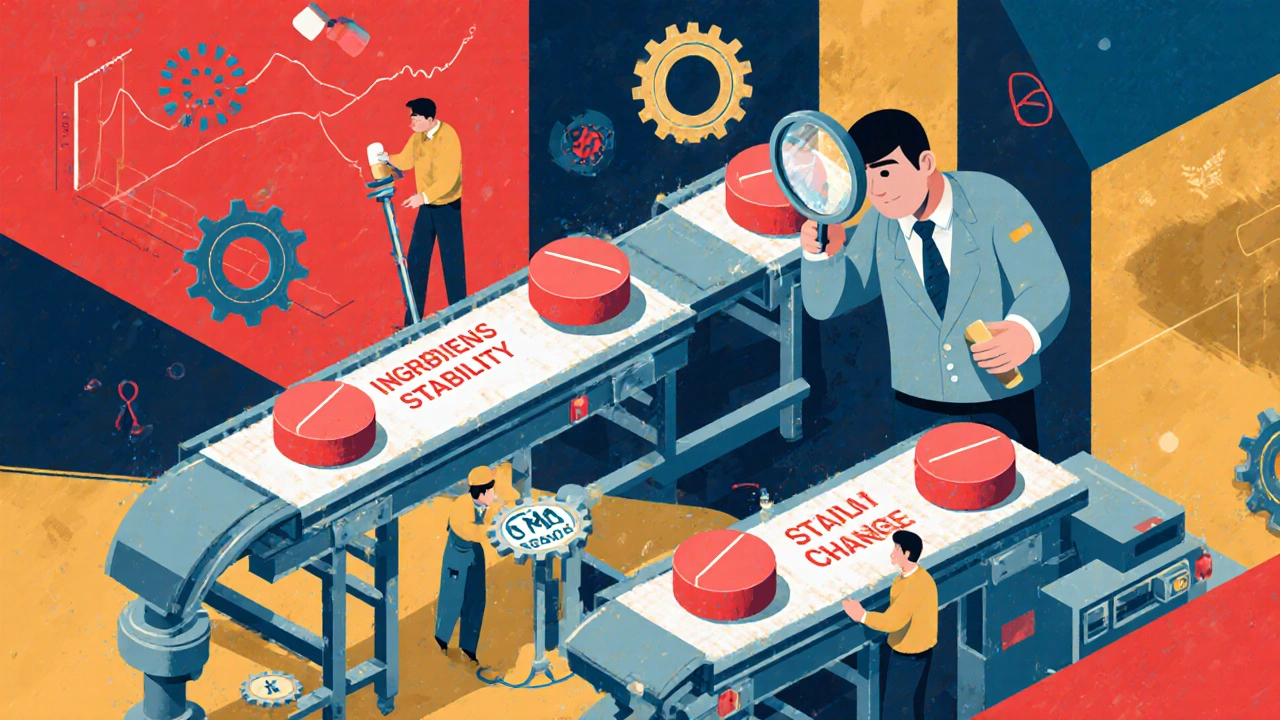
Manufacturing Changes and Generic Approval: What Triggers FDA Re-Evaluation
Learn what manufacturing changes trigger FDA re-evaluation for generic drugs, how the approval process works, and why delays happen - plus what’s changing in 2025 to speed things up.
Read more