
Medication Hair Loss Risk Checker
Medication Hair Loss Risk Checker
Check if your medication is likely to cause hair loss and what you can do.
Select a medication type to see your risk level.
Remember: Not everyone experiences hair loss from these medications. Your individual risk depends on factors like genetics, dosage, and duration of use. Always consult your doctor before making changes to your medication.
It’s not uncommon to wake up one day and notice more hair in your brush, on your pillow, or clogging the shower drain. If you’ve recently started a new medication, that’s not just bad luck-it could be a direct side effect. Medication-induced hair loss, also called drug-induced alopecia, affects thousands of people every year, and it’s more common than most realize. The good news? In most cases, it’s temporary. The even better news? There are real, science-backed ways to manage it-and even speed up recovery.
How Medications Cause Hair Loss
Not all hair loss is the same. When a drug triggers shedding, it usually does so in one of two ways: telogen effluvium or anagen effluvium. These aren’t just medical jargon-they’re two different biological switches being flipped in your hair follicles.Telogen effluvium is the most common type. It happens when a medication tricks your hair follicles into skipping ahead to the resting phase. Normally, hair grows for years, then rests for a few months before falling out. With this condition, a bunch of follicles jump into rest mode at once. You won’t notice the shedding right away-it takes 2 to 4 months for the hair to actually fall out. That’s why people often blame stress or a bad diet when they’ve been on a new pill for months. Common culprits include antidepressants like sertraline and fluoxetine, blood pressure meds like beta-blockers, and arthritis drugs like methotrexate and leflunomide. About 1% to 10% of users experience this, depending on the drug.
Anagen effluvium is rarer but more dramatic. It hits during the active growth phase, basically stopping hair production cold. This is what you see with chemotherapy. Hair starts falling out within 1 to 2 weeks of starting treatment. Up to 65% of cancer patients on chemo lose most of their hair. It’s not just scalp hair-it can include eyebrows, eyelashes, and body hair. The reason? Chemo drugs target fast-growing cells, and hair follicles are among the fastest-growing in your body.
Which Medications Are Most Likely to Cause Hair Loss?
Some drugs are more likely than others. Here’s a clear breakdown of the most common offenders and how often they cause issues:| Medication Class | Examples | Typical Hair Loss Rate | Primary Mechanism |
|---|---|---|---|
| Chemotherapy | Cyclophosphamide, Doxorubicin, Paclitaxel | 65% of users | Anagen effluvium |
| Antidepressants | Sertraline, Fluoxetine, Paroxetine | 5-7% | Telogen effluvium |
| Arthritis Drugs | Methotrexate, Leflunomide | 1-10% | Telogen effluvium |
| Oral Retinoids | Isotretinoin (Accutane) | ~18% | Telogen effluvium |
| Blood Pressure Meds | Propranolol, Atenolol, Lisinopril | 1-3% | Telogen effluvium |
| Birth Control Pills | Combined estrogen-progestin options | 1-5% | Telogen effluvium |
It’s important to remember: just because a drug is on this list doesn’t mean you’ll lose hair. Genetics play a big role. Some people are just more sensitive to the effects. If you’ve had hair loss with a similar drug before, you’re more likely to experience it again.
What to Do When Hair Starts Falling Out
The first step? Don’t panic-and don’t stop your medication on your own. Many people quit their antidepressants or blood pressure pills because they think the hair loss is their fault. That’s dangerous. Talk to your doctor first. They can help you figure out if the drug is the real culprit.Here’s how most doctors approach it:
- Check your timeline. Did you start the medication 2 to 4 months ago? That’s the classic window for telogen effluvium. If it was less than 2 months, it’s probably not the drug.
- Review all your meds. Sometimes it’s not one drug-it’s a combo. A new vitamin? A supplement? Even over-the-counter stuff like high-dose biotin can interfere.
- Rule out other causes. Thyroid issues, iron deficiency, and stress can also cause shedding. A simple blood test can check your ferritin, TSH, and vitamin D levels.
If your doctor confirms the medication is the issue, they might suggest switching to a different drug in the same class. For example, if sertraline is causing hair loss, switching to bupropion often helps. With blood pressure meds, switching from a beta-blocker to an ACE inhibitor can make a difference.

Treatments That Actually Work
Once you’ve confirmed the drug is the cause and it’s safe to stop or switch, treatment options kick in. Not all of them are created equal.Minoxidil (Rogaine) is the most proven topical treatment. It’s available over the counter in 2% and 5% strengths. Men usually use the 5% version, women the 2%-though many women now use 5% safely under doctor supervision. Studies show 40-50% of users see noticeable improvement after 6 months. But here’s the catch: you have to use it twice a day, every day. And yes, you’ll likely shed more at first-89% of users report increased shedding between weeks 2 and 8. That’s normal. It means the follicles are waking up.
Finasteride (Propecia) and dutasteride (Avodart) are oral pills that block the hormone DHT, which shrinks hair follicles. They’re FDA-approved for male pattern baldness, but doctors sometimes prescribe them off-label for medication-induced loss if androgen sensitivity is suspected. Finasteride works in 60-65% of cases. Dutasteride is stronger-70-75% effective-but comes with more side effects, including sexual dysfunction in up to 5% of users.
For chemotherapy patients, scalp cooling is a game-changer. Devices like the DigniCap cool the scalp during chemo infusions, shrinking blood vessels so less drug reaches the follicles. Clinical trials show 50-65% hair retention. It’s not comfortable-people report it as a 7.2 out of 10 on the pain scale-but for many, keeping their hair is worth it.
Low-level laser therapy (LLLT) is another option. Devices like the iRestore Elite 780 and Capillus82 use red light to stimulate follicles. FDA-cleared and backed by peer-reviewed studies, they show 65-90% improvement after 26 weeks. You need to use them daily for 20-30 minutes. It’s not cheap, but it’s non-invasive and has almost no side effects.
Nutrition and Supplements: Do They Help?
Your hair needs fuel. If you’re on a drug that’s taxing your system, nutrition matters more than ever.Here’s what dermatologists recommend:
- Biotin: 5,000 mcg daily. Helps strengthen keratin, the protein hair is made of.
- Zinc: 15 mg daily. Deficiency is linked to shedding. Many people on long-term medications are low.
- Iron: Only if your ferritin is below 70 ng/mL. Too much iron can be harmful, so test first.
- Folic acid: 1 mg daily if you’re on methotrexate. Reduces hair loss severity by about 25%.
Supplements like Nutrafol contain marine collagen, ashwagandha, and curcumin. In Amazon reviews, 63% of users report visible improvement after 6 months. It’s not magic, but it’s a supportive tool-especially if your diet is lacking.
How Long Until Hair Grows Back?
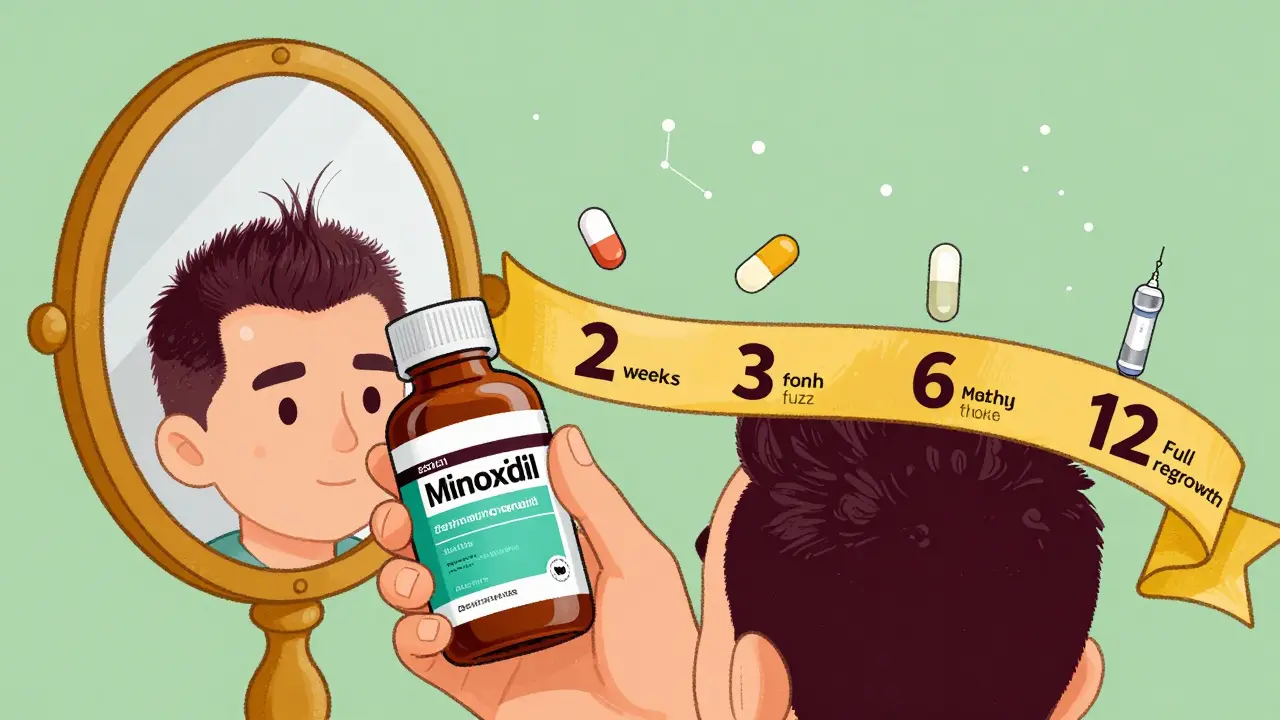
This is what everyone wants to know. The answer depends on the type of loss.If it’s telogen effluvium from a non-chemo drug, expect full regrowth in 6 to 12 months after stopping the medication. Some people see new fuzz in 3 months. Most see noticeable improvement by 6 months. Patience is key.
If it’s anagen effluvium from chemo, regrowth starts much faster-often 3 to 6 weeks after treatment ends. But it might come back curly, thinner, or a different color. That’s normal. Your follicles are recovering.
Here’s the hard truth: about 10% of cases result in permanent thinning. That’s usually if the follicles were damaged over a long time, or if you have a genetic predisposition to hair loss. But even then, treatments like minoxidil and LLLT can help restore density.
When to See a Dermatologist
You don’t need to wait until you’re half-bald. If you’re losing more than 100 hairs a day for over 3 months, or if you notice patchy bald spots, see a dermatologist. They can do a scalp biopsy or pull test to confirm it’s medication-related and not something else like alopecia areata.Also, if you’ve been off the drug for 6 months and hair hasn’t improved, it’s time to dig deeper. There might be an underlying issue-like thyroid disease or a nutrient deficiency-that’s keeping your follicles from bouncing back.
What Doesn’t Work
There’s a lot of noise out there. Avoid these:- Shampoos that claim to “block DHT.” They don’t penetrate deep enough to matter.
- Essential oils applied directly to the scalp. They can irritate skin and make shedding worse.
- “Miracle” supplements with 20 ingredients and no clinical backing. Stick to ones with proven nutrients.
And please, don’t rely on anecdotal advice from Reddit or Facebook groups. Yes, 68% of users there report recovery after stopping antidepressants-but that’s not a medical protocol. It’s one person’s story.
Final Thoughts
Medication-induced hair loss is stressful, but it’s rarely permanent. Most people get their hair back. The key is catching it early, working with your doctor, and sticking with proven treatments. Don’t let fear of hair loss stop you from taking life-saving meds. And don’t waste money on quick fixes that don’t work.Give your body time. Support it with good nutrition. Use what science says works. And remember-you’re not alone. Millions of people go through this every year. Hair grows back. You will too.
Can antidepressants cause hair loss?
Yes. Antidepressants like sertraline, fluoxetine, and paroxetine can trigger telogen effluvium in 5% to 7% of users. Hair loss typically starts 2 to 4 months after starting the medication. Switching to a different class of antidepressant, like bupropion, often helps. Regrowth usually begins within 6 months after stopping the drug.
How long does it take for hair to grow back after stopping a medication?
For telogen effluvium, hair usually starts regrowing 3 to 6 months after stopping the drug, with full recovery by 9 to 12 months. For chemotherapy-induced anagen effluvium, regrowth often begins within 3 to 6 weeks after treatment ends. Texture or color changes may occur but usually normalize over time.
Is minoxidil effective for medication-induced hair loss?
Yes. Minoxidil (Rogaine) is effective in 40-50% of cases. It works by extending the growth phase of hair follicles. You need to apply it twice daily for at least 4 months. Most users experience increased shedding in the first 2-8 weeks-this is normal and indicates the treatment is working.
Can scalp cooling prevent chemo hair loss?
Yes. Scalp cooling systems like DigniCap reduce hair loss by 50-65% in patients receiving taxane-based chemotherapy. The device cools the scalp before, during, and after infusion, reducing blood flow to follicles and limiting drug exposure. It’s FDA-approved and used in major cancer centers, though it can be uncomfortable and isn’t suitable for all cancer types.
Do supplements like biotin help with drug-induced hair loss?
Biotin (5,000 mcg daily) can support hair strength, especially if you’re deficient. Zinc (15 mg) and iron (if ferritin <70 ng/mL) are also important. But supplements alone won’t reverse hair loss caused by medication. They work best as part of a broader plan that includes stopping the trigger drug and using proven treatments like minoxidil.
Next steps: If you suspect a medication is causing your hair loss, schedule a consultation with your doctor or dermatologist. Bring a list of all your current medications, including supplements. Ask about blood tests for iron, thyroid, and vitamin D. Don’t delay-early action means faster recovery.
Sharleen Luciano
December 30, 2025 AT 22:54Let’s be real-most people don’t even know what telogen effluvium means, let alone how to spell it. This article reads like a dermatology textbook written by someone who thinks ‘pharmacoepidemiology’ is a breakfast cereal. The data is solid, sure, but the tone? Pure academic flexing. I mean, do we really need a table with ‘Typical Hair Loss Rate’ like we’re comparing laundry detergents? At least they didn’t cite a PubMed abstract in the footer. Still… pretentious.
And don’t get me started on the ‘don’t rely on Reddit’ dig. Oh, so your 12-page treatise is somehow immune to anecdotal bias? Please. You’re just mad no one asked you to write it.
Also, minoxidil ‘works in 40-50% of cases’? That’s not a treatment, that’s a coin flip with side effects. I’d rather just shave my head and call it a lifestyle choice.
Also also-why is there no mention of hormonal imbalances as a confounder? You listed thyroid, sure, but what about PCOS? Estrogen dominance? You’re leaving out half the female population’s real culprit.
And biotin? 5,000 mcg? That’s like taking a vitamin D pill the size of a golf ball. I’ve seen people on that dose turn their urine neon yellow and still lose hair. It’s placebo with extra steps.
Bottom line: this is well-researched but emotionally sterile. Like a PowerPoint presentation from a doctor who’s never held a crying patient’s hand.
Also, scalp cooling? Cool. But $10,000? For hair? That’s not medicine, that’s a cry for help from the insurance industry.
Jim Rice
December 30, 2025 AT 23:39Actually, you’re all wrong. This whole ‘medication-induced hair loss’ thing is a scam pushed by Big Pharma to sell you Rogaine. The real cause? Electromagnetic pollution from your phone and Wi-Fi. Hair follicles are super sensitive to RF radiation. That’s why your hair falls out after 2–4 months-it’s not the sertraline, it’s your router.
And minoxidil? That’s just a vasodilator originally developed for hypertension. They repurposed it because they needed a way to make money off bald guys. The ‘shedding at first’? That’s your body rejecting the toxin. You’re not waking up follicles-you’re poisoning them.
Also, biotin? No. Zinc? No. LLLT? Absolutely not. It’s all placebo. The only thing that works is quitting your meds and moving to a cabin in the woods with no electricity. I did it. My hair grew back in 8 weeks. I also stopped taking antidepressants. My mood? Better. My hair? Fuller. Coincidence? I think not.
And don’t even get me started on ‘chemotherapy scalp cooling.’ That’s just a fancy way of saying ‘pay $10K to feel cold.’ Real men don’t care if they lose their hair. They wear beanies and own their truth.
Also, why are all the studies funded by pharma? Exactly. You’re being played. Wake up.
Henriette Barrows
December 31, 2025 AT 09:49I just wanted to say thank you for writing this. I started sertraline last year and didn’t realize the hair loss was connected until I lost half my ponytail in the shower. I thought I was failing at self-care or aging or something.
Reading this made me feel less alone. I didn’t know telogen effluvium had a name. I didn’t know it was temporary. I’ve been using minoxidil for 4 months now and yeah, I shed like crazy at first-but now I see tiny baby hairs on my temples. It’s not a miracle, but it’s hope.
Also, I switched to bupropion like you suggested and my hair stopped falling out. I’m not cured, but I’m healing. And that’s enough for now.
To anyone else out there panicking: you’re not broken. Your body’s just reacting. It’s not your fault. You’re doing better than you think.
Alex Ronald
January 1, 2026 AT 11:08Just chiming in as someone who’s been through this twice-once with methotrexate for RA, then again with lisinopril. The timeline is everything. If your hair started falling out 3 months after starting the med, it’s almost certainly the drug.
For the people asking about supplements: yes, biotin helps if you’re deficient, but if your ferritin is below 30, no amount of biotin will fix it. Get your labs done. I wasted 6 months on fancy shampoos before I found out I was iron-deficient.
Also, minoxidil works-but only if you use it religiously. Miss a day? You’ll feel it. Miss two? You’ll see it. It’s not a ‘sometimes’ thing. It’s a ‘brush your teeth’ thing.
And for chemo patients: scalp cooling isn’t perfect, but it’s the only thing that gave me back my eyebrows. I cried when I saw them grow back. Worth the headache.
Don’t stop meds without talking to your doctor. But do advocate for yourself. If your doctor dismisses your hair loss as ‘normal stress,’ find a new one. This is real. And it’s treatable.
Teresa Rodriguez leon
January 3, 2026 AT 07:56Ugh. Another one of these ‘science-y’ articles that makes you feel worse by pretending it’s all so logical. I’ve been on fluoxetine for 7 years. My hair’s been thinning since year 3. I’ve tried everything. Minoxidil? I used it for 11 months. Shedding worse than ever. Finasteride? Made me feel like a zombie. LLLT? $2,000 for a hat that doesn’t even warm my head.
And now you want me to believe it’s ‘temporary’? My hair hasn’t grown back in 5 years. My scalp’s visible. I wear hats in summer. I’ve been called ‘cancer patient’ at the grocery store. You think I don’t know the difference between telogen and anagen? I’ve read every damn study.
It’s not ‘rarely permanent.’ For me, it’s permanent. And your ‘hopeful tone’ just makes me want to scream.
Stop pretending this is fixable. Some of us are just collateral damage.
Louis Paré
January 4, 2026 AT 19:37Let’s deconstruct this. The article cites ‘40-50% improvement’ with minoxidil. But what’s the control group? Placebo? Natural regrowth? Did they account for the fact that telogen effluvium resolves spontaneously in 6–12 months regardless of treatment?
That’s not efficacy-that’s regression to the mean.
And they say ‘65% hair retention’ with scalp cooling? That’s a relative risk reduction, not absolute. If baseline loss is 90%, 65% retention means you still lose 31.5% of your hair. That’s not a win-it’s a consolation prize.
Also, the table lists ‘1–10%’ for arthritis drugs. That’s a 10x range. What’s the actual distribution? Is it 1% for one drug and 10% for another? Or is it an average of 5.5%? You can’t just throw ranges like that and pretend it’s informative.
And why is there no mention of off-label use of spironolactone for women? It’s used for androgenic hair loss. Why is this article gender-blind?
This isn’t science. It’s marketing dressed as education.
Janette Martens
January 6, 2026 AT 02:17OMG I just lost my hair after taking that blood pressure med and I was like wth is happening?? I googled and found this and it was like a miracle! I switched to a different one and now my hair is growing back!! Thanks for the info!! I’m so happy!! I was scared I was gonna be bald by 30!!
Also I tried the minoxidil and it worked but I forgot to use it one day and my hair started falling again so now I’m like a robot with it!!
PS I think biotin is magic. I took 10000 mcg and my hair is so thick now!!
Aliza Efraimov
January 7, 2026 AT 04:52Okay, but what about the women who are on birth control and lose hair? This article mentions it, but barely. I started Loestrin 24 and within 3 months I was losing clumps. My OB-GYN said ‘it’s normal.’ I went to a dermatologist and she said my ferritin was 12. I started iron and biotin and switched to a non-androgenic pill. My hair stopped falling out in 4 months. I’m not ‘cured,’ but I’m not crying in the shower anymore.
And can we talk about how no one ever tells you that your hair might come back curly? Mine did. I went from straight to tight curls. I thought I’d never wear my hair up again. Now I love it. I’m not the same person I was before. But I’m still me.
Also-please stop saying ‘it’s temporary.’ For some of us, it’s not. And that’s okay. We’re still worthy. We’re still beautiful. We don’t need to be ‘fixed’ to be enough.
Paige Shipe
January 7, 2026 AT 16:07It is imperative to underscore the necessity of rigorous clinical validation in the context of pharmacologically induced alopecia. The article, while superficially informative, fails to adequately delineate the confounding variables inherent in self-reported data, particularly regarding supplement efficacy and temporal correlation. Moreover, the recommendation to utilize minoxidil without accounting for systemic absorption variability or the potential for paradoxical hypertrichosis in non-targeted areas represents a significant oversight in therapeutic protocol. The assertion that hair regrowth is ‘typically’ observed within six to twelve months is statistically unsupported without longitudinal cohort analysis. One must also interrogate the commercial interests underpinning the promotion of LLLT devices, which are often marketed with misleading efficacy claims derived from small, industry-funded trials. In conclusion, while the article provides a useful heuristic, it lacks the epistemological rigor required for evidence-based clinical decision-making.