
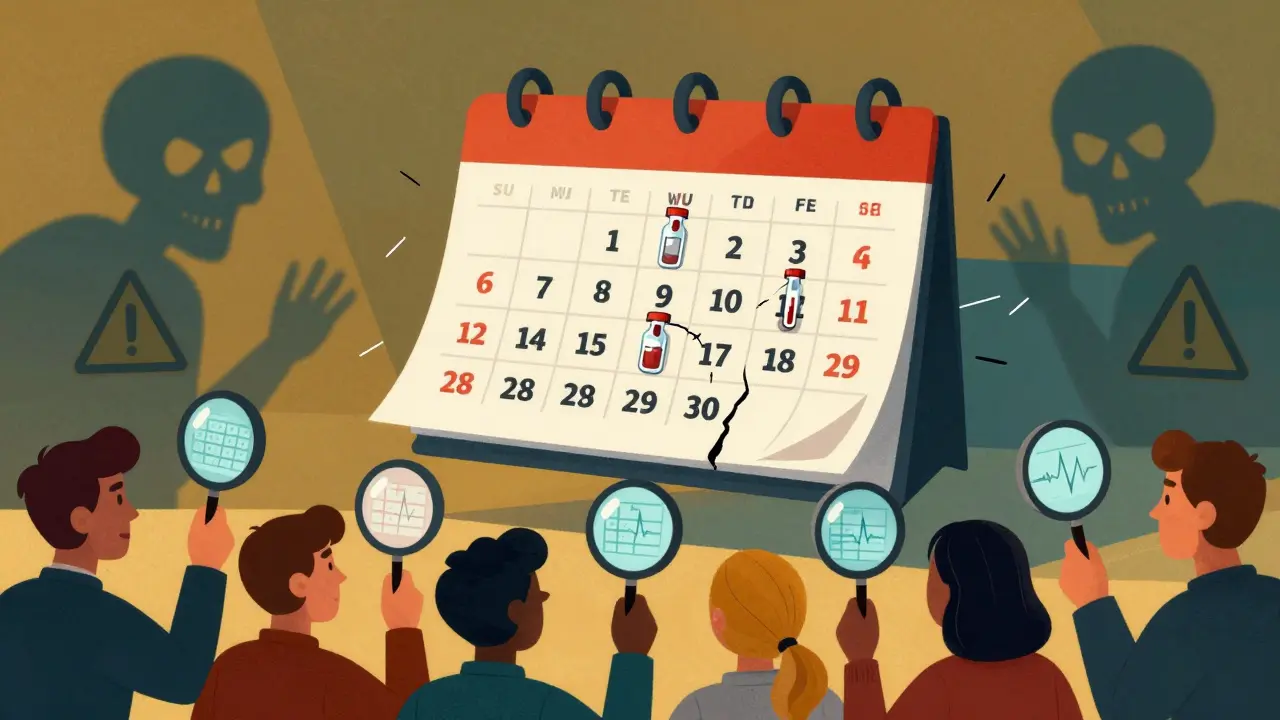
Medication Lab Monitoring Calculator
Select Your Medication
Your Lab Monitoring Schedule
Key Details
Critical Safety Note
When you start a new medication, especially one with serious side effects, the real work doesn’t begin when you swallow the pill-it begins with lab monitoring calendars. These aren’t just reminders. They’re your early warning system. Miss a blood test, ignore a drop in white blood cells, delay a liver check, and what could have been a mild issue becomes a hospital visit. Too many people think side effects are just something you ‘live with.’ But with the right tracking system, most serious reactions are preventable.
Why Your Medication Needs a Lab Calendar
Not all drugs are created equal. Some, like lithium for bipolar disorder or clozapine for treatment-resistant schizophrenia, have narrow safety margins. A small change in your blood level can mean the difference between control and crisis. Others, like warfarin or corticosteroids, quietly damage organs over time if left unchecked. Without regular lab tests, you’re flying blind. A lab monitoring calendar maps out exactly when you need blood work, urine tests, or other clinical checks based on your drug, dose, and medical history. It’s not optional-it’s standard care. For example, clozapine requires weekly blood tests for the first four months to catch a rare but deadly drop in white blood cells. If you miss even one, you risk agranulocytosis, a condition that can kill within days if untreated.Common Medications and Their Monitoring Rules
Different drugs demand different tracking. Here’s what you need to know for the most common high-risk medications:- Clozapine: Weekly absolute neutrophil count (ANC) for the first 18 weeks. After that, if your ANC stays above 1500/μL, it drops to every two weeks, then monthly. Lifelong monitoring is required-even if you’ve been stable for years.
- Lithium: Check serum levels 5-7 days after starting or changing dose. Once stable, test every 3-6 months. Levels above 1.2 mmol/L can cause tremors, confusion, or kidney damage.
- Warfarin: Monthly INR tests are standard. But if you start a new antibiotic, change your diet, or miss a dose, test within 3-5 days. An INR over 4.5 puts you at high risk for internal bleeding.
- Statins: Liver enzymes (ALT, AST) checked at baseline and again at 12 weeks. If levels rise above three times normal, the drug may need to stop.
- Systemic corticosteroids (over 2 weeks): Morning cortisol test before stopping. Abruptly stopping after long-term use can trigger adrenal crisis-low blood pressure, vomiting, even death.
- LONSURF (cancer therapy): Weekly complete blood counts (CBC) to track platelets and neutrophils. Also track diarrhea and fatigue daily. Dose delays are common if counts drop too low.
- Glaucoma eye drops (e.g., dorzolamide/timolol): Annual eye exams to check for corneal damage or pressure changes. These aren’t just for vision-they’re for long-term tissue health.
These aren’t suggestions. They’re clinical guidelines backed by decades of data. Skipping them isn’t risky-it’s reckless.
Digital vs. Paper Calendars: Which Works Better?
You’ve got options. But not all are equal. Digital tools like Blood Cancer United’s Health Manager app let you log symptoms, lab results, and medication times all in one place. It shows patterns-like how your fatigue spikes every time you eat dairy after taking LONSURF. It can even sync with wearable devices to track heart rate or sleep changes. Some apps send reminders to your phone and automatically share reports with your doctor. But not everyone uses smartphones. That’s where printable templates come in. Organizations like Community Behavioral Health (CBH) in Philly offer free, printable calendars with pre-filled intervals for clozapine, lithium, and other drugs. You can tape one to your fridge, carry it in your wallet, or staple it to your pill organizer. The catch? Paper doesn’t adapt. If your doctor changes your dose, you have to rewrite the whole calendar. Digital tools update automatically. But if you lose your phone, or the app crashes, you’re back to square one. The smartest approach? Use both. Print a copy for your home and keep a digital version synced to your cloud. That way, if one fails, the other still works.
How to Build Your Own Lab Monitoring Calendar
Start with your prescription. Look up the drug’s FDA label or consult your pharmacist. Most will list the recommended monitoring schedule. Then follow these steps:- Write down every required test. Don’t assume your doctor will remind you. List blood, urine, imaging, or physical exams.
- Note the timing. Is it weekly? Monthly? After 12 weeks? Be exact. Lithium levels must be drawn 12 hours after your last dose. Get it wrong, and the result is useless.
- Mark your calendar. Use a physical calendar, Google Calendar, or app. Set recurring reminders with alerts 2 days before each test.
- Track symptoms daily. Keep a simple log: fatigue, nausea, rash, dizziness. Note when it started and what you ate or did that day. This helps your doctor spot triggers.
- Bring it to every appointment. Don’t rely on memory. Show your doctor the calendar, your symptom log, and your last lab results. This cuts down on guesswork.
- Update it when anything changes. New drug? New dose? New doctor? Adjust the calendar immediately. Don’t wait.
Some pharmacies, like Pharmerica, offer custom printed calendars for cancer and psychiatric meds. Ask your pharmacist if they provide them. You’d be surprised how many don’t know this service exists.
What Happens When You Skip Monitoring
It’s easy to think, “I feel fine, why bother?” But many side effects don’t cause symptoms until it’s too late. - A patient on clozapine skipped two ANC tests. Their white blood cell count dropped silently. They collapsed at home from infection and died within 36 hours. - Someone on warfarin didn’t test for 10 weeks. Their INR hit 8. They woke up with blood in their urine and ended up in the ER with a brain bleed. - A man on lithium for 15 years stopped getting tested. His kidneys slowly failed. He needed dialysis by age 52. These aren’t rare cases. They’re textbook examples of preventable harm. The CDC estimates that 20% of hospital admissions for drug reactions are due to poor monitoring-not bad drugs, but missed tests.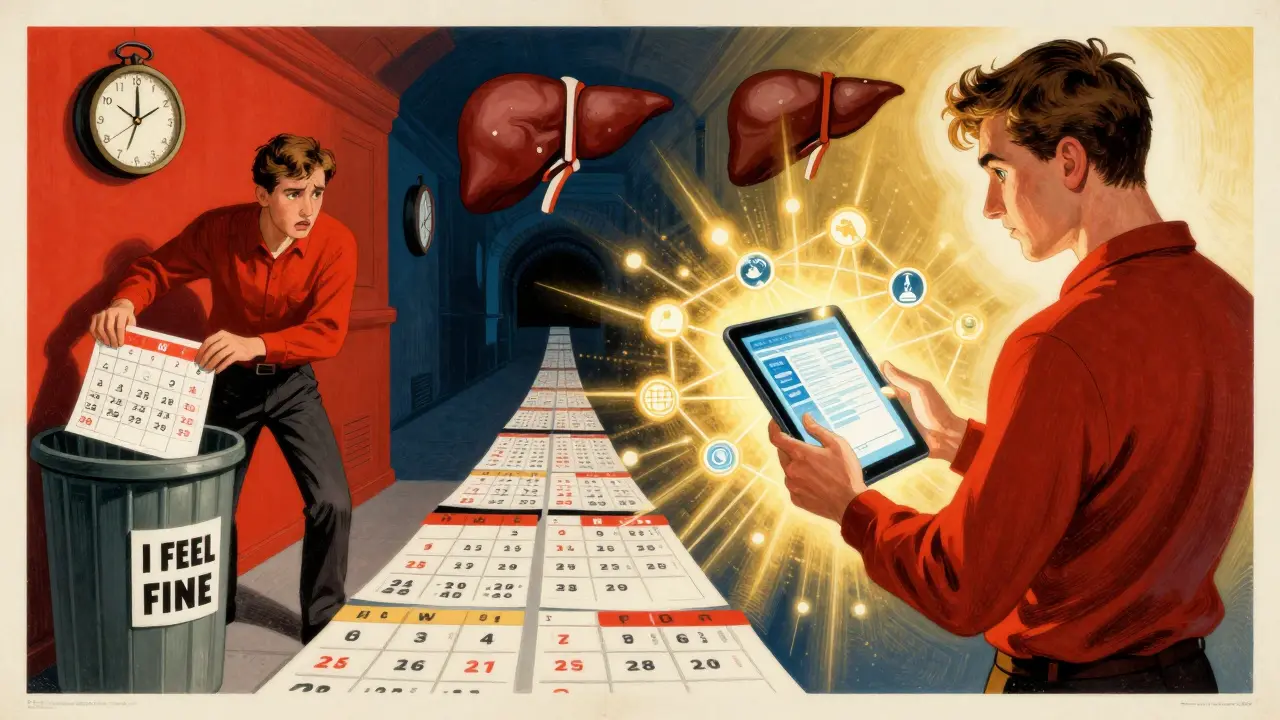
What to Do If You Can’t Afford Tests
Cost is a real barrier. But you don’t have to go without. Ulta Lab Tests lets you order blood work directly without a doctor’s note. Prices for a full CBC or lithium level can be under $30. It’s not insurance, but it’s cheaper than an ER visit. Many clinics offer sliding-scale fees. Community health centers often run free or low-cost lab days for patients on chronic meds. Call ahead. Ask if they have a “medication monitoring clinic.” Pharmaceutical companies sometimes offer free testing programs. Taiho Oncology, for example, provides free CBC kits for LONSURF patients. Check the drug’s official website or call their patient support line. Don’t let cost become an excuse. The cost of ignoring monitoring is far higher.The Future: AI, Wearables, and Smarter Tracking
The next wave of monitoring is already here. Apps are starting to integrate with smartwatches to detect subtle changes in heart rate variability or sleep patterns that signal early toxicity. Some trials are using AI to predict when a patient’s lithium level will spike based on their hydration, diet, and medication timing. But here’s the truth: no algorithm replaces a blood test. These tools are helpers-not replacements. They’re great for spotting trends, but they can’t measure your actual blood levels. For now, stick to the proven methods. Use your calendar. Get your labs. Log your symptoms. Stay ahead.Final Checklist: Your Lab Monitoring Action Plan
Before your next doctor’s visit, ask yourself:- Do I know exactly which lab tests I need and how often?
- Is my calendar up to date with my current dose and meds?
- Have I logged any new symptoms in the past month?
- Did I get my last test on time? If not, why?
- Do I have a backup copy of my calendar (digital and printed)?
- Have I asked my pharmacist or doctor if free or low-cost testing options exist?
If you answered ‘no’ to any of these, fix it today. One overdue test could change everything.
What if I miss a lab test?
Don’t panic, but act fast. Contact your doctor or pharmacist immediately. Some tests, like lithium levels, need to be redone within a few days to stay safe. Others, like monthly INR checks for warfarin, can be rescheduled without major risk-but only if you haven’t changed your dose or started a new medication. Never skip the next one just because you missed the last.
Can my doctor just order all the tests at once?
Not always. Many tests must be timed with your medication schedule. Lithium levels require a 12-hour post-dose window. Cortisol tests need to be done in the morning. Blood counts for cancer drugs are tied to your treatment cycle. Ordering everything at once won’t give accurate results. Stick to the schedule-it’s based on how your body processes the drug, not convenience.
Do I need to monitor side effects even if I feel fine?
Yes. Many dangerous side effects are silent. Liver damage from statins, kidney stress from lithium, and low white blood cells from clozapine often show no symptoms until they’re severe. Daily symptom tracking helps catch subtle changes-like a slight loss of appetite or mild dizziness-that could signal a problem before it becomes an emergency.
How long do I need to keep monitoring?
It depends on the drug. For clozapine, you monitor for life. For lithium, lifelong checks are recommended even after decades of stability. For short-term antibiotics, monitoring ends after the course. But for chronic medications-especially those affecting blood, liver, or kidneys-monitoring doesn’t stop just because you feel okay. The risk doesn’t disappear; it just becomes quieter.
Are lab monitoring calendars only for serious drugs?
No. Even common drugs like metformin (for diabetes) require annual kidney function tests. Statins need liver checks. Even some over-the-counter supplements can interfere with lab results. If a drug has a known risk, there’s a monitoring guideline. Ask your pharmacist: ‘Is there a recommended lab schedule for this?’
Anu radha
December 16, 2025 AT 14:20This made me cry. I missed a lithium test last year and ended up in the ER. I felt fine. Turns out, my kidneys were shutting down. Don’t be like me. 🥺
Brooks Beveridge
December 17, 2025 AT 07:38Man, this is the kind of post that makes you realize medicine isn’t just about pills-it’s about discipline. I used to think lab tests were just bureaucracy until my dad almost died from a silent clozapine drop. Now I print his calendar and tape it to his fridge. He doesn’t even remember to eat, but he checks that calendar like it’s a sacred text. 🙏
Donna Packard
December 17, 2025 AT 13:49I’m so glad someone finally said this out loud. I’ve been tracking my warfarin INR for 8 years now. Used to forget. Now I set 3 alarms. One for the test, one for the log, one for the doctor’s appointment. It’s not glamorous-but it’s what keeps me alive. You don’t need to be a hero. Just show up.
Sam Clark
December 18, 2025 AT 16:14While the information presented is clinically accurate and commendable, one must also acknowledge systemic barriers to adherence. Socioeconomic disparities, lack of transportation, and fragmented care coordination significantly impede consistent monitoring. A purely individualistic approach to compliance overlooks the structural determinants of health. Collaborative care models with embedded pharmacy support are empirically superior to self-managed calendars alone.
Jessica Salgado
December 19, 2025 AT 14:40Okay, but have you ever tried keeping a calendar when you’re bipolar AND depressed AND your brain feels like mush? I have. I printed 17 versions. I stuck them everywhere. I set alarms that screamed. And still, I missed one. And yes-I got hospitalized. But here’s the thing: I didn’t give up. I found a peer support group. We text each other: ‘Did you get your labs?’ No judgment. Just ‘me too.’ That’s the real magic. Not the app. Not the paper. The human.
Erik J
December 20, 2025 AT 22:41Interesting. I wonder if there’s any peer-reviewed data correlating calendar adherence with reduced hospitalization rates for clozapine users specifically. The anecdotal evidence is compelling, but I’d like to see the statistical power behind the claim that ‘20% of admissions are due to poor monitoring.’ Also, what’s the compliance rate in real-world settings? Is it even 50%?
Chris Van Horn
December 22, 2025 AT 12:59How quaint. You all treat this like it’s some profound revelation. I’ve been a psychiatrist for 22 years. This is Basic Medicine 101. The fact that people need a blog post to understand that lithium requires monitoring is a testament to the erosion of medical literacy in this country. Also, you misspelled ‘neutrophil’ in your clozapine section. Pathetic.
Virginia Seitz
December 23, 2025 AT 00:31My mom’s on statins. She got her liver test last week. 🎉 She’s 78 and still remembers to check her calendar. I’m so proud. 💕
Patrick A. Ck. Trip
December 23, 2025 AT 09:31I appreciate the effort put into this piece. However, as a patient advocate with over a decade of experience in chronic disease management, I must respectfully note that the emphasis on digital vs. paper systems, while well-intentioned, inadvertently marginalizes elderly and low-literacy populations. The true solution lies not in tech superiority, but in community-based health navigator programs. I’ve personally facilitated free lab reminder calls for 400+ patients in rural Ohio. No app needed. Just a phone, a schedule, and a kind voice. That’s care.