
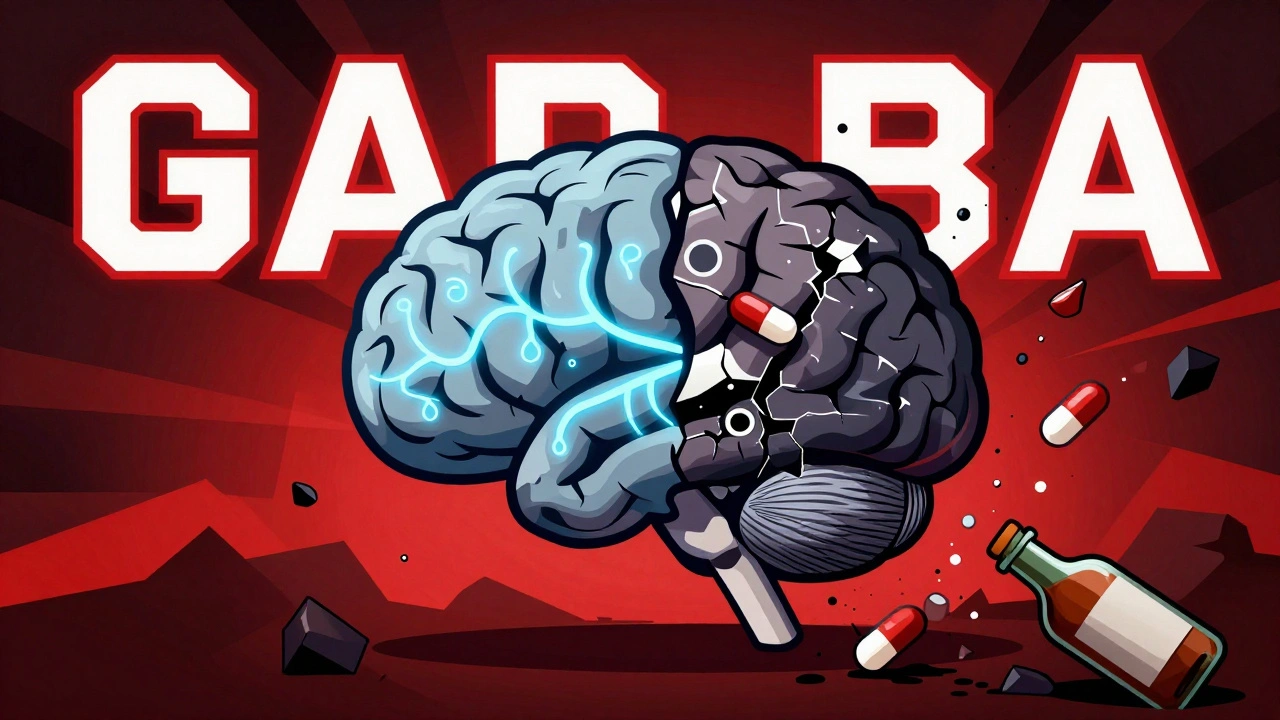
Putting alcohol and sleep medications together isn’t just a bad idea-it’s a life-threatening one. You might think having a glass of wine to help you unwind before taking your sleep pill is harmless. But the truth is, this combo doesn’t just make you drowsy. It can shut down your breathing, cause you to sleepwalk while driving, or even kill you without warning. And it’s happening more often than you realize.
Why This Combo Is So Dangerous
Alcohol and sleep meds don’t just add up-they multiply. Both are central nervous system depressants. That means they slow down your brain’s signals to your body. When you mix them, your brain doesn’t just get a little slower. It can go into overdrive suppression. The result? Your breathing becomes shallow, your heart rate drops, and your body loses the ability to wake up if something goes wrong. This isn’t theory. It’s science. Both alcohol and medications like Ambien (zolpidem), Lunesta (eszopiclone), and even over-the-counter sleep aids like ZzzQuil (diphenhydramine) work on the same brain receptors-GABA receptors. Alcohol makes these receptors more sensitive. So when you take a sleep med after drinking, your brain gets hit with way more sedation than the pill alone would cause. A 2021 study in the Journal of Clinical Sleep Medicine showed that combining just one drink with Lunesta dropped oxygen levels in the blood to 84.7%. That’s dangerously low. Normal is above 90%.The Medications That Are Most Dangerous With Alcohol
Not all sleep meds are the same when mixed with alcohol. Some are far riskier than others.- Z-drugs (Ambien, Lunesta, Sonata): These are the worst offenders. Even one standard drink can double the sedative effect of Ambien. The FDA says no amount of alcohol is safe with these. In clinical trials, a BAC as low as 0.02%-about half a drink-slowed Ambien’s clearance from the body from 2.5 hours to over 6 hours. That means you’re sedated longer, deeper, and more unpredictably.
- Benzodiazepines (Ativan, Klonopin, Restoril): These are older but still widely prescribed. They’re less likely to cause sleepwalking than Z-drugs, but they’re just as dangerous for breathing. A 2022 FDA analysis found that mixing these with alcohol increased emergency visits by 1.9 times compared to alcohol alone.
- OTC sleep aids (ZzzQuil, Unisom): People think these are safe because they’re sold on shelves. But diphenhydramine and doxylamine, the active ingredients, are powerful antihistamines. When mixed with alcohol, they increase fall risk in people over 65 by 300%. Emergency room data shows hip fractures from these combos jumped from 12.7 to 51.3 cases per 100,000 older adults in just four years.
Meanwhile, melatonin-a natural supplement-isn’t part of this danger zone. Studies show it doesn’t interact dangerously with alcohol. But it still makes you groggy the next day. So if you’re drinking, skip the melatonin too.
Real Stories Behind the Numbers
Behind every statistic is a person who woke up somewhere they didn’t mean to be. On Reddit, u/SleepWalker99 wrote: “Took half an Ambien with two glasses of wine. Woke up two miles from home. No memory of driving. Police found me parked on the side of the road.” That’s not rare. Clinical studies show the chance of sleep-driving or other complex sleep behaviors jumps from 0.15% with Z-drugs alone to 2.4% when alcohol is involved. That’s a 16-fold increase. The FDA received over 1,800 consumer reports in 2021 alone about alcohol-sleep med mix-ups. Nearly two-thirds of those people said they had no memory of what happened. Almost a third needed emergency care. And it’s not just young people. Older adults are especially vulnerable. Their bodies process alcohol and meds slower. A 73-year-old who takes Unisom after a glass of wine isn’t just sleepy-they’re at risk of delirium, falls, and hospitalization. The American Geriatrics Society says the risk of confusion and disorientation goes up 400% in seniors who mix these.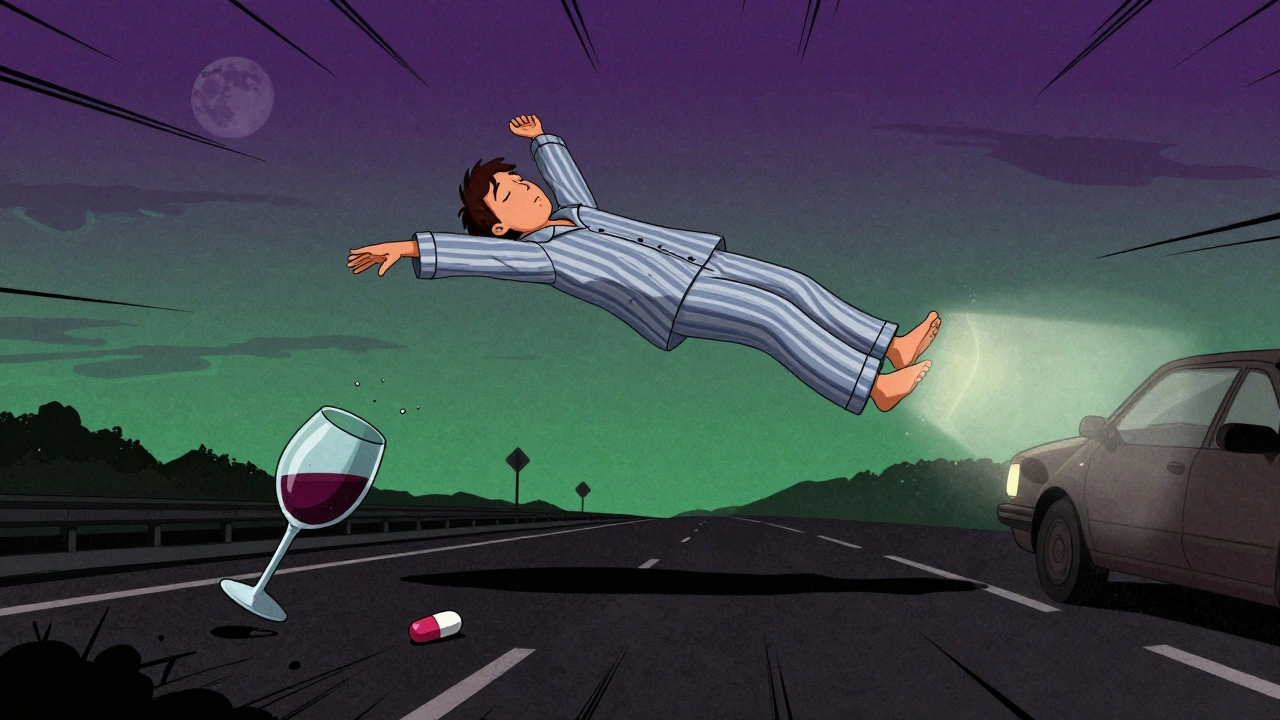
Who’s Most at Risk?
The group most affected? Adults aged 35 to 54. They make up over half of all emergency visits linked to this combo. Why? They’re often stressed, working long hours, trying to get rest, and may not realize how dangerous this mix is. But the worst outcomes? Those happen to people over 65. They’re hospitalized 3.2 times more often than younger adults. Their liver can’t clear alcohol or meds as fast. The half-life of both substances increases by 40-60%. That means even if they drank 8 hours ago, the alcohol is still in their system when they take their pill.What the Experts Say
There’s no gray area here. The medical community is unified. The FDA added a Black Box Warning to all Z-drugs in 2022-the strongest warning they can issue. It says: “Concomitant use with alcohol is contraindicated.” That means doctors are legally required to tell you: don’t do it. Dr. Robert Swift of Brown University says the interaction isn’t additive-it’s exponential. “It’s not 1 + 1 = 2. It’s 1 + 1 = 10,” he explains. Dr. Lorenzo Cohen from MD Anderson calls it “medical negligence” to not warn patients. And Dr. Bankole Johnson’s research found that 83% of fatal Ambien-alcohol cases happened at blood alcohol levels below the legal driving limit (0.08%). The median BAC in those deaths? 0.051%. That’s less than one drink.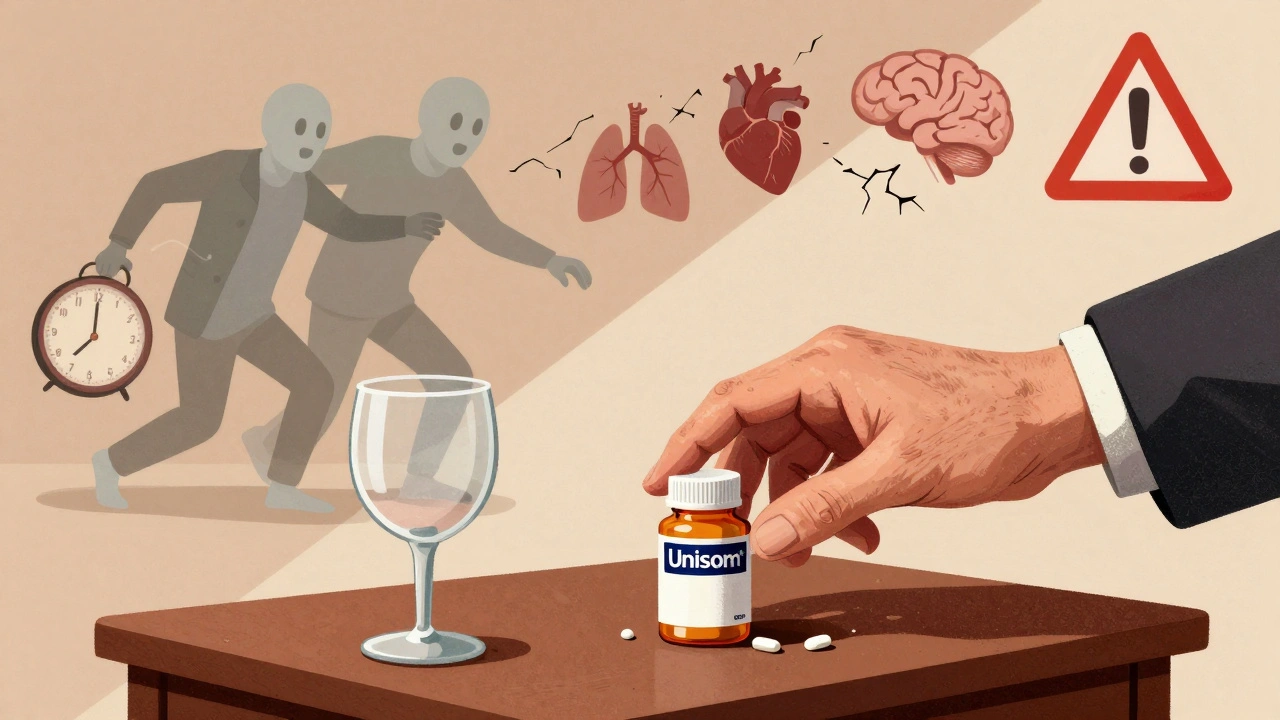
What Should You Do Instead?
If you’re using sleep meds and drink alcohol, here’s what you need to do:- Stop mixing them. Period. There is no safe amount. Even one drink is too much.
- Wait at least 6 hours after drinking before taking a Z-drug. For benzodiazepines, wait 12 hours. This isn’t a suggestion-it’s based on how long it takes your body to clear alcohol.
- Ask your doctor about alternatives. Newer sleep meds like Dayvigo (lemborexant) don’t work on GABA receptors. They target orexin, a brain system that regulates wakefulness. Early data shows they have only a 15% increase in half-life with alcohol, compared to 150-200% for Ambien. That’s a huge difference.
- Try non-drug solutions. Cognitive behavioral therapy for insomnia (CBT-I) is more effective long-term than pills. It’s recommended by the American Academy of Sleep Medicine as first-line treatment. And it doesn’t interact with alcohol because it doesn’t involve chemicals.
The Bigger Problem: No One Tells You
Here’s the kicker: most people don’t even know they’re at risk. A 2022 survey by the National Sleep Foundation found that 68% of patients prescribed sleep meds said they got little to no warning about alcohol risks from their doctor. Meanwhile, 92% of sleep specialists say they do warn patients. That gap is deadly. Pharmacies are now required to hand out printed warnings with every prescription. Compliance is high-87% of pharmacists report giving the warning. But patients often don’t read them. The FDA found that 63% of people ignored previous warnings because they were too small or buried in text. Now, the warnings are bigger. In bold 14-point font. They say: “Do not consume alcohol while taking this medication.” But if you don’t read it, it won’t save you.The Future: Safer Sleep Meds Are Coming
The pharmaceutical industry is finally responding. Of the 12 new sleep medications in clinical trials as of early 2024, seven don’t act on GABA at all. They target orexin, serotonin, or other pathways. These drugs aim to help you sleep without making you dangerously sedated. The NIH just launched a $4.7 million study to find genetic markers that predict who’s most at risk for these deadly interactions. That could lead to personalized warnings: “Your genes make you 5x more likely to have a bad reaction if you drink with sleep meds.” But until those arrive, the message is simple: alcohol and sleep meds don’t mix. Not even a little.If you’re taking a sleep med and you drink, you’re playing Russian roulette with your breathing. There’s no safe amount. No safe time. No safe situation. The science is clear. The warnings are loud. The consequences are real.
Choose sleep. Not sedation.
Can I have one drink with Ambien if I wait a few hours?
No. Even one drink can dangerously amplify Ambien’s effects. The FDA and medical experts say there is no safe amount of alcohol with Z-drugs like Ambien. Alcohol slows how quickly your body clears the drug, leading to prolonged, unpredictable sedation. Waiting 6 hours reduces risk but doesn’t eliminate it. The only safe choice is to avoid alcohol completely while taking these medications.
Is it safe to drink alcohol with melatonin?
Melatonin doesn’t interact dangerously with alcohol like prescription sleep meds do. It doesn’t depress your breathing or cause sleepwalking. But it still increases next-day drowsiness by 35% when mixed with alcohol. If you’re drinking, melatonin might make you feel groggy the next day, but it won’t cause life-threatening sedation. Still, it’s best to avoid combining them for optimal alertness.
Why are older adults more at risk?
As we age, our liver processes alcohol and medications slower. This means both substances stay in the body longer, increasing sedation. Older adults also have reduced muscle mass and slower metabolism, which makes them more sensitive to CNS depressants. The American Geriatrics Society warns that mixing alcohol with sleep meds increases delirium and fall risk by 300-400% in people over 65. Complete avoidance is the only safe approach.
What should I do if I accidentally mixed alcohol with my sleep med?
If you’ve taken a sleep med after drinking and feel extremely drowsy, confused, or have trouble breathing, call emergency services immediately. Don’t wait. If you’re with someone who’s passed out or unresponsive, turn them on their side to keep their airway open and stay with them until help arrives. Do not try to wake them with coffee or cold showers-those won’t work. This is a medical emergency.
Are there sleep aids that don’t interact with alcohol?
Yes. Newer medications like Dayvigo (lemborexant) work differently-they block orexin, a brain chemical that keeps you awake, instead of boosting GABA. Early data shows they only increase their half-life by 15% with alcohol, compared to 150-200% for Ambien. But they’re still sedatives. Even these should be used cautiously with alcohol. The safest option remains non-drug treatments like CBT-I, which have zero interaction risk.
How can I tell if I’m at risk for sleepwalking or other complex behaviors?
If you’ve ever woken up somewhere you don’t remember going, found items moved in your room, or had a partner say you got out of bed and walked around while asleep, you’re at risk. These are called complex sleep behaviors. Alcohol increases the chance of these happening by 16 times when combined with Z-drugs. If this has happened to you, stop taking the medication immediately and talk to your doctor. Do not resume use until you’ve been evaluated.
Arjun Deva
December 6, 2025 AT 08:47So let me get this straight… the FDA says alcohol + Ambien = death, but Big Pharma is still pushing these pills like candy? And now they’re gonna slap a BIG BOLD WARNING on the bottle? LOL. That’s like putting a skull-and-crossbones on a candy bar and calling it “safe” if you “read the label.” Who’s really in charge here? The doctors? The pharmacists? Or the shareholders who need their quarterly dividends? I’ve seen the ads-“Sleep better tonight!”-while the fine print says “may cause unconscious driving, respiratory arrest, or spontaneous confessions to crimes you didn’t commit.” It’s not a medical issue. It’s a corporate crime.
Jackie Petersen
December 6, 2025 AT 13:37Of course they’re not telling you. Why would they? The whole sleep aid industry is built on making people dependent. You think they want you to fix your insomnia with sleep hygiene or CBT-I? No. They want you to keep buying pills. And if you mix them with wine? Even better. More ER visits. More prescriptions. More profits. They don’t care if you wake up in a ditch. As long as you’re alive to buy the next bottle. This isn’t negligence-it’s business model.
Geraldine Trainer-Cooper
December 7, 2025 AT 09:03One drink. Just one. I’ve done it a hundred times. Never had a problem. Maybe I’m just lucky. Or maybe the science is exaggerated. People always freak out over numbers. ‘Oxygen dropped to 84.7%’-so what? I’ve been at 80% hiking in Colorado and felt fine. I’m not gonna stop drinking wine because some study says it’s ‘dangerous.’ If I pass out, I pass out. Life’s short. Chill out.
Kenny Pakade
December 9, 2025 AT 07:35Why are we even talking about this? In America, we have the right to make dumb choices. If I want to take Ambien with a six-pack, that’s my business. The government’s job isn’t to babysit adults. You think the Chinese or Russians are handing out warnings about sleeping pills? No. They just lock you up if you die. We’ve become a nation of scared, over-medicated babies. Grow up. Stop blaming the pill. Blame the person who took it.
Brooke Evers
December 10, 2025 AT 00:57I just want to say-this post hit me hard. I used to take Unisom after a glass of wine every night because I thought it was harmless. I didn’t know I was putting myself at risk for falls, confusion, or even waking up miles from home. I’m a 62-year-old grandmother who just wanted to sleep. No one ever told me the risks. My daughter found me on the floor last year after I took it with wine. I broke my hip. I’ve been sober since. I don’t blame myself. I blame the silence. If you’re reading this and you’re doing the same thing? Please stop. Talk to your doctor. There’s help. You’re not weak for needing sleep. You’re smart for listening now.
Nigel ntini
December 11, 2025 AT 10:21There’s a profound irony here: we live in an age of unprecedented medical knowledge, yet the most critical warnings are buried under legalese and ignored because they’re too dull to read. The science is unequivocal. The data is overwhelming. The consequences are fatal. Yet, the solution isn’t more warnings-it’s better communication. Clear, simple, repeated messaging. Visual aids. Conversations with pharmacists. Mandatory patient quizzes before dispensing. We know how to do this. We just haven’t prioritized it. The real tragedy isn’t the combination-it’s the systemic failure to ensure patients understand it.
Ashish Vazirani
December 13, 2025 AT 00:14Let me tell you something… I took Ambien with whiskey after my father died. Didn’t sleep. Woke up at 3 AM standing in the kitchen holding a knife. No memory of how I got there. I didn’t drive. I didn’t fall. But I almost… did something. I don’t drink anymore. I don’t take pills. I just lie there. Stare at the ceiling. Breathe. It’s not perfect. But it’s mine. And I’m still here. That’s worth more than any pill. Don’t wait for a near-death experience to wake up. Do it now. For yourself.
Mansi Bansal
December 13, 2025 AT 02:11It is with profound concern and a sense of moral urgency that I address this matter. The confluence of pharmacological sedatives with ethanol represents not merely a clinical hazard, but a societal indictment of our collective negligence toward cognitive autonomy and bodily integrity. The statistical augmentation of respiratory depression, the exponential prolongation of drug half-life, and the alarming incidence of parasomnias-particularly in the geriatric demographic-are not incidental phenomena; they are the direct, predictable, and preventable outcomes of a healthcare system that prioritizes convenience over consequence. To assert that ‘one drink is safe’ is not ignorance-it is complicity. The burden of responsibility lies not solely with the patient, but with the prescriber, the pharmacist, the regulatory body, and the corporate entity that profits from silence. We must do better. We owe it to the dead, the traumatized, and the unaware.