
Dosing Accuracy: Why Getting the Right Amount of Medicine Matters
When you take a pill, dosing accuracy, the precise amount of medication delivered to match your medical needs. It's not just about following the label—it's about making sure your body gets exactly what it needs, no more, no less. A few milligrams too much or too little can mean the difference between relief and harm. This isn't theoretical. People end up in the ER every day because a dose was off—sometimes because of how the pill was made, sometimes because of what else they were taking.
extended-release tablets, medications designed to release their active ingredient slowly over time are a perfect example. They’re great for reducing side effects like nausea or dizziness, but if you crush or split them, you lose that safety feature. Suddenly, you’re not getting a steady drip—you’re getting a flood. That’s not dosing accuracy anymore. The same goes for drug interactions, when one medication changes how another works in your body. Take blood thinners with ibuprofen? That combo can turn a minor cut into a life-threatening bleed. Or stack statins with certain antibiotics? You could trigger muscle damage you didn’t see coming. These aren’t rare cases. They’re predictable—and preventable—if you understand how dosing works in context.
It’s not just about the pills. pill formulations, how drugs are built—tablets, capsules, liquids, patches—affect how much actually gets into your system. A capsule might dissolve faster than a tablet. A liquid might be easier for kids or seniors to take, but measuring it wrong by a teaspoon can throw off the whole dose. Even expired eye drops or inhalers can lose potency, meaning you think you’re getting the right amount, but you’re not. Dosing accuracy isn’t just a doctor’s job. It’s yours too—whether you’re tracking your diabetes meds, managing high blood pressure, or using emergency contraception.
That’s why the articles here focus on real-world risks: how opioid overdose hides in plain sight, why liver damage shows up after months of "safe" doses, and how generics aren’t always available when you need them. You’ll find guides on what to watch for with statins, how to carry backup prescriptions safely, and why mixing OTC drugs can be more dangerous than you think. Every post ties back to one thing: getting the dose right isn’t optional. It’s the line between healing and harm. Below, you’ll see how these mistakes happen—and how to stop them before they do.
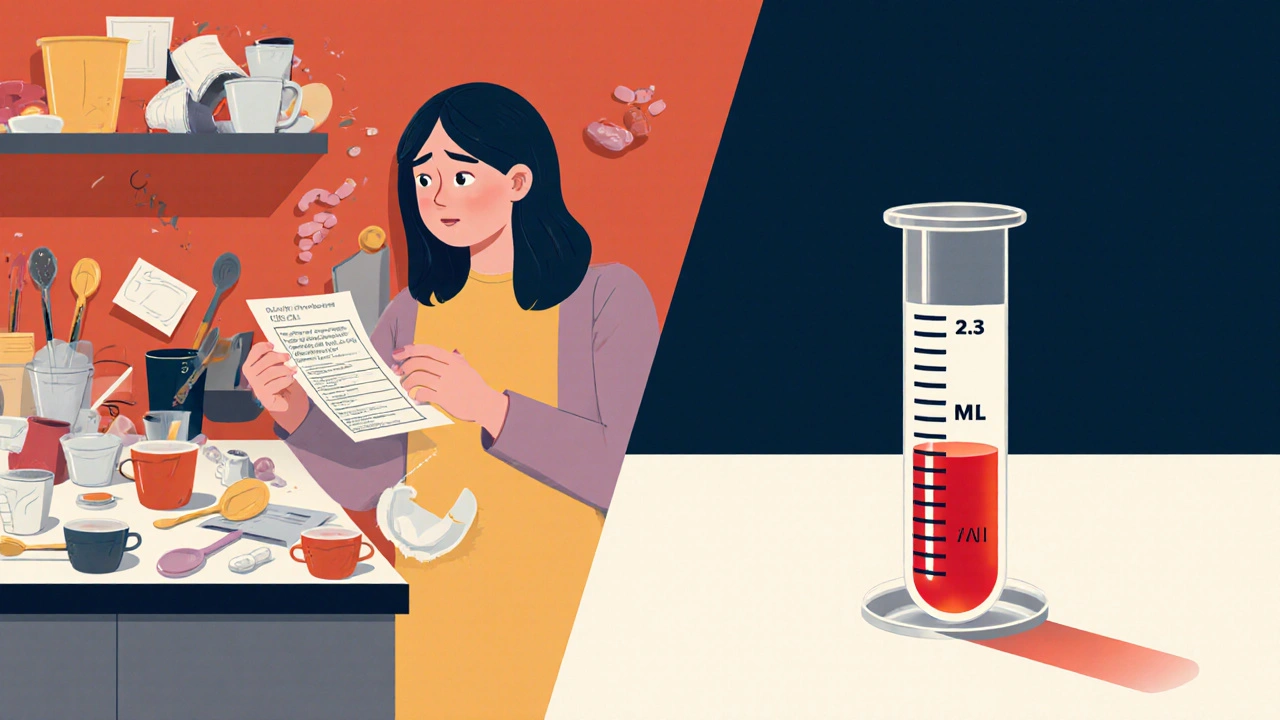
How to Ensure Accurate Dosing Devices with Liquid Prescriptions
Accurate liquid medication dosing prevents dangerous errors. Learn why oral syringes beat cups and spoons, how to use them correctly, and what labels to trust for safe dosing every time.
Read more