
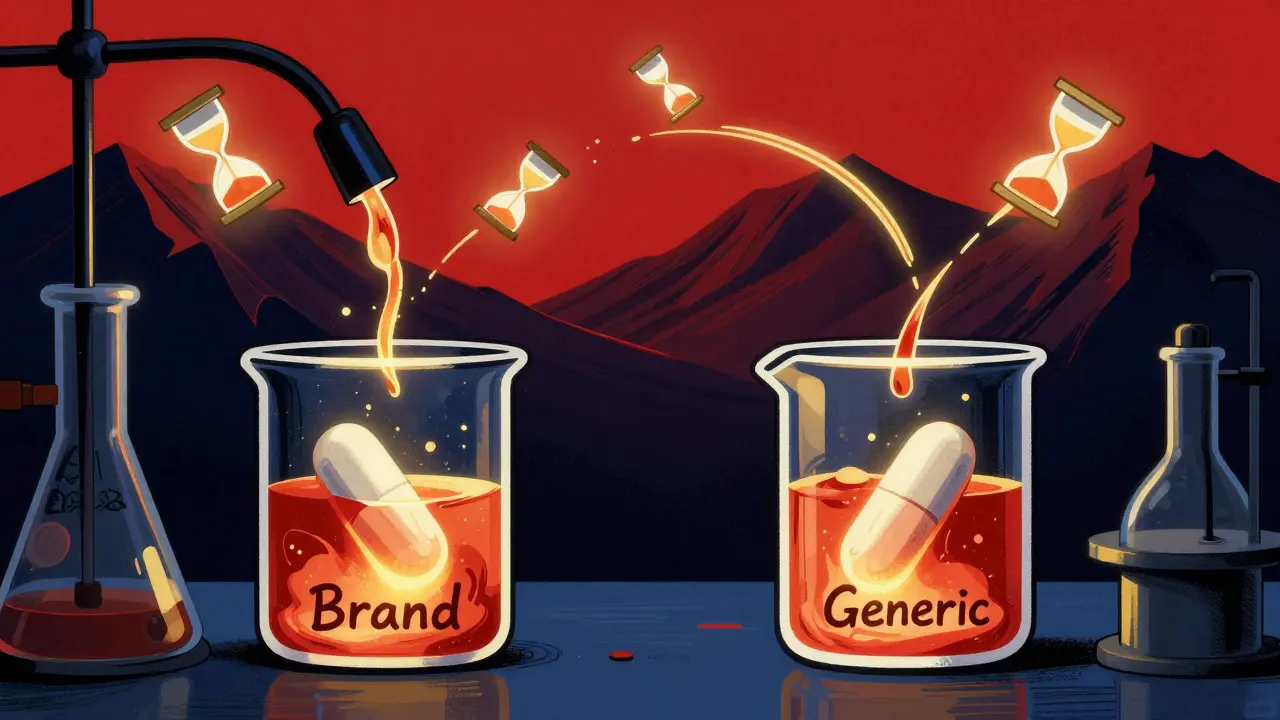
When you pick up a generic pill at the pharmacy, you expect it to work just like the brand-name version. But how do regulators know it’s the same? The answer lies in something most people never hear about: dissolution profile comparison. This isn’t marketing jargon. It’s a precise, science-backed method used worldwide to prove that a generic drug releases its active ingredient the same way as the original - down to the minute. Without it, generic drugs wouldn’t be approved. And without proper dissolution testing, you could be getting a pill that looks right but doesn’t act right.
What Dissolution Profiles Actually Measure
Dissolution testing simulates how a pill breaks down in your body. Imagine putting a tablet in a beaker of fluid that mimics stomach acid, then watching how fast the drug comes out. This isn’t guesswork. It’s done under strict conditions: 37°C (body temperature), specific stirring speed (50-100 rpm), and pH levels that match different parts of the digestive tract. The test runs at timed intervals - say, 5, 10, 15, 30, 45, and 60 minutes - and records how much drug has dissolved at each point.
The result? A curve. One line for the brand drug. One line for the generic. If they match closely, regulators accept that the two will behave the same in your body. That’s the whole point. You don’t need to run expensive, invasive bioequivalence studies on humans if the dissolution profiles are nearly identical. The FDA, EMA, and Health Canada all use this method to approve generics - and it’s why 78% of generic applications submitted to the FDA in 2022-2023 relied on dissolution data instead of human trials.
The f2 Factor: The Industry Standard
The most common tool for comparing these curves is the f2 similarity factor. Developed in 1996 and still used in over 90% of regulatory submissions, f2 is a mathematical score between 0 and 100. A score of 100 means the two profiles are identical. A score below 50 means they’re too different to be considered similar.
Here’s how it works: You test 12 tablets of each product. You plot the percentage dissolved at each time point. Then you plug the numbers into a formula that calculates the average difference across all time points. The lower the average difference, the higher the f2 score. For most immediate-release drugs, an f2 of 50-100 is acceptable. But it’s not that simple.
Here’s where people get it wrong: an f2 of 52 doesn’t automatically mean the drugs are the same. If the brand drug dissolves 90% in 15 minutes and the generic hits 90% in 5 minutes - even if the final f2 is 53 - they’re not interchangeable. The timing matters. One releases too fast. The other too slow. Your body absorbs drugs differently depending on how quickly they enter your bloodstream. That’s why experts like Dr. Diane Bunick warn that f2 ignores the sequence of release. Two curves can look similar overall but have totally different release mechanisms.
When f2 Isn’t Enough
Some drugs are tricky. Highly soluble ones, like amlodipine or metoprolol, dissolve so fast that small variations in equipment or temperature cause wild swings in results. One lab’s f2 might be 49.8. Another’s might be 51.2. Same pill. Different results. That’s why Pfizer scientists have had to completely reformulate products just to hit f2 ≥ 50 - even though human studies showed no difference in how the body handled them.
For these cases, regulators have backup methods. One is f2 bootstrapping, which runs the f2 calculation thousands of times using random samples from the data to estimate a confidence interval. If the lower bound of that interval is still above 50, you’re good. Another is the Mahalanobis Distance Test, which looks at the whole shape of the curve, not just the average difference. A 2021 University of Maryland study found this method correctly flagged dissimilar profiles 94% of the time - better than f2 bootstrapping’s 82%.
For even more accuracy, some labs combine f2 with the area under the dissolution curve (AUC). Think of AUC as the total amount of drug released over time. If the ratio of AUC between the generic and brand is between 0.80 and 1.25 - and f2 is above 50 - the chance of true bioequivalence jumps 23% compared to using f2 alone.

Regulatory Rules Are Getting Tighter
The rules aren’t static. In 2023, the FDA proposed tiered criteria based on how dangerous a drug is. For drugs with a narrow therapeutic index - like warfarin, levothyroxine, or phenytoin - where even a 10% change in blood level can cause harm or toxicity - the minimum f2 requirement jumps from 50 to 65. That’s a big deal. It means generics for these drugs must match the brand almost perfectly.
Meanwhile, the EMA now requires not just an f2 score, but confidence intervals around every single time point. You can’t just say “f2 is 60.” You have to prove that at 10 minutes, the difference between the two profiles is statistically insignificant - and same at 20, 30, 45, and 60 minutes. It’s more work. But it’s more accurate.
Why This Matters for You
Let’s say you’re on a generic version of your blood pressure pill. You switch brands because your insurance changed. You feel fine. But what if the new generic dissolves 20% faster? You might get a spike in blood pressure right after taking it - then a drop later. That’s not theoretical. In 2022, a survey of 127 quality labs found that 73% of failed dissolution comparisons weren’t due to bad formulations - they were caused by poor testing conditions. A slightly misaligned paddle. A temperature drift of 0.6°C. A media volume too small to keep the drug dissolved.
That’s why proper dissolution testing isn’t just about paperwork. It’s about safety. The same equipment used to test a $5 generic pill is the same used to test a $500 brand drug. The same standards. The same calibration. If the test is done right, the generic works just as well. But if the method isn’t validated, or the lab cuts corners - you’re the one who pays the price.
What Makes a Good Dissolution Method
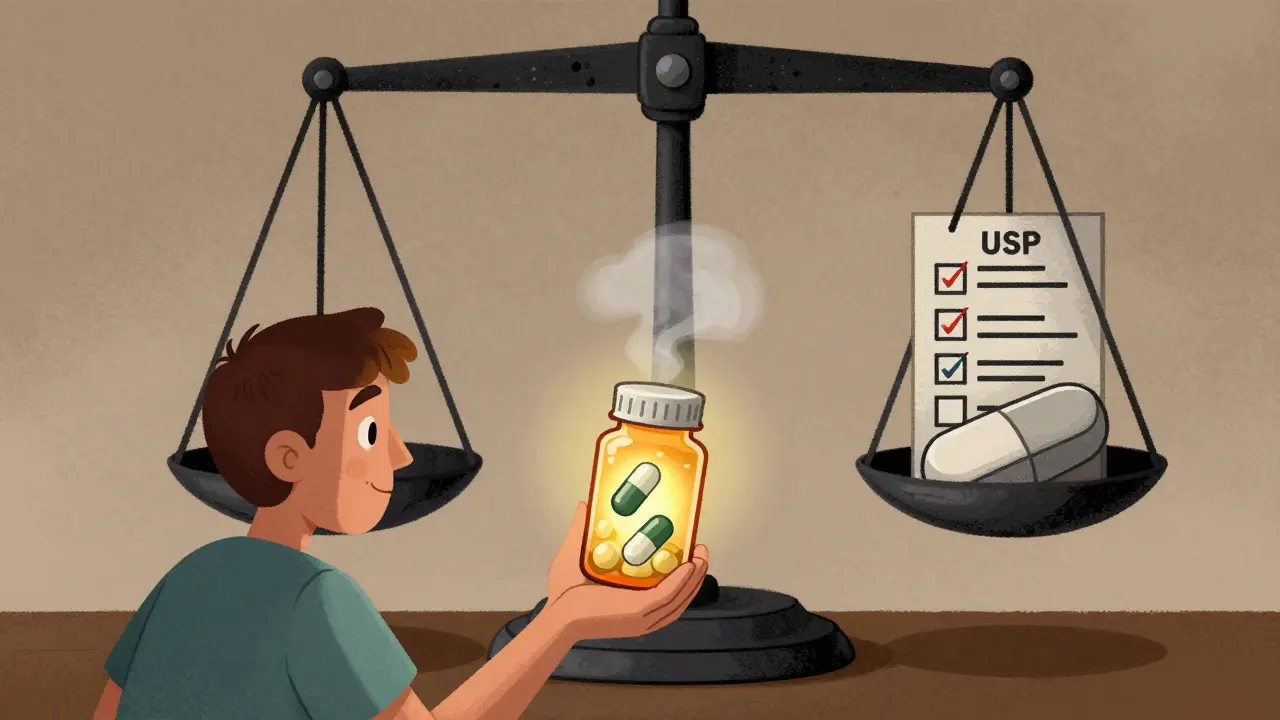
A good test doesn’t just measure how much dissolves - it detects differences. That’s called discriminatory power. To build one, labs test the same tablet under stress: overheated, under-compressed, or aged for months. If the dissolution curve changes under stress, the method is sensitive enough to catch real differences. If it doesn’t - even if the f2 score looks great - the test is useless.
For poorly soluble drugs, they add surfactants to the fluid. For drugs that break down in acid, they switch from pH 1.2 to pH 6.8. For BCS Class I drugs (highly soluble and highly permeable), regulators now require testing in three different pH levels: 1.2, 4.5, and 6.8. And the apparatus? Must be calibrated to within 0.5mm of perfect alignment. A wobbly paddle can throw off the whole test.
Successful submissions - like Teva’s 25mg amlodipine tablet - didn’t just rely on numbers. They fixed the equipment first. Calibrated paddles. Verified temperature. Used sink conditions (enough fluid to keep the drug dissolved). And they documented every single step. No shortcuts.
The Bigger Picture: Why This System Works
Generics save the U.S. healthcare system over $300 billion a year. That’s only possible because dissolution profile comparison lets regulators approve them faster and cheaper. A full bioequivalence study costs $1-2 million and takes 12-18 months. A well-designed dissolution comparison? $200,000 and 6 months. That’s why 95% of immediate-release generic applications include this data.
And the tech is improving. New machines now use real-time UV sensors to track dissolution without manual sampling. AI models are being trained to predict how a drug will behave in the body just from its dissolution curve. By 2026, biorelevant media - fluids that mimic actual stomach and intestinal conditions - will be standard for many drugs.
But the core hasn’t changed. The same principles from 1996 still hold: if the pill dissolves the same way, it works the same way. The math is simple. The science is solid. And the stakes? Your health.
What is the f2 similarity factor and why is it important?
The f2 similarity factor is a statistical measure used to compare the dissolution profiles of two drug products - typically a generic and its brand-name counterpart. It calculates the average difference in percentage dissolved across multiple time points, with a score between 50 and 100 indicating similarity. A score of 100 means the profiles are identical. Regulators like the FDA and EMA require f2 ≥ 50 for generic approval because it’s a reliable predictor of bioequivalence without needing human trials. However, f2 alone isn’t foolproof - timing and release pattern matter too.
Can two drugs have the same f2 score but still behave differently in the body?
Yes. Two drugs can have identical f2 scores but release their active ingredient at different rates. For example, one might release 80% of the drug in 10 minutes, while the other takes 40 minutes to reach the same point. The final f2 might still be 55, but the first drug could cause a dangerous spike in blood levels, while the second provides steady, sustained release. Dissolution profiles are curves - not just numbers. Experts warn that f2 ignores the sequence of release, so it must be used with other data like AUC and visual curve inspection.
Why do some generic drugs fail dissolution testing even when they’re the same formula?
Most failures aren’t due to the drug itself - they’re caused by testing conditions. A slightly misaligned paddle, a temperature variation of 0.5°C, or using too little dissolution fluid can skew results. A 2022 survey of 127 labs found that 73% of failed comparisons were due to analytical variability, not product differences. Low-dose drugs (under 5mg) are especially sensitive. Even small errors in weighing or sampling can throw off the curve. That’s why labs must follow strict calibration standards and validate their methods with stressed samples.
Are dissolution profiles required for all generic drugs?
Yes - for nearly all immediate-release solid oral dosage forms. In 2022-2023, 95% of generic applications submitted to the FDA included dissolution profile comparisons. It’s the standard for biowaivers, meaning manufacturers can skip expensive human bioequivalence studies if the dissolution profiles match. However, for modified-release products or drugs with narrow therapeutic indices, the requirements are stricter. Some now require testing in multiple pH environments and confidence intervals around each time point.
What’s the difference between f1 and f2 in dissolution testing?
f1 is the difference factor - it measures the absolute difference between two dissolution profiles at each time point. A score between 0 and 15 is acceptable, with lower numbers meaning less difference. f2 is the similarity factor - it’s a more sensitive, logarithmic calculation that gives a score from 0 to 100, where higher means more similar. f2 is preferred for regulatory submissions because it’s more robust and widely accepted. f1 is rarely used alone; it’s often reported alongside f2 as supporting data.
How do regulatory agencies ensure dissolution testing is reliable?
Regulators require strict validation. Labs must prove their dissolution method can detect changes - by testing stressed samples like overheated or under-compressed tablets. Equipment must meet USP <711> standards: paddle alignment within 0.5mm, temperature controlled to ±0.3°C, and shaft wobble under 1mm. All data must be documented, including calibration records and statistical code. The FDA also requires that dissolution media maintain sink conditions - enough fluid to prevent drug re-precipitation. Without this, results are meaningless.
Lawrence Jung
January 12, 2026 AT 20:54Dissolution profiles are the unsung heroes of generic drugs and nobody talks about them until someone gets sick from a bad batch
Alice Elanora Shepherd
January 14, 2026 AT 15:03It's fascinating how much precision goes into this-calibrated paddles, ±0.3°C temperature control, sink conditions… it’s not just science, it’s craftsmanship. And yet, most people assume a pill is a pill. The regulatory rigor here is actually reassuring, if you know what’s behind the curtain.
Christina Widodo
January 16, 2026 AT 09:39Wait so if two drugs have the same f2 score but different release times, they could literally make you feel different? Like, one gives you a spike and the other a slow drip? That’s wild. I thought f2 was the final word. So what’s the real takeaway-don’t trust the number alone?
Prachi Chauhan
January 16, 2026 AT 23:17bro like the body is not a beaker why are we even doing this? if the pill looks the same and costs less and i dont feel different then its fine. stop overthinking. science is for people who dont trust their gut
Katherine Carlock
January 17, 2026 AT 06:35I love that this exists. I’ve switched generics so many times and never worried-now I realize I should’ve been paying attention. It’s comforting to know there’s a system, even if it’s flawed. Also, the part about amlodipine being reformulated just to hit f2 ≥ 50? That’s insane. The system’s working, but it’s fragile.
Sona Chandra
January 17, 2026 AT 08:37THIS IS WHY PEOPLE DIE FROM GENERIC DRUGS. THEY LET SOME LAB WITH A WOBBLY PADDLE AND A $2000 BUDGET APPROVE A PILL THAT COULD KILL YOU. THE FDA IS ASLEEP. 73% OF FAILURES ARE FROM BAD TESTING?! THAT’S NOT A FLAW-THAT’S NEGLIGENCE. SOMEONE NEEDS TO GET FIRED.
Jennifer Phelps
January 18, 2026 AT 05:59So f2 is like a grade but it doesn’t show the curve shape? So two drugs could both get a B but one is a straight line and one is a rollercoaster? That’s terrifying. Why don’t they just show the graphs? Why do we need a number at all?
beth cordell
January 19, 2026 AT 18:56So basically the system is like a really strict recipe that’s supposed to guarantee the same taste… but if your oven is off by 1 degree, the cake burns. And no one tells you. 😅 But hey, at least we’re saving $300B a year 🙌 #GenericRevolution
Lauren Warner
January 21, 2026 AT 10:20Let’s be real. The FDA’s tiered system for narrow therapeutic index drugs is a band-aid. If you need f2 ≥ 65 for warfarin, why not just require full bioequivalence studies? The whole f2 framework is a cost-cutting illusion. It’s not science-it’s regulatory convenience dressed up as innovation. And the fact that labs fail because of a 0.6°C drift? That’s not incompetence. That’s systemic neglect.